What’s the Best Driveway Material for a Country Home?
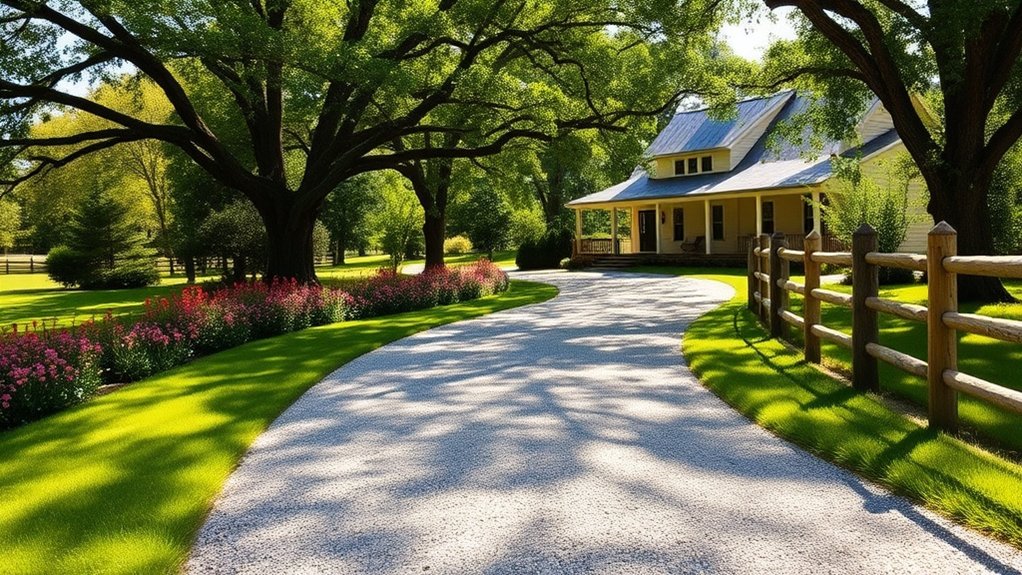
For a country home, both asphalt and gravel are solid options thanks to their durability and minimal upkeep. Asphalt is particularly effective in dealing with freeze-thaw cycles and quickly clears melting snow. On the other hand, gravel provides excellent drainage, making it ideal for areas prone to heavy rainfall. If you’re looking for a more elegant appearance, cobblestone or permeable pavers offer aesthetic charm and sustainability. Each material has its own advantages and costs, so assessing your specific requirements is key. Take the time to explore your choices to find the best fit for your home.
Key Takeaways
- Aesthetic Appeal: Gravel adds a rustic charm that suits country homes, harmonising beautifully with the natural surroundings.
- Cost-Effective: It’s one of the most budget-friendly options, with installation costs ranging from £0.70 to £2 per square foot.
- Drainage: Thanks to its porous nature, gravel offers excellent drainage, helping to reduce runoff and minimise flood risks during heavy rain.
- Durability: Asphalt is another solid option, with a lifespan of 15 to 30 years. It retains heat, which can help snow melt faster in colder weather.
- Maintenance: Gravel needs annual maintenance, while asphalt requires resealing every 2-3 years, so consider these factors for long-term use.
The Durability Factor: Lifespan of Driveway Materials
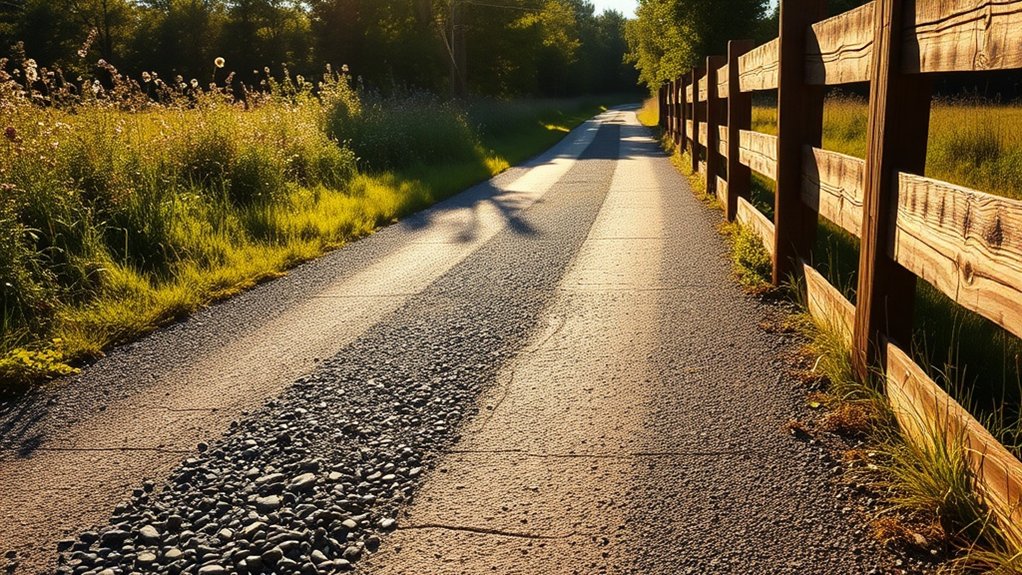
When choosing the right driveway material for your country home, it’s important to consider the durability and lifespan of your options.
Concrete driveways can last between 25 to 50 years, making them a strong choice. Asphalt, on the other hand, usually lasts around 15 to 30 years, which is less impressive than concrete. Additionally, environmental factors can significantly affect the lifespan of both materials, influencing your decision based on local conditions. Regular maintenance is essential for maximizing the lifespan of both materials.
Cobblestone pavers are highly durable and can last up to a century, representing a solid long-term investment. Concrete pavers offer a good compromise, with a lifespan of 30 to 40 years, while natural stone and brick pavers can also serve you well for 25 to 50+ years.
Ultimately, weighing longevity alongside durability will help you choose the best driveway for your country property.
Maintenance Requirements: Keeping Your Driveway in Shape
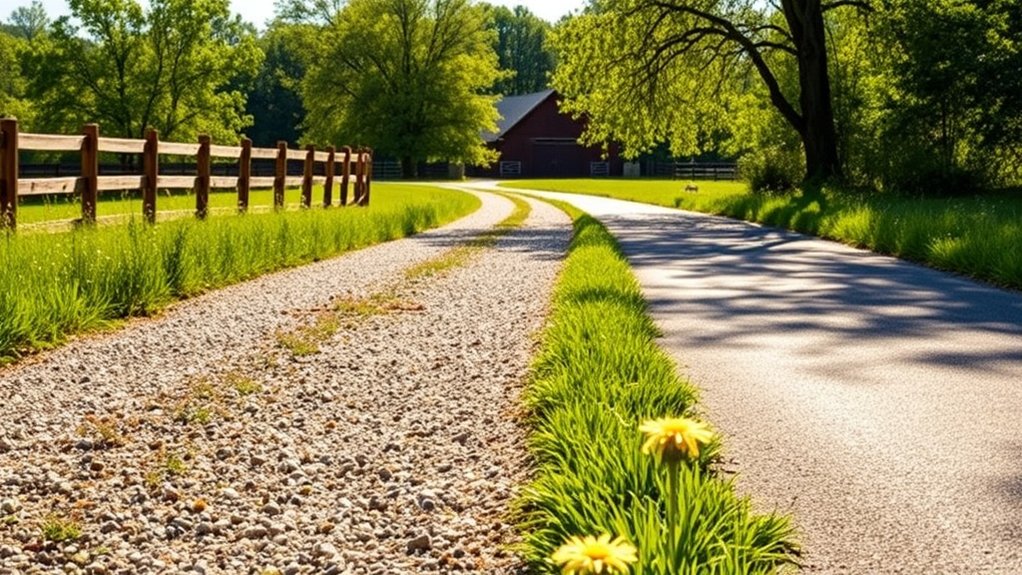
To keep your driveway in good condition, regular maintenance is crucial for its longevity. Routine inspections, cleaning, and prompt repairs can stop minor problems from turning into expensive fixes. By following a seasonal maintenance schedule and addressing any drainage issues, you can significantly prolong the life of your driveway. For example, clearing leaves and debris can prevent water pooling, reducing the risk of cracks. Regularly resealing asphalt is also essential to protect it from the elements and extend its lifespan. Additionally, ensuring effective drainage is critical for preventing erosion and maintaining surface integrity.
Routine Maintenance Tasks
Maintaining a tidy driveway might seem daunting, but regular upkeep is vital for extending its life and boosting your home’s curb appeal. A well-kept driveway ensures a safe and welcoming entrance to your property. Here are some key seasonal tasks:
- After cleaning, check for cracks, holes, and any drainage problems. Regular inspections can catch early signs of damage that might worsen over time.
- Clear away debris by sweeping or using a blower, and wash the surface at least twice a year. Implementing proper grading will enhance the driveway’s longevity and prevent water accumulation.
- Fill in small cracks to prevent further damage and seal the concrete every 4–5 years. Applying a tarmac sealer can also help protect against fading and deterioration.
- Tackle weeds and plants immediately to prevent root damage. Early intervention can save you from more extensive repairs in the future.
Long-Term Durability Considerations
Understanding long-term durability is crucial for preserving your driveway’s integrity and appearance over time. Different materials have varying lifespans and maintenance requirements that affect their sustainability.
| Driveway Material | Lifespan |
|---|---|
| Concrete | 25 to 50 years |
| Brick | 50 to 100 years |
| Stone | Up to 50 years |
| Permeable Pavers | 25 to 60 years |
| Gravel | 7 to 10 years |
Regular maintenance, such as sealing concrete every 2-3 years or replacing loose bricks, can significantly extend your driveway’s life. Be aware of seasonal challenges that may impact your chosen material. Prioritising durability and sustainability ensures your driveway remains functional and visually appealing for years to come.
Climate Considerations: Choosing the Right Material for Your Area
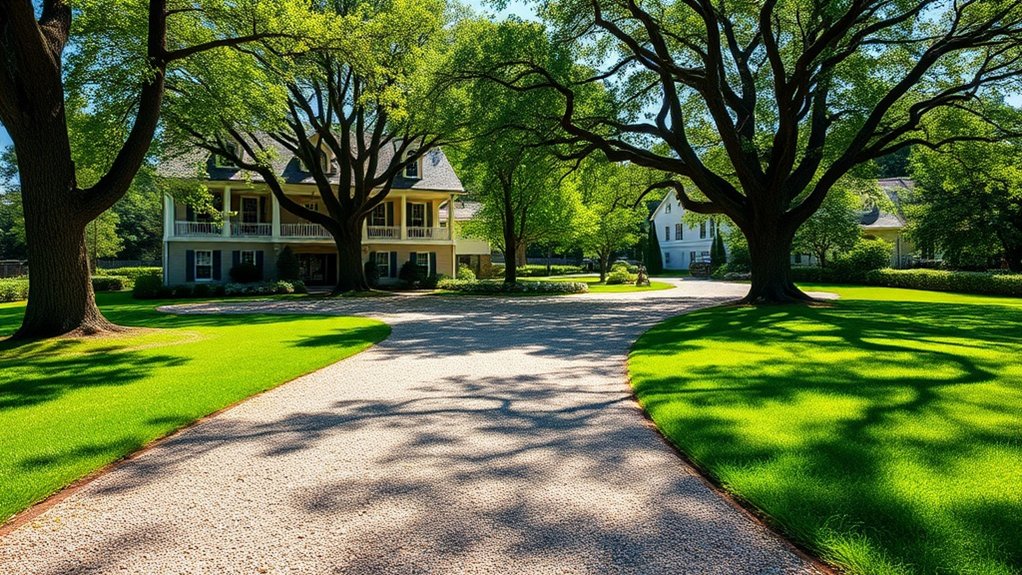
Choosing the right driveway material for your country home in the UK depends on your local climate. Here are some key points to consider:
- Cold, wet climates: Asphalt is a good choice as it can handle freeze-thaw cycles. Alternatively, durable pavers with adequate base preparation can also work well.
- Hot, dry climates: Concrete or light-coloured stones are ideal for managing heat. Avoid asphalt, as it may soften in high temperatures.
- Areas with heavy rainfall: Permeable options, such as gravel or specially designed pavers, help manage rainwater effectively.
- Rural settings: Consider asphalt or TRUEGRID® PRO LITE systems for their durability and eco-friendliness, especially for longer driveways.
Making the right choice ensures your driveway stays functional and attractive throughout the year.
Aesthetic Appeal: Enhancing Your Home’s Curb Appeal
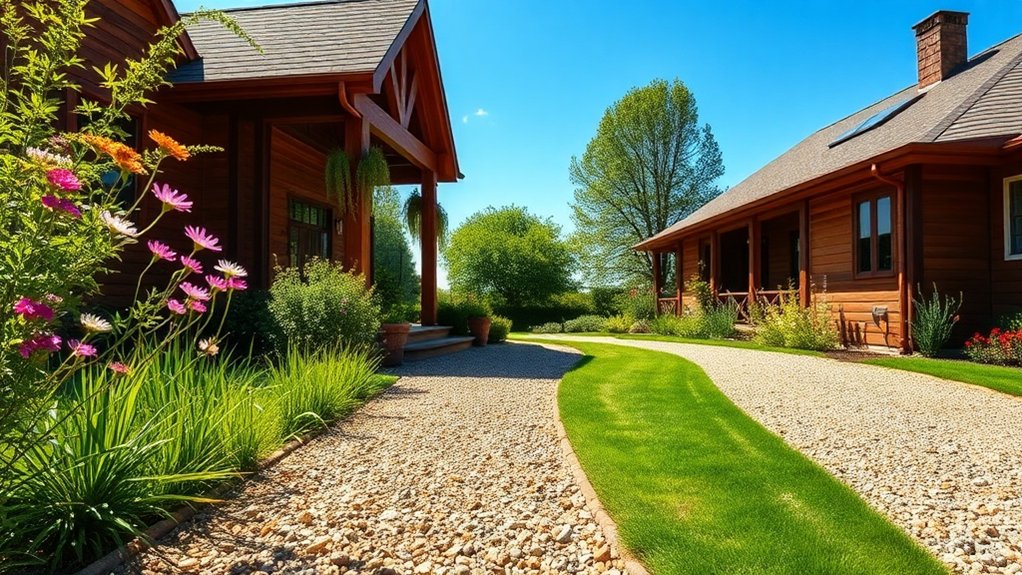
Choosing the right driveway material not only ensures practicality but also significantly boosts your home’s curb appeal.
First impressions matter; in fact, 72% of homebuyers take curb appeal into account when assessing properties. Concrete offers a sleek, modern finish, while asphalt lends a traditional look ideal for classic homes.
For a more upscale feel, consider paver driveways, which provide design versatility and can attract buyers willing to pay a premium. Gravel, with its rustic appeal, is great for countryside settings but may require more upkeep.
Cost Analysis: Budgeting for Your Driveway Project
When planning your driveway project, it’s vital to understand the costs associated with various materials.
Consider not just the initial installation costs, but also the long-term maintenance expenses for each option.
For instance, while block paving may be pricier upfront, it often requires less maintenance compared to gravel, which can need regular replenishing.
Material Cost Comparison
When budgeting for your driveway project, it’s essential to compare different materials based on their costs and long-term benefits.
Here’s a straightforward breakdown:
- Concrete: £3 to £18 per square foot; lasts 30–40 years but may crack in colder climates.
- Asphalt: £1.50 to £10 per square foot; lifespan of 10–30 years with regular upkeep.
- Gravel: £0.70 to £2 per square foot; can last indefinitely with occasional topping up.
- Pavers: £7 to £35 per square foot; 25–50 years of durability, and repairs are simple.
Each material has its pros and cons, so consider your budget and how long you want your driveway to last to make the best choice for your home.
Installation Expenses Overview
After assessing material costs, it’s crucial to consider the installation expenses that can affect your overall budget.
Labour costs typically range from £30 to £45 per hour. For gravel, anticipate an extra £4 to £8 per square metre for labour, while concrete averages £5 to £12 per square metre.
Asphalt pricing is more straightforward, with total costs for a standard two-car driveway falling between £2,500 and £6,500.
Don’t overlook site preparation, which can add £1 to £1.50 per square metre. Additionally, delivery fees for materials may vary from £40 to £80.
Each of these factors significantly contributes to your final expenses, so careful budgeting is essential.
Long-term Maintenance Expenses
When selecting the right driveway material, it’s crucial to consider long-term maintenance costs as part of your budget.
Here’s a simplified overview of what to expect:
- Gravel upkeep: Annual maintenance costs can be between £80 to £240, with an additional £80 to £240 for pothole repairs.
- Asphalt longevity: You’ll need sealcoating every 2-3 years, costing around £80 to £160 each time. Repairs could potentially reach £2,400.
- Concrete repairs: Anticipate costs of £2.40 to £6.40 per square foot for repairs, plus sealants priced at £0.80 to £2.80.
- Paver maintenance: Individual pavers can cost £8 to £16 each, and you’ll need to replenish joint stabilisation every few years.
Being aware of these driveway costs will help you make an informed investment for your home.
Installation Process: What to Expect
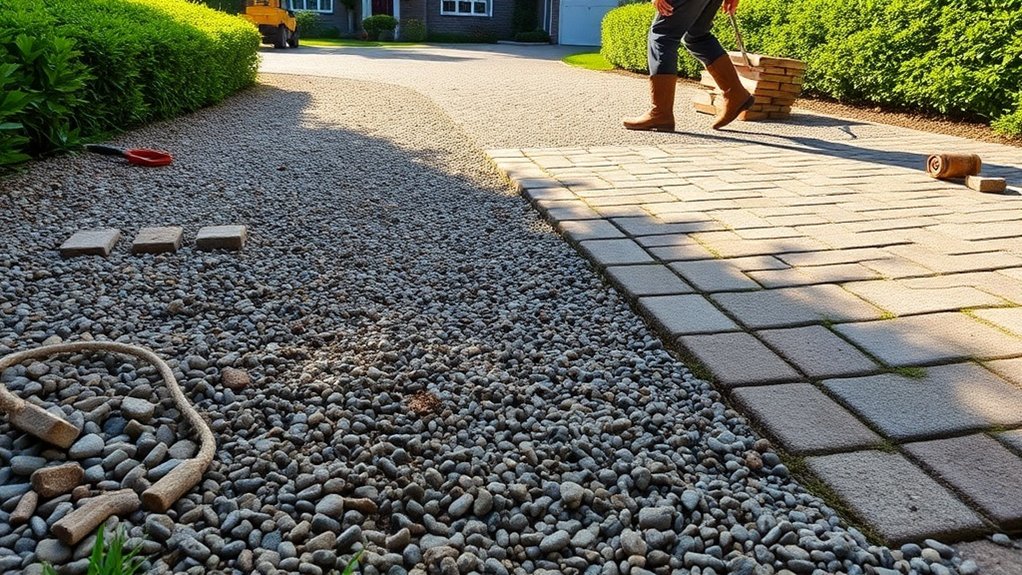
When installing a driveway for your country home, knowing the process can help ensure a smooth experience. Start by clearing the area of any debris, marking the boundaries, and contacting utility companies to locate any underground services.
Next, excavate 200-300mm of soil for the base layer. Depending on whether you choose concrete or asphalt, follow the appropriate installation steps. For concrete, set up wooden forms and lay reinforcement before pouring the mix. For asphalt, carry out proof rolling and then apply a binder layer.
Be prepared for challenges such as assessing soil quality and ensuring proper drainage. Finally, allow the concrete to cure for about a week, while asphalt typically takes just 1-3 days to be ready, ensuring your new driveway remains durable over time.
Environmental Impact: Sustainable Driveway Options
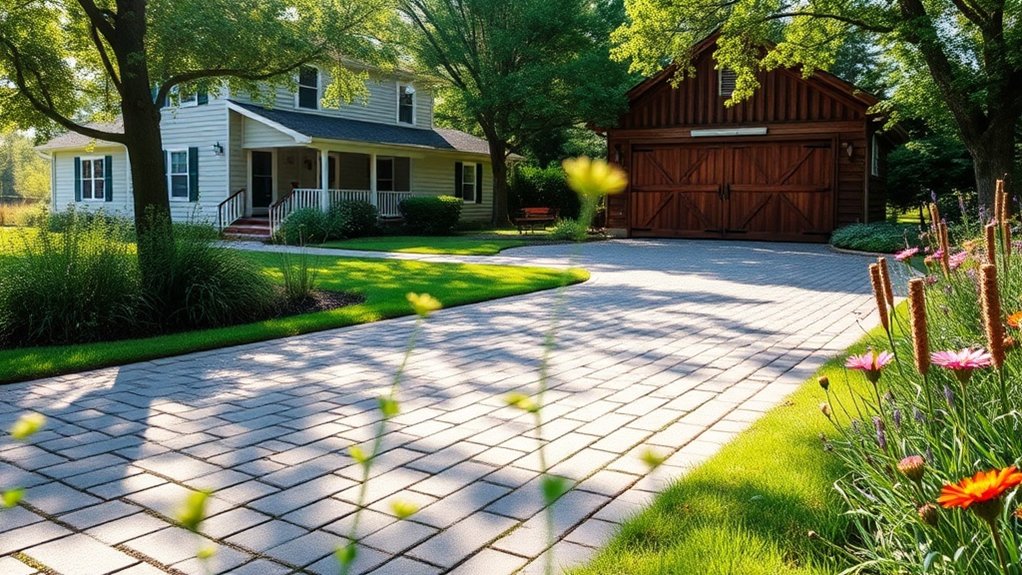
When considering driveway options for your country home, choosing sustainable materials can significantly reduce your environmental impact.
Eco-friendly choices not only benefit the planet but can also enhance your property’s appeal. Here are some sustainable driveway options:
- Recycled asphalt (RAP) helps lower oil consumption and cuts emissions.
- Permeable pavers allow rainwater to soak through, reducing runoff and the risk of flooding.
- Bamboo and natural stones are renewable resources that promote biodiversity.
- Composite pavers made from recycled plastics and rubber are durable and provide good grip.
Performance in Various Conditions: Snow, Rain, and Heat
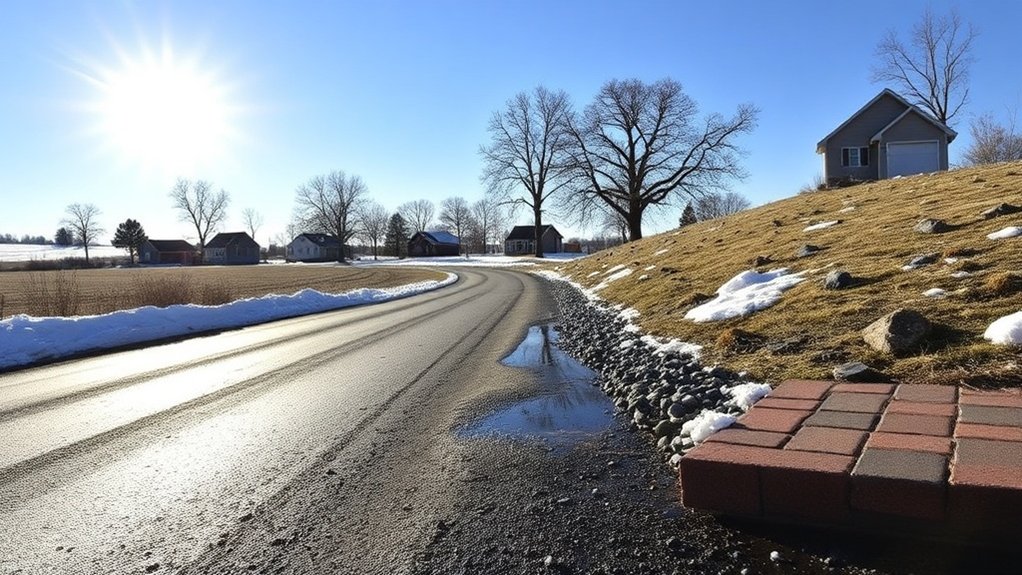
When selecting the right driveway material for your country home, it’s essential to consider how it performs in snow, rain, and heat.
Look for a surface that allows for easy snow clearance without compromising its integrity, efficiently drains rainwater to avoid erosion, and can withstand high temperatures without warping.
Each material has its own advantages and drawbacks that can significantly affect the durability and practicality of your driveway.
For instance, block paving may provide excellent drainage but can be more challenging to clear of snow compared to tarmac.
Choose wisely to ensure your driveway stands the test of time.
Snow Removal Challenges
Snow removal challenges can differ significantly based on your choice of driveway material, affecting both the ease of clearing and the long-term durability of the surface.
Each material responds distinctly to snow and ice, which can influence your winter maintenance efforts.
- Asphalt retains heat, helping to melt snow faster and minimise ice patches.
- Concrete tends to reflect sunlight, resulting in slower melting and a higher chance of ice forming.
- Heated driveway systems completely prevent snow and ice from accumulating.
- Gravel offers natural drainage, which helps reduce water refreezing and prevents ice formation.
Selecting the right material is crucial for effectively managing winter conditions, ensuring your driveway remains safe and accessible throughout the colder months.
Rain Drainage Efficiency
Choosing the right driveway material plays a crucial role in managing rain drainage, especially in areas that experience heavy downpours. Using effective drainage solutions, such as permeable surfaces, can significantly enhance water management, helping to prevent issues like puddles and erosion.
| Driveway Material | Drainage Efficiency |
|---|---|
| Gravel Driveways | Excellent, due to its porous nature |
| Permeable Pavers | Reduces runoff, eco-friendly |
| Resin-Bound Driveways | Absorbs 850 L/m²/min |
| Pervious Concrete | Drains 4 inches/min |
Gravel provides stability, though it may require some upkeep. On the other hand, resin-bound driveways are sustainable and can be customised to fit your style. Pervious concrete efficiently allows water to flow through, minimising the risk of foundation damage. Make an informed choice to improve your home’s drainage efficiency.
Heat Resistance Properties
When selecting driveway materials for your country home, understanding their performance in hot weather is crucial. Here’s a quick overview of how different materials handle heat:
- Concrete: Stays strong in high temperatures but may stain over time.
- Asphalt: Tends to absorb heat and can soften, which might shorten its lifespan.
- Wood pavers: Provide a cooler surface, making them suitable for warmer climates.
- Gravel: Naturally resists high temperatures, preventing any softening.
When considering sustainable options, think about how heat retention impacts comfort and upkeep.
Wood pavers, for instance, can endure extreme heat while still looking appealing, making them an excellent choice for your country home.
Repair and Resurfacing: Long-Term Care for Your Driveway
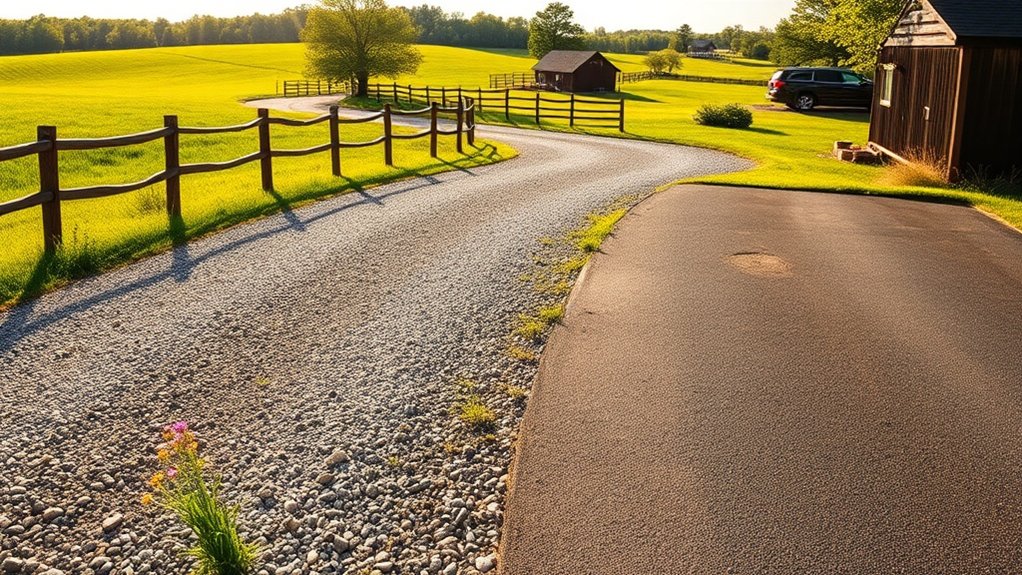
To keep your driveway in good condition and looking its best, regular repair and resurfacing are crucial.
Start by preparing the surface properly—use a pressure washer to remove dirt and oil stains, which helps repair materials adhere better. Clear away debris with a wire brush and broom, and apply weed killer to stop future growth from damaging your asphalt.
For cracks, opt for cold pour fillers for quick fixes or hot rubberised options for a more durable solution.
When it comes to potholes, you can use cold patches or hot patching techniques to ensure stability.
After making repairs, apply a sealcoat to protect your driveway from water damage. Just be sure to let everything dry and cure completely before using it again.
With regular maintenance, your driveway can remain a beautiful and functional part of your home.
Comparing Local Regulations and Permits for Driveway Installations
What should you know about local regulations and permits before installing a driveway? Navigating the nuances of planning regulations and types of permits is crucial for a smooth installation.
- Most residential driveways will require a building regulations approval unless they’re associated with new single-family builds.
- If you’re altering the public highway, you’ll need a permit for any driveway changes.
- You may be asked to provide detailed construction plans and evidence of compliance with local standards.
- If your driveway exceeds certain surface area limits, you might need to incorporate sustainable drainage solutions.
Disregarding these regulations can result in expensive delays and potential fines.
Always check with your local council to ensure your project complies with all necessary requirements before you start.
Frequently Asked Questions
How Do Different Driveway Materials Affect Home Resale Value?
Different driveway materials can significantly influence your home’s resale value. For instance, block paving or natural stone can enhance your property’s curb appeal, making it more attractive to potential buyers and potentially increasing its value. In contrast, a gravel driveway may lack the same appeal, which could deter buyers and negatively affect offers during negotiations. Choosing the right material can make a considerable difference in how your home is perceived on the market.
Which Driveway Material Is Best for Heavy Vehicle Traffic?
For heavy vehicle traffic, reinforced concrete is the best option. It can support over 30,000 lbs, ensuring durability and requiring minimal maintenance. While asphalt is reasonably strong, it doesn’t match the resilience of concrete, especially with continuous heavy use. Choose wisely for long-lasting results.
Can I Install a Driveway Myself, or Should I Hire a Professional?
You can lay a driveway yourself, but hiring a professional offers benefits such as expertise, efficiency, and adherence to local regulations. Consider your DIY skills in relation to the complexity of the project. For instance, if you’re planning a simple gravel driveway, it might be manageable. However, for a block paving or tarmac drive, it’s wise to consult a pro for the best outcome.
What Driveway Materials Are Best for Minimizing Dust and Debris?
To reduce dust and debris, consider alternatives to gravel such as resin-bonded surfaces or geogrid pavers. These options effectively control dust while improving the look of your driveway, keeping it clean and attractive in various weather conditions.
Are There Any Eco-Friendly Sealants for Driveway Maintenance?
There are several eco-friendly options for maintaining your driveway, including sustainable sealants that reduce environmental impact. Water-based and biodegradable sealants are safe and durable, keeping your driveway looking good while being kind to the planet.
Conclusion
When choosing the right driveway for your country home, consider it more than just a route; it’s the first impression of your property. Focus on durability, maintenance, and visual appeal to select a material that can endure both time and the elements. Think about costs and the environmental impact too. Picture your driveway as an enhancement to your landscape. The ideal choice will not only guide you home but also showcase your personal taste and commitment to eco-friendliness.
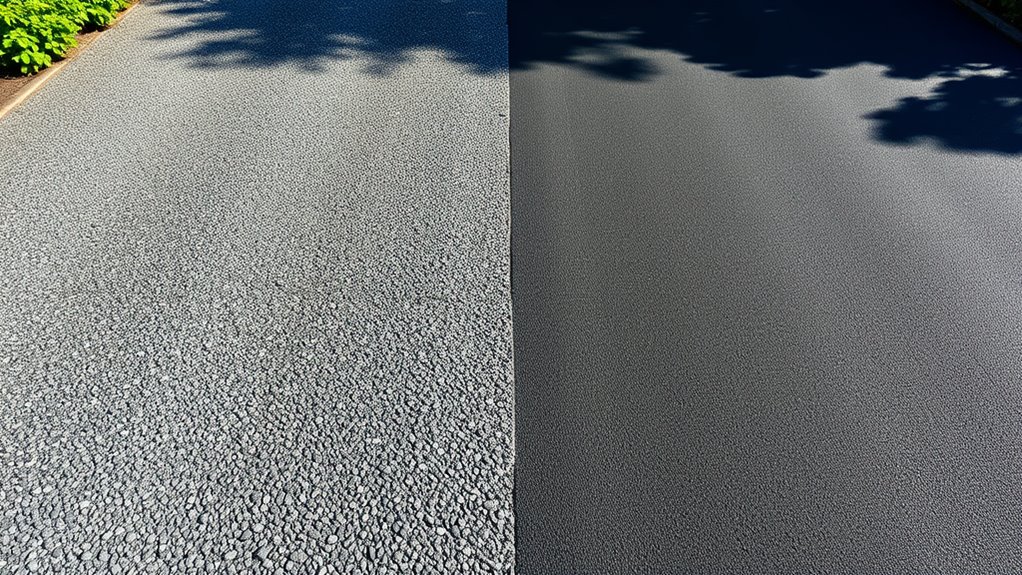
Beneath the surface of tarmac and asphalt driveways lies a world of differences; discover which option suits your needs best.
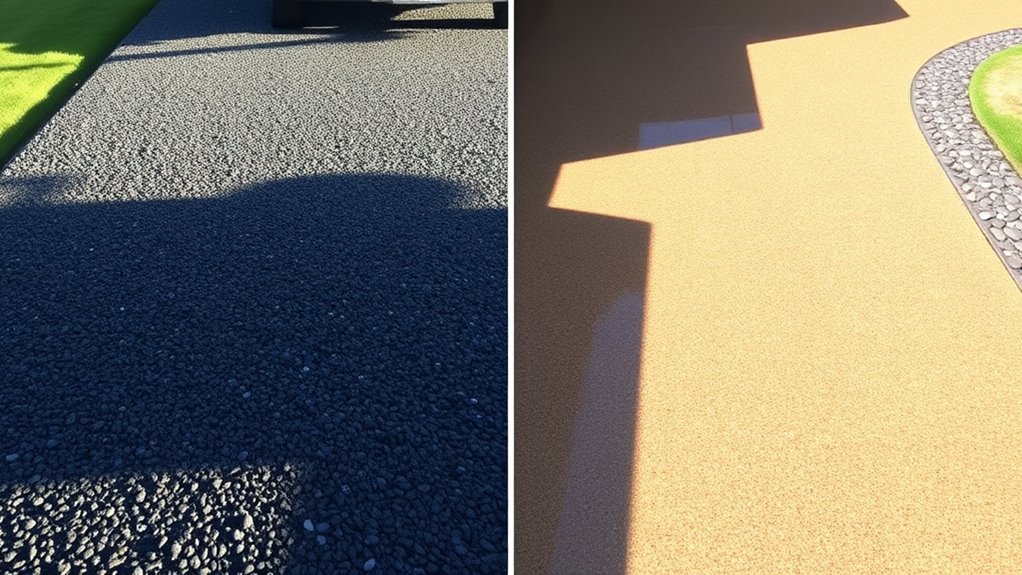
Choosing between a tarmac and resin driveway can be challenging; discover the key factors that could influence your decision.
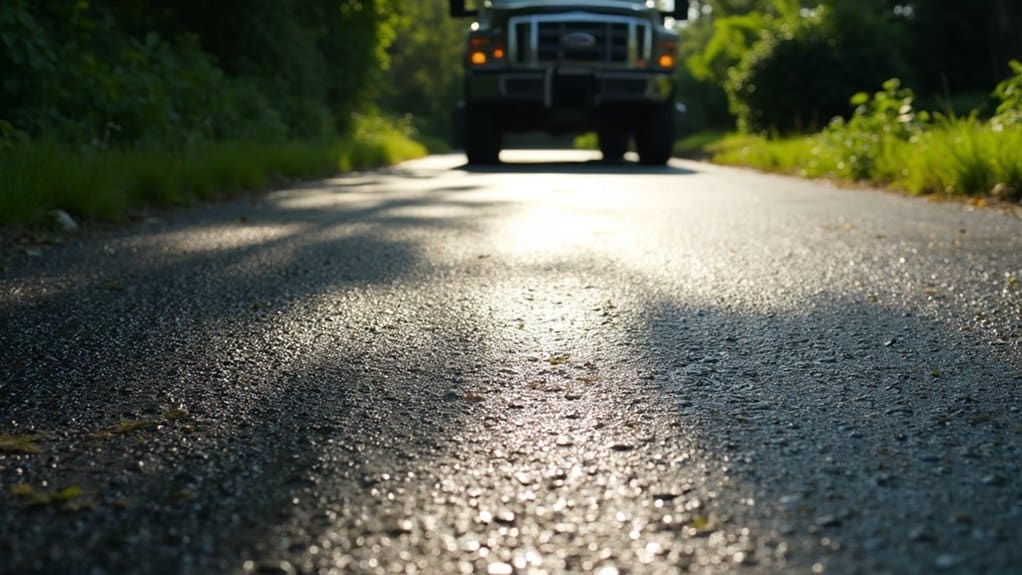
Tarmac driveways can support impressive weights, but understanding the key factors will help you determine just how much yours can Read more