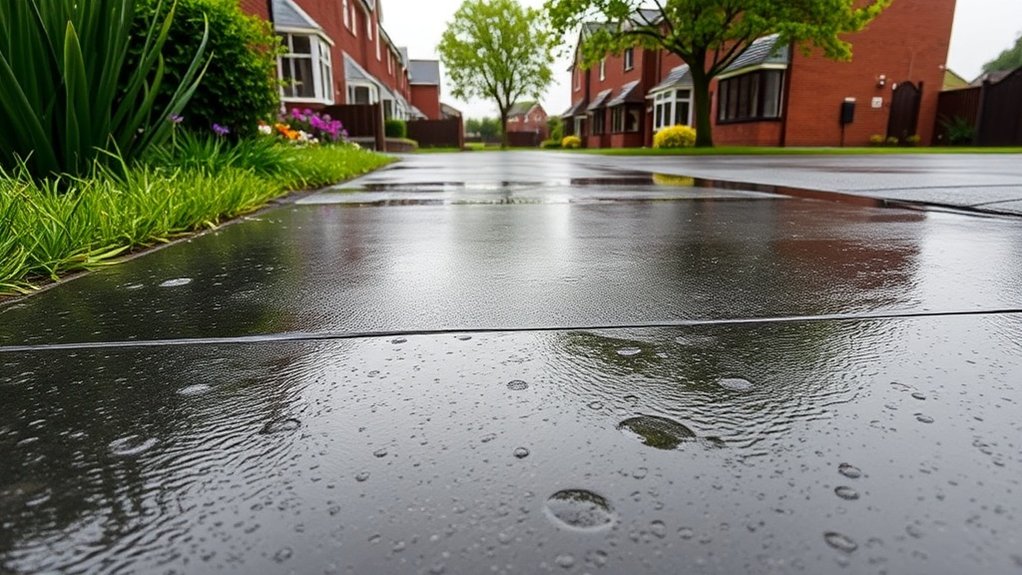
Resin driveways are well-suited for Manchester’s wet weather. Their porous design allows for effective drainage, helping to minimise flooding. They are also frost-resistant and UV-stable, which means they can withstand the region’s unpredictable climate. With proper installation and care, resin driveways can last between 10 to 15 years, offering both durability and visual appeal. Interested in tips for enhancing their performance? There’s plenty to learn about maintaining resin driveways.
Key Takeaways
- Resin driveways are permeable, allowing rainwater to drain through, which helps reduce surface pooling and flooding risks in Manchester’s wet climate.
- They meet Sustainable Urban Drainage Systems (SUDS) standards, improving urban drainage and effectively filtering out pollutants.
- With their frost-resistant and UV-stable properties, resin driveways stand up well to Manchester’s unpredictable weather, helping to prevent cracking.
- Regular maintenance, such as cleaning and sealing, is vital to combat moisture effects and extend the lifespan in damp conditions.
- A properly designed sub-base is essential for stability, especially in wet weather, making resin driveways a suitable choice for Manchester.
Understanding Permeability and Drainage
When considering Manchester’s rainy climate for your driveway, it’s crucial to think about permeability and drainage.
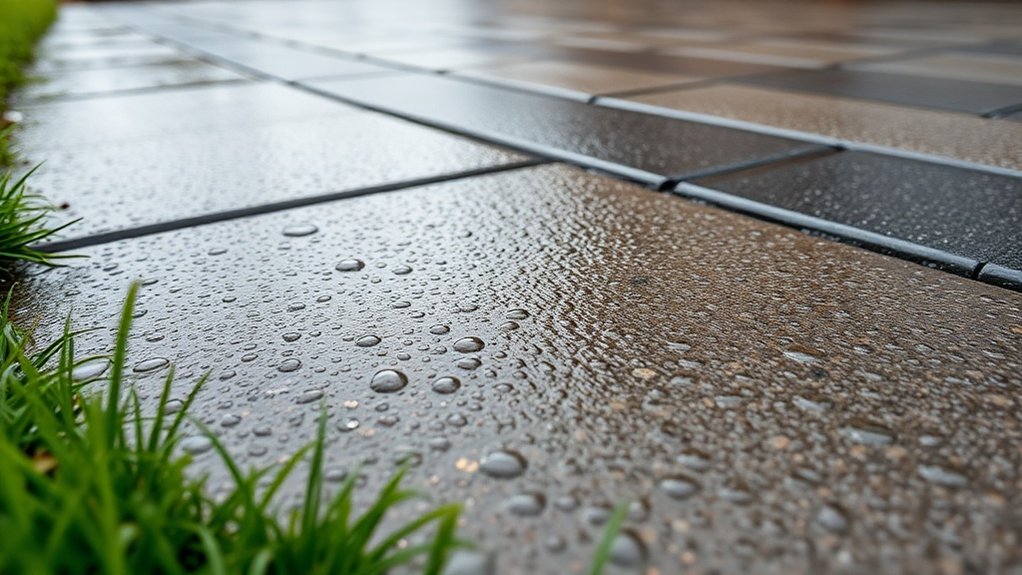
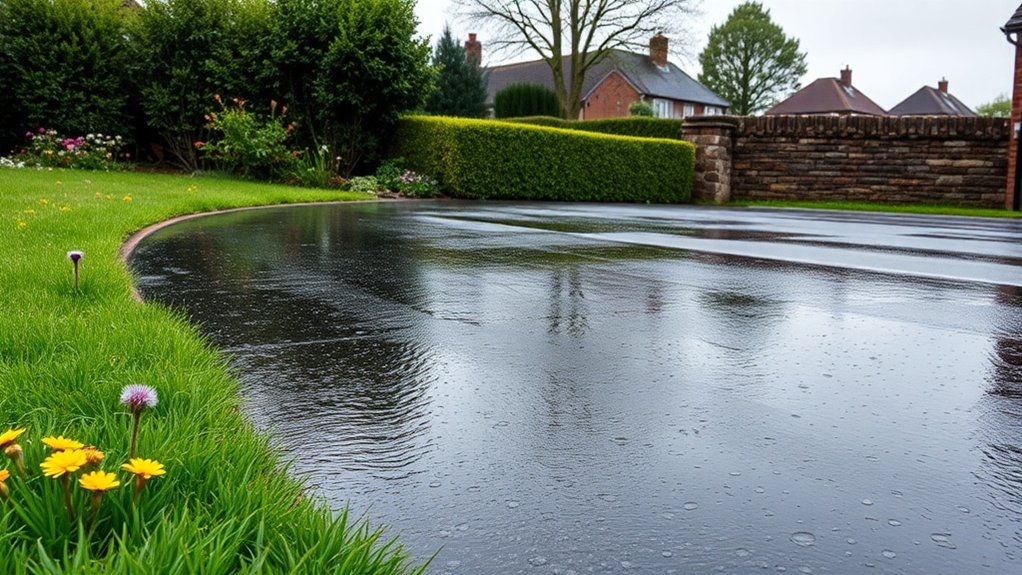
Resin driveways are a great option as they allow rainwater to flow through their porous surfaces, reducing surface pooling and improving drainage efficiency. This is particularly important for dealing with heavy rainfall. Unlike traditional tarmac or concrete, resin surfaces manage stormwater better and help recharge groundwater, which can mitigate flooding risks. The gaps between the aggregates in resin driveways also help filter out pollutants, enhancing water quality. Additionally, proper drainage design can prevent water pooling, which is essential for maintaining the longevity of the driveway.
Plus, they comply with Sustainable Urban Drainage Systems (SUDS) standards, promoting natural water redirection and easing the burden on urban drainage systems. Additionally, resin driveways can last over twenty years with minimal maintenance, making them a cost-effective choice for homeowners in Manchester’s wet weather. In Manchester’s wet weather, a resin driveway not only looks good but also supports a more sustainable environment.
Durability of Resin Driveways in Manchester’s Climate
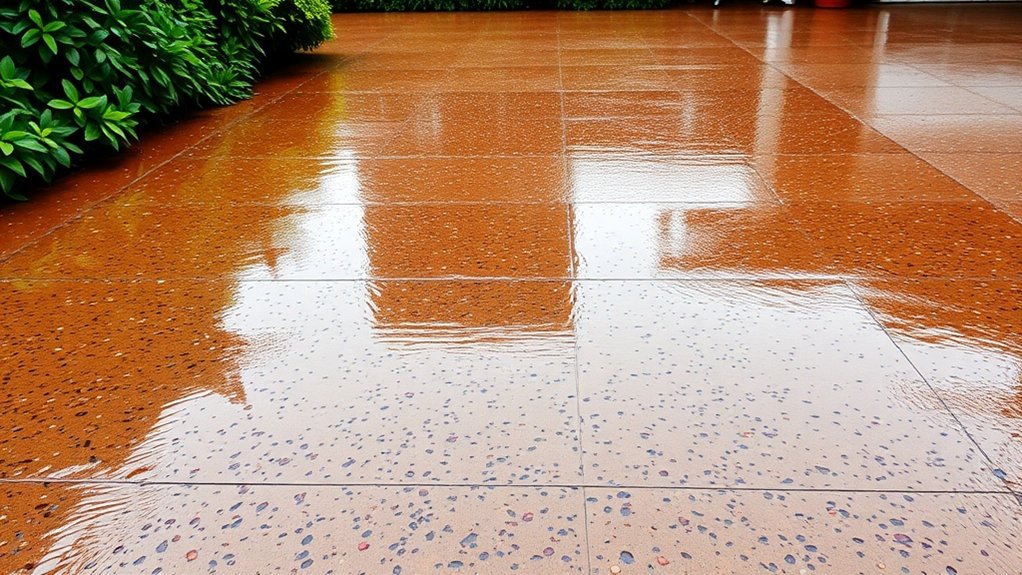
When assessing the durability of resin driveways in Manchester’s often wet and chilly climate, two key factors to consider are frost resistance and UV stability. Modern resin can handle harsh freeze-thaw cycles without cracking, and its UV-stable properties prevent fading. This means your driveway will maintain its appearance for years, making it a sensible choice for Manchester’s unpredictable weather. Additionally, the permeable nature of resin driveways allows for efficient drainage, helping to further reduce the risk of damage from standing water during heavy rains. Proper drainage solutions ensure that excess water is managed effectively, contributing to the longevity of your driveway.
Frost Resistance Benefits
Manchester’s weather is known for its relentless rain and chilly winters, but resin driveways offer impressive frost resistance and durability. Their permeable nature allows water to drain through, preventing freezing and frost damage. Unlike concrete, which can become brittle, or tarmac that may crack, resin is flexible and adapts to temperature changes, providing resilience against freeze-thaw cycles. The seamless finish means there are no joints for water to collect in, further reducing frost risk. With a lifespan of over 10-15 years, resin driveways are a reliable choice for Manchester’s unpredictable climate, ensuring a safe, slip-resistant surface all winter long. Additionally, these driveways are made from highly resistant materials that withstand the rigors of changing weather conditions, resulting in lower maintenance costs compared to traditional surfaces.
UV Stability Factors
Frost resistance is important for the durability of resin driveways, but UV stability is just as crucial in Manchester’s unpredictable weather.
UV stability protects the resin from sunlight, preventing damage and ensuring it stays strong. In an area with bursts of intense sunshine, high-quality UV-resistant resins help maintain vibrant colours and extend the lifespan of your driveway, reducing the risk of fading.
When UV protection is integrated during manufacturing, it significantly boosts the longevity of the resin, leading to less frequent maintenance.
In contrast to traditional materials that can discolour and become brittle when exposed to sunlight, UV-stable resin can endure Manchester’s mix of rain and sun.
Ideal Installation Conditions for Resin Surfaces
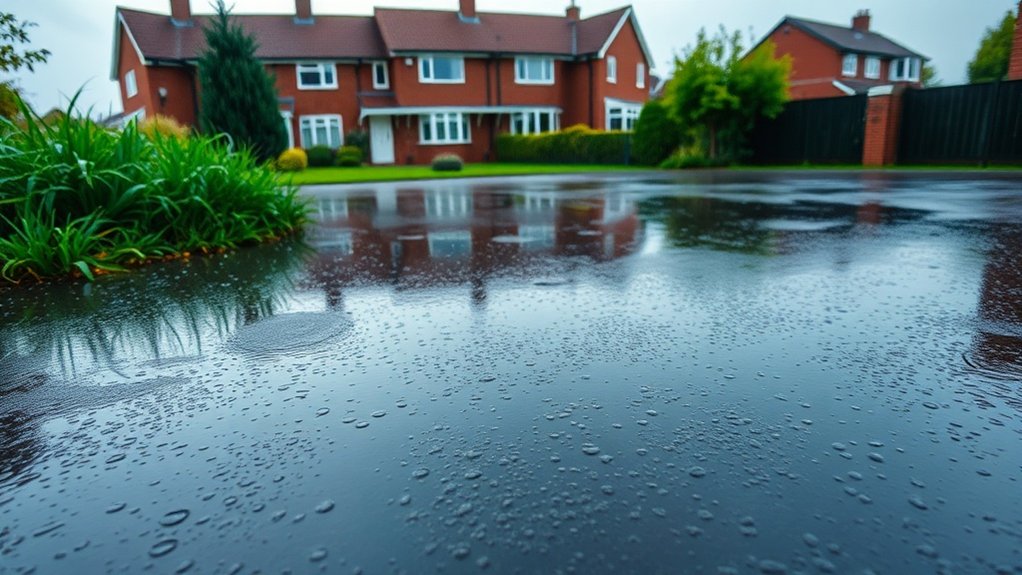
To achieve the best results for resin surfaces, it’s crucial to understand the ideal installation conditions, especially given Manchester’s unpredictable weather.
The optimal temperature for application is between 5°C and 25°C; going outside this range can cause issues like brittleness or prolonged curing times.
Ensure that the area is dry for at least 24 hours before and after installation, as moisture from rain or dew can affect adhesion and result in defects.
In colder months, consider using catalysts to improve performance.
Keep an eye on the dew point and ensure proper drainage; these steps are essential for maintaining resin quality.
Spring and autumn are generally the most reliable seasons for installation, thanks to more stable weather conditions.
Importance of Proper Sub-Base Design
When installing resin driveways, proper sub-base design is crucial for durability and stability, particularly in Manchester’s frequently damp climate.
A solid sub-base protects your driveway from water damage and movement. Here are three key factors to consider:
- Sub-base materials: Opt for MOT Type 3, which should be well-compacted and resistant to frost.
- Thickness requirements: Ensure a minimum thickness of 100mm, with deeper layers for heavier loads.
- Compaction techniques: Use vibrating plates to reach a maximum dry density of 95%, keeping any deviations within 3mm over a 1m straight edge.
Maintenance Requirements for Resin Driveways
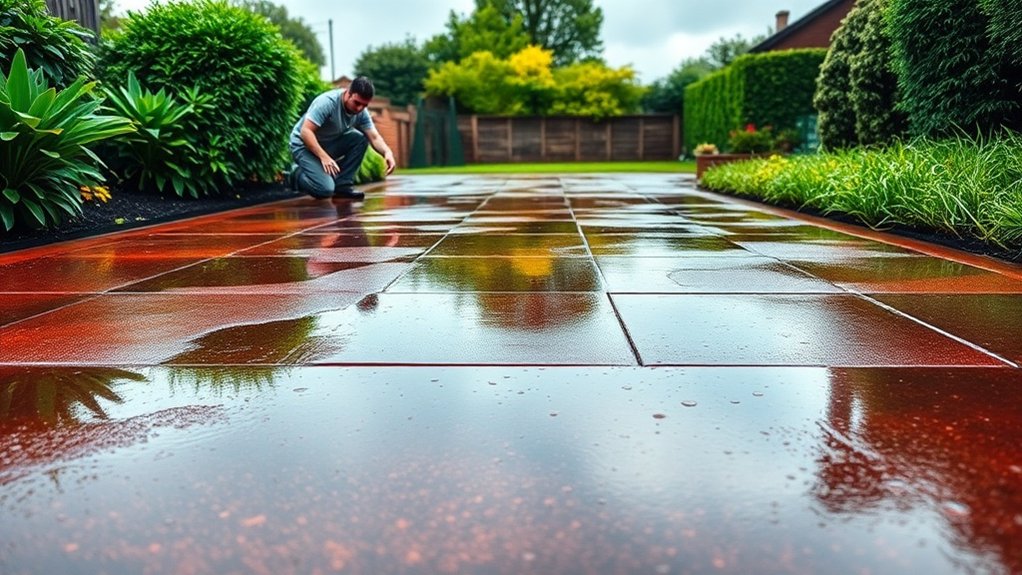
To keep your resin driveway in top condition in Manchester’s wet weather, establish a regular cleaning routine and be mindful of when to seal and restore it.
Regularly managing weeds and vegetation is also essential to prevent any growth that could damage your driveway.
Routine Cleaning Practices
Maintaining a resin driveway may seem daunting, but regular cleaning is vital for keeping it looking good and functioning well.
Here are some straightforward maintenance tips:
- Light Surface Cleaning: Every 1–2 months, especially during damp weather, clear away organic debris that encourages moss and algae.
- Thorough Wash: Once a year, give your driveway a deep clean to remove stubborn pollutants, which is also important for keeping your warranty valid.
- Spot-Cleaning: Tackle any oil or fuel spills immediately with a mild detergent to avoid staining.
Sealing and Restoration Timing
Proper timing for sealing and restoration is crucial for the longevity and appearance of your resin driveway. Aim to seal your driveway every 2-3 years, preferably in stable weather between spring and early autumn.
Ideal conditions are air and surface temperatures between 10°C and 32°C, with no rain expected for at least 24 hours after application. This ensures better adhesion and quicker drying.
Regular maintenance, including cleaning and treatment, can help your driveway last 20-25 years. By considering these timing factors, you can protect your investment against the UK’s rainy weather, keeping your driveway looking great for years.
Vegetation Management Strategies
Effective vegetation management is crucial for maintaining the integrity and appearance of your resin driveway, particularly in Manchester’s damp climate, which can encourage organic growth.
To keep your driveway in excellent condition, consider these straightforward strategies:
- Regular Sweeping: Sweep your driveway weekly to remove leaves and debris. This helps prevent long-term staining and the growth of moss.
- Pressure Washing: Use a low-pressure setting with a mild detergent once or twice a year to tackle stubborn stains and preserve the surface.
- Routine Inspections: Check your driveway weekly for early signs of moss. Clearing any debris promptly can stop it from spreading.
Performance Trade-Offs of Resin Systems
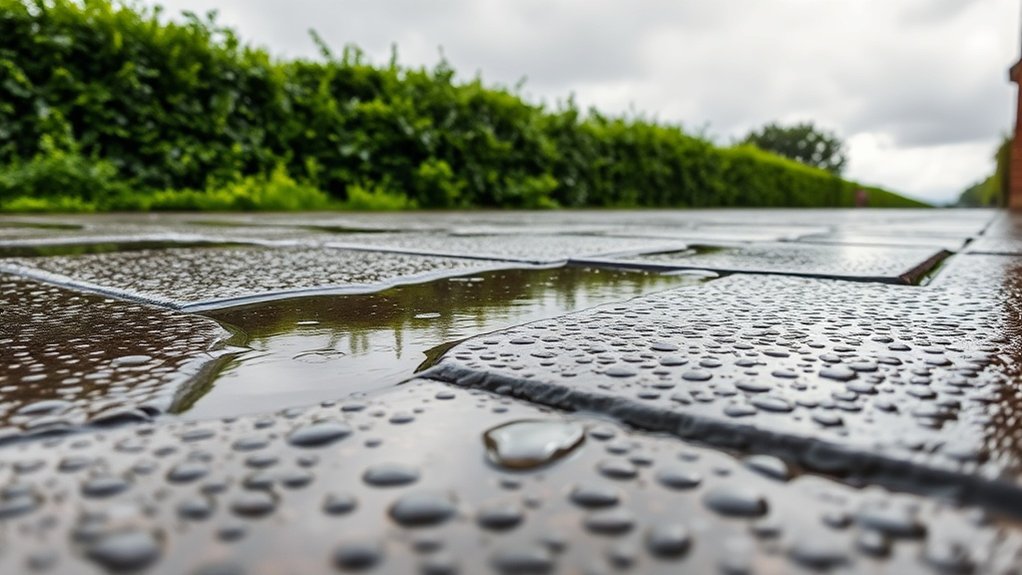
When selecting resin systems for driveways, it’s crucial to understand how performance trade-offs can affect long-term satisfaction and usability. Key factors such as installation conditions and weather resistance significantly influence the lifespan of the resin. Here’s a brief overview of the trade-offs:
| Trade-Off Factor | Impact on Performance |
|---|---|
| Installation Moisture | Poor adhesion, uneven surfaces |
| Curing Process | Discolouration and surface blemishes |
| Surface Performance | Slippery when wet |
| Temperature Fluctuations | Cracking and deformation |
Choosing the right conditions for installation is vital. Ignoring moisture levels or temperature can compromise the driveway’s durability, resulting in expensive repairs down the line. Be proactive about these factors to ensure a sturdy and lasting surface.
Environmental Impact of Resin Driveways
When considering the environmental impact of resin driveways, it’s important to highlight their sustainability benefits.
These driveways help enhance urban ecology in several ways:
- Permeability: They allow water to drain through, which reduces surface runoff and the risk of flooding.
- Recycled materials: Many resin driveways use materials like gravel and recycled tyres, which helps to lower carbon footprints.
- Local ecosystems: They filter pollutants and help replenish groundwater, improving environmental health.
In Manchester’s often rainy climate, these features are especially useful for managing flooding and promoting a healthier urban environment.
Choosing a resin driveway not only enhances your property’s appearance but also positively impacts the community’s ecological balance.
Regulatory Considerations for Installation
When considering a resin driveway, it’s important to understand not just its environmental benefits, but also the regulatory requirements for installation.
Generally, you won’t need planning permission if your resin bound driveway is permeable and directs water to an appropriate area. However, if you’re replacing more than 5 square metres with non-permeable materials, you’ll likely need to seek approval.
If your property is located in a conservation area or is listed, you should check for any specific permissions required.
Compliance with Sustainable Drainage Systems (SUDS) is crucial; ensure that your installation includes a porous subbase to effectively manage surface water.
In some cases, particularly for larger projects, local councils may ask for a drainage statement.
Always verify local regulations and guidelines to avoid any unexpected issues during your installation.
Common Installation Challenges in Wet Weather
Installing resin driveways in Manchester can be tricky due to the area’s unpredictable weather.
Moisture contamination and fluctuating temperatures pose significant challenges. It’s crucial to prepare surfaces thoroughly, as even a bit of dampness can weaken the bond between the resin and the aggregate.
Timing your installation to dodge rain and ensuring temperatures are just right are key to achieving a strong, high-quality finish.
Moisture Contamination Risk
Moisture contamination is a serious concern when installing resin driveways, especially in Manchester’s often rainy weather. The impact of moisture can lead to several problems:
- Too much moisture can prevent proper curing, resulting in weak surfaces that wear out quickly.
- Rain during the installation process can create clouding, leading to an unattractive finish that affects your driveway’s overall look.
- Contaminants from wet conditions can cause discolouration and brittleness, further shortening the lifespan of your driveway.
To ensure a successful installation, it’s essential to keep an eye on the weather forecast and take protective measures.
Using washed aggregates and laying on a permeable sub-base can help reduce these risks, maintaining both the durability and appearance of your resin driveway, even in challenging conditions.
Temperature and Timing Issues
Installing resin driveways in Manchester can be tricky due to the region’s wet weather. The ideal temperature for installation is between 20°C and 25°C. If it drops below 10°C, the resin may cure unevenly, leading to imperfections.
On the other hand, temperatures above 25°C can cause the resin to set too quickly, resulting in defects.
Timing is also crucial; aim for a minimum of 24 hours without rain after installation. Unexpected rain can weaken the bond between the resin and aggregate, causing surface problems.
To minimise these risks, it’s best to plan installations during the summer or milder seasons and keep an eye on the weather forecast. This strategy helps avoid moisture issues, ensuring a strong and attractive driveway.
Surface Preparation Importance
Proper surface preparation is crucial for successful resin driveway installations, particularly in Manchester’s often wet climate. To ensure durability and visual appeal, consider these essential points:
- Dry Substrate: Allow a dry period of 24 to 48 hours before installation. This helps maintain substrate integrity and ensures strong adhesion.
- Moisture Management: Keep a close eye on surface moisture; even slight dampness can weaken the resin mixture, compromising the structure.
- Curing Conditions: After installation, aim for at least 24 hours without rain. This allows the resin to harden properly, preventing issues like bubbling or discolouration.
Cost Comparison: Resin vs. Traditional Surfaces
When considering a new driveway, resin surfaces can be a cost-effective choice compared to traditional materials. On average, resin costs between £80 and £170 per square metre, while tarmac and concrete are around £90 to £100.
Although resin may have higher upfront costs, its durability can lead to savings on long-term maintenance.
Installation is also a factor; resin requires careful preparation and can take 2 to 5 days to install, which may impact overall costs. For example, a small resin driveway typically ranges from £1,200 to £2,800.
While block paving may start at a lower price, it often comes with higher maintenance costs. In the end, although traditional surfaces might seem cheaper initially, resin’s longevity can offer better value over time.
Long-Term Longevity and Lifecycle Costs
While many homeowners prioritise initial costs, the long-term durability and lifecycle expenses of resin driveways present a strong financial case.
Here are some key points to consider:
- Resin driveways can last 15-25 years with proper maintenance, significantly outlasting concrete, which typically lasts around 10 years.
- Maintenance is straightforward—just occasional sealing and sweeping—keeping costs low and potentially extending the lifespan beyond 25 years.
- Their weather-resistant features protect against heavy rain, frost, and UV damage, leading to lower repair costs over time.
Investing in a resin driveway could save you money in the long run.
Enhancing Aesthetics and Performance Through Care

To keep your resin driveway in top condition and performing well, regular maintenance is key. A simple clean with warm soapy water and a stiff brush will maintain its texture and boost its visual appeal.
An annual power wash not only extends its lifespan but also helps uphold your warranty. Resealing every few years revitalises the surface, ensuring it retains its attractive look.
In Manchester’s damp climate, managing weeds and moss is crucial to keep your driveway looking pristine. Addressing minor repairs quickly enhances performance and prevents bigger issues down the line.
With a wide range of colours and designs available, you can easily boost your property’s kerb appeal and value with minimal effort, impressing both neighbours and visitors.
Frequently Asked Questions
Can Resin Driveways Handle Manchester’s Heavy Snowfall?
Yes, resin driveways can cope with Manchester’s heavy snowfall. Their permeable design helps prevent snow build-up, allowing water to drain away easily. They require minimal maintenance during winter and are both durable and flexible, meaning they won’t crack or suffer damage from the weight of snow.
How Do Resin Driveways Perform in Extreme Heat?
In extreme heat, resin driveways perform exceptionally well thanks to their heat resistance and UV stability. They maintain their structural integrity without softening, making them a reliable choice. You’ll find that they remain durable and flexible, even under intense sun exposure, ensuring a long-lasting surface for your home.
Are There Color Options Available for Resin Driveways?
Yes, resin driveways come in a broad range of colours, giving you plenty of design flexibility. You can opt for natural shades like gravel greys or earthy browns, or go for more vibrant colours to make a statement. This variety allows you to create a look that perfectly complements your home and its surroundings.
What Happens if My Resin Driveway Gets Damaged?
If your resin driveway gets damaged, there’s no need to worry! You can repair it through methods like patching or applying overlays. To maintain its appearance and longevity, make sure to clean it regularly and ensure proper drainage.
How Long Does the Installation Process Take?
The installation process for a resin driveway usually takes between 1 to 5 days, depending on its size. Preparation work, such as clearing the area and ensuring proper drainage, can lengthen this timeline, particularly if the weather is not cooperating. For example, heavy rain could delay the groundwork needed before laying the resin.
Conclusion
In Manchester’s wet climate, resin driveways can be a solid choice if installed and maintained properly. It’s true what they say: “You get what you pay for.” Investing in a high-quality sub-base and ensuring proper drainage will help your driveway last, even in persistent rain. With proper care, a resin driveway can not only boost your home’s appearance but also provide practical benefits. Don’t let the rain put you off; a well-made resin surface can be a durable and attractive option for your property.
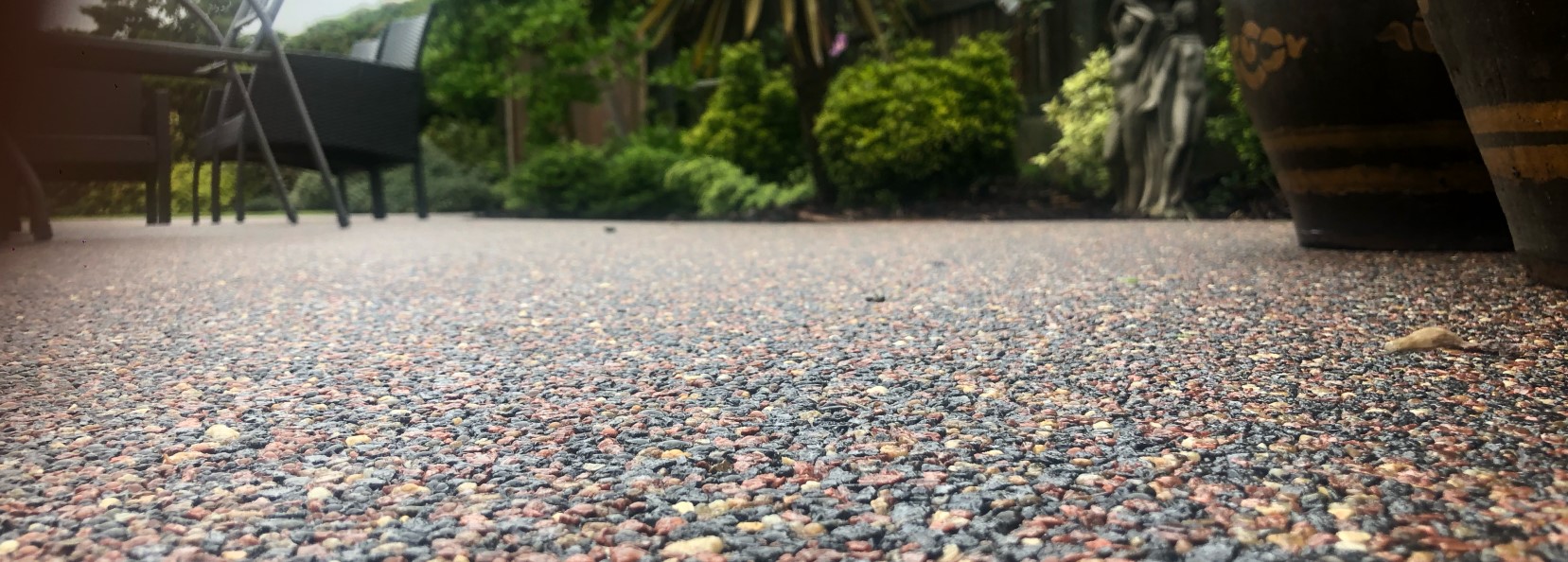
Whilst it is true that there are certain conditions required in order to lay a resin bound stone patio, pathway Read more
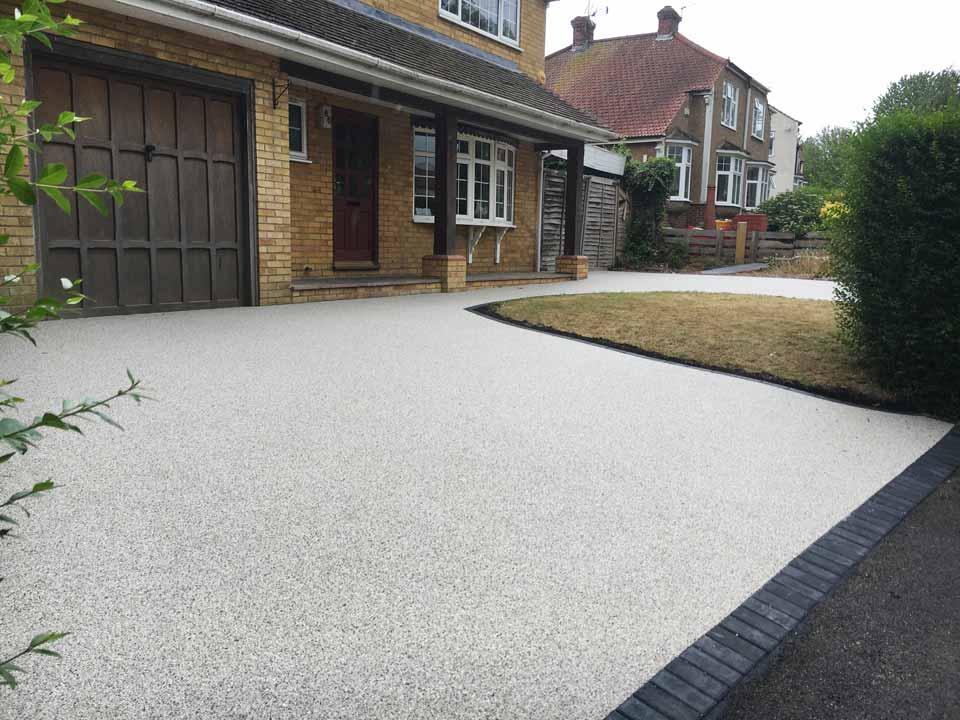
If your driveway is looking old and tired, a new one can help revamp your property. Modern driveways are available Read more
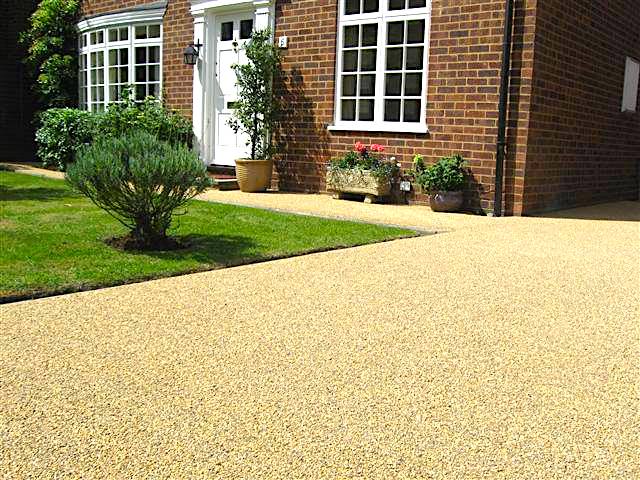
APPROVED RESIN BOUND DRIVEWAY INSTALLERS LOCAL TO YOU! Find out More Get in Touch Get a Free Quote Book an Read more