
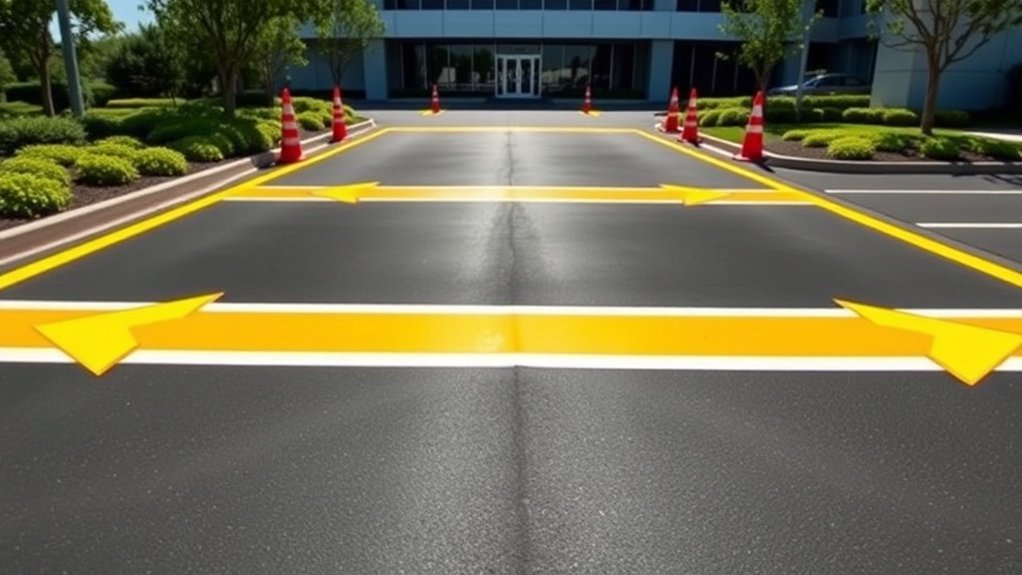
To achieve optimal driveway marking for commercial spaces, ensure compliance with local regulations and visibility standards. Use high-reflective materials such as thermoplastic and LED markers to enhance safety. Design layouts with sufficient width and turning radii, clearly indicating pedestrian crossings. Regular inspections and maintenance are essential to prevent wear and tear. Incorporating innovative technology can streamline the marking process, ensuring precision and durability. For more practical tips on optimising your driveway markings, read on.
Key Takeaways
- Use thermoplastic markings for durable, low-maintenance solutions in busy commercial driveways.
- Implement high-visibility patterns like zebra crossings to enhance pedestrian safety at junctions.
- Regularly check and maintain markings to prevent fading and ensure they comply with safety regulations.
- Utilise GPS technology for accurate layout and robotic pre-marking to boost efficiency and minimise errors.
- Opt for reflective materials, such as aluminium or LED markers, to improve visibility in low-light conditions.
Understanding Driveway Marking Regulations
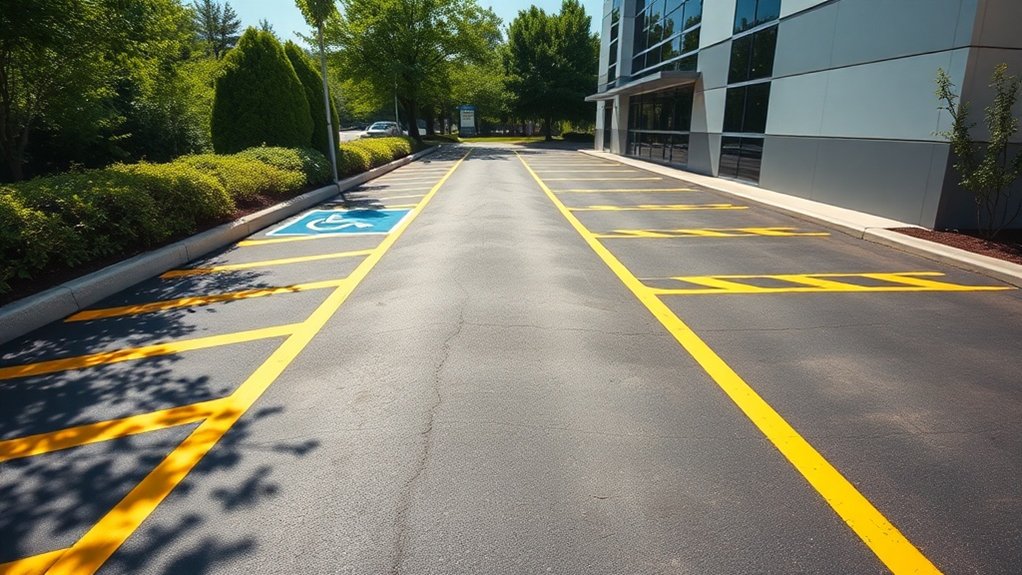
How familiar are you with the regulations regarding driveway markings?
It’s essential to understand the compliance requirements in your local area, as these can differ significantly. Generally, local regulations may be stricter than national standards, covering specifics like colour and marking requirements. Before you begin any construction or alterations, it’s necessary to obtain a driveway approach permit from your local council or transport officials. You must comply with both national building regulations and local ordinances for your driveway to be legal. Additionally, guidance from the Department for Transport can influence local codes to ensure they meet access management standards. Always keep yourself informed about these regulations to avoid fines and ensure your driveway markings are legally compliant. Furthermore, verifying that traffic stripes and pavement markings are correctly located during layout checks is crucial for compliance.
Ensuring Visibility and Reflectivity

To ensure your driveway markings are effective, you must adhere to the minimum retroreflectivity standards set by the Department for Transport. Using high-visibility materials not only improves safety but also significantly reduces the likelihood of accidents at night. Regular upkeep and remarking will keep your markings bright and clear, even in low-light conditions. Additionally, incorporating fiberglass driveway markers can enhance durability and visibility, providing a long-lasting solution for commercial spaces.
Minimum Retroreflectivity Standards
Ensuring compliance with minimum retroreflectivity standards is crucial for safe driving conditions on public roads.
The relevant authorities in the UK require that road markings on routes with speed limits of 56 km/h (35 mph) or higher meet specific retroreflectivity levels. Here’s what you need to know for effective compliance:
- Aim for a retroreflectivity level of 50 mcd/m²/lx for roads with speed limits of 56 km/h or higher and an average daily traffic (ADT) of 6,000 vehicles or more.
- For roads with speed limits of 112 km/h (70 mph) or above, the required level is 100 mcd/m²/lx.
- Use standardised angles for retroreflectivity measurement to ensure accurate readings.
- Carry out regular assessments to monitor compliance over time.
- Keeping records of any exemptions that may apply due to traffic volume or environmental factors is essential, as new retroreflectivity standards have been established to enhance safety and support the operation of Autonomous Driver Assisted Systems (ADAS).
High-Visibility Material Recommendations
Selecting the right high-visibility materials for marking your driveway is crucial for safety and clear communication with drivers. Consider using high-contrast materials, such as orange fiberglass markers or reflective aluminium, combined with tape for enhanced visibility. Here’s a quick comparison of recommended materials:
| Material Type | Key Features |
|---|---|
| Fiberglass Markers | High contrast, weather-resistant |
| Aluminium Markers | Strong, reflective options |
| LED Markers | Solar-powered, night visibility |
| Reflective Tapes | High reflectivity, easy to apply |
| Thermoplastic Markings | Long-lasting, low maintenance |
To boost reflectivity, you can incorporate reflective coatings or additives like glass beads. This ensures your driveway markings remain visible both day and night, enhancing safety for everyone.
Designing an Effective Driveway Layout
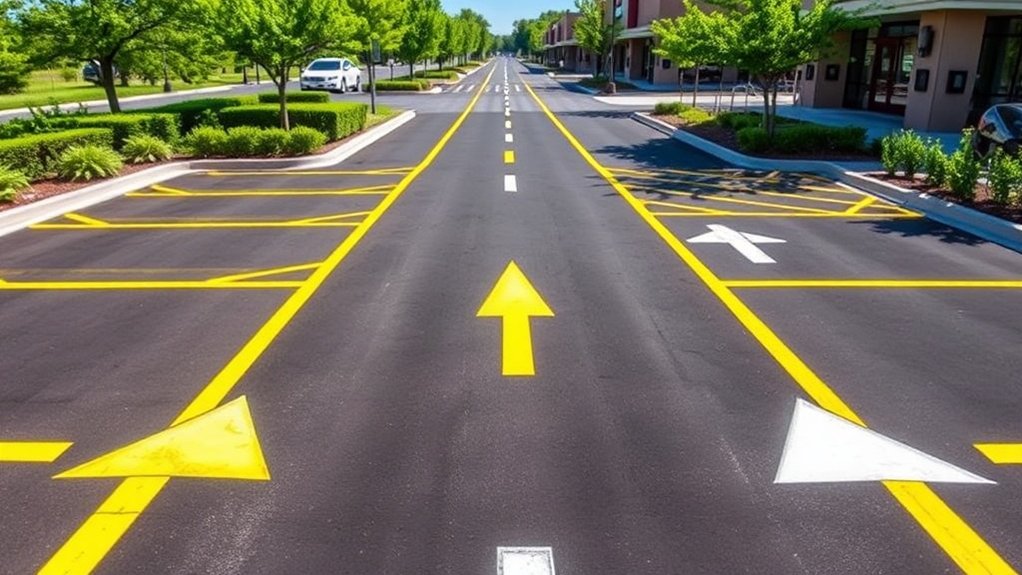
Designing an effective driveway layout requires careful thought to ensure both functionality and safety. Here are some essential factors to consider:
- Ensure a minimum width of 6 metres for two-way driveways; 8.5–12.5 metres is preferable for low to medium traffic.
- Maintain turning radii of 9–15 metres for larger vehicles, allowing for safe and easy manoeuvrability.
- Limit the number of access points to help reduce congestion and potential conflicts.
- Design slopes to be no steeper than 7%-9% to promote smooth vehicle movement and proper drainage.
- Maximise sight distance by placing driveways away from sharp bends and steep inclines.
These guidelines will help create a driveway that’s both practical and safe for all users.
Choosing the Right Marking Colors and Patterns
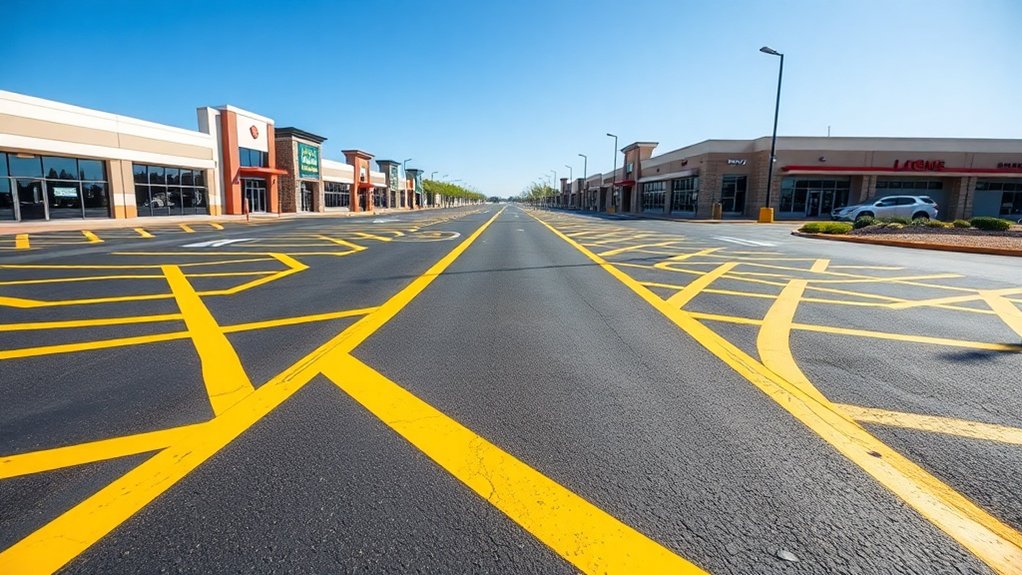
A well-designed driveway layout is essential for a property’s functionality, but selecting the right marking colours and patterns is crucial for effective traffic management. Understanding colour psychology can help you choose shades that enhance visibility and delineation. Here’s a quick guide for marking colours and their uses:
| Colour | Usage |
|---|---|
| White | Parking spaces, pedestrian crossings |
| Yellow | Fire lanes, no parking zones |
| Blue | Disabled parking |
| Red | Fire lanes, stop areas |
Using standardised colours ensures consistency in markings, reducing confusion and improving traffic flow. High-contrast colours like white and yellow stand out against dark tarmac, making it easier for drivers to navigate and comply with regulations, while also prioritising safety.
Implementing Safety and Compliance Features
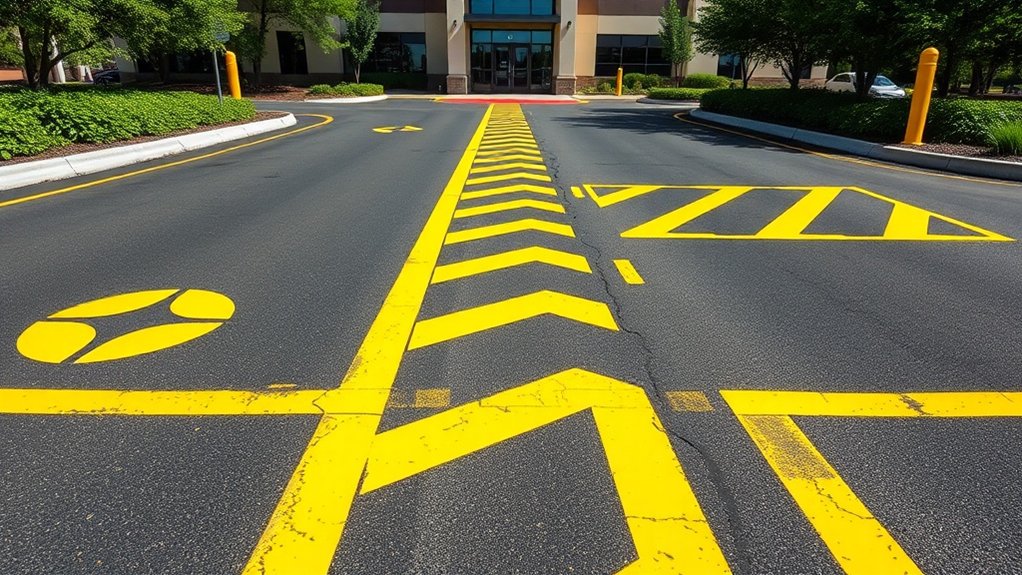
When implementing safety and compliance features, it’s essential to establish clear pedestrian crossings and markings for restricted areas.
These elements guide both vehicles and pedestrians, helping to minimise the risk of accidents. Following regulatory standards ensures that your driveway markings enhance safety while complying with local regulations.
For example, using bright, visible paint for crossings can significantly improve awareness among drivers and walkers alike.
Clear Pedestrian Crossings
Ensuring clear pedestrian crossings is crucial for improving safety in urban areas. Here are some key techniques to enhance crosswalk visibility and pedestrian safety:
- Use retroreflective materials to ensure high visibility in low-light conditions.
- Position pedestrian crossing signs in line with UK regulations for unobstructed views.
- Choose high-visibility patterns such as zebra stripes, making sure markings are at least 45 cm wide.
- Install pedestrian crossing signals at uncontrolled crossings to alert drivers.
- Regularly maintain signage and markings to prevent fading and ensure they’re clear.
Restricted Area Markings
Clear pedestrian crossings are essential for safe navigation in urban areas. Equally important are restricted area markings that manage vehicle movement and ensure compliance. To ensure proper curb marking and effective restricted zone designation, follow these best practices:
| Marking Type | Colour | Standard Width |
|---|---|---|
| No Parking Zone | Yellow | 10-15 cm |
| Fire Lane | Yellow | 15 cm |
| Accessible Parking | Blue | 10-15 cm |
| Speed Bump | Yellow | 15 cm |
| Directional Arrows | Yellow | 10-15 cm |
Implementing these strategies helps maintain safety and compliance, providing clear communication for drivers while preventing unauthorised access. Always adhere to local regulations for effective restricted area management.
Maintenance and Inspection Best Practices

Regular maintenance and inspection are crucial for keeping your driveway safe and in good condition.
By following a straightforward maintenance checklist and sticking to a proper inspection schedule, you can avoid small issues turning into costly repairs.
- Inspect for cracks, potholes, and debris weekly
- Conduct monthly visual checks to spot minor problems early
- Carry out seasonal reviews to identify water pooling and fading markings
- Complete detailed annual assessments to evaluate the surface condition and when to replace markings
- Ensure thorough cleaning of the surface before any striping work begins
Utilizing Technology for Marking Efficiency
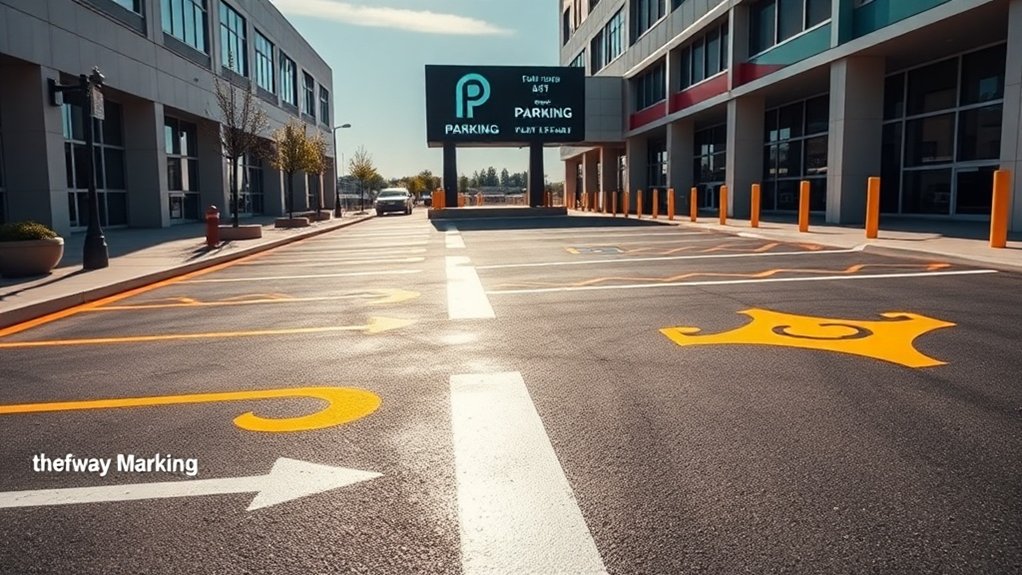
How can technology transform the efficiency of driveway marking? By employing GPS technology and robotic pre-marking solutions, we can significantly enhance both precision and speed. With RTK GPS systems, you can achieve sub-inch accuracy, which helps to minimise errors in line placement. Robotic pre-marking robots work alongside GNSS, ensuring precise positioning while considerably reducing labour requirements.
| Technology Type | Benefits |
|---|---|
| GPS Technology | Sub-inch accuracy, real-time corrections |
| Robotic Pre-Marking | Improved efficiency, error reduction |
| Thermoplastic Systems | High durability, low maintenance |
| Traffic Tape Solutions | Enhanced reflectivity, reduced waste |
| Material Science | Reliable visibility, consistent performance |
Enhancing Driver Awareness With Innovative Techniques

Driver awareness is crucial for road safety, and innovative marking techniques significantly enhance visibility and help reduce accidents.
Advanced edge line safety measures can notably lower crash rates, especially at night.
- Use wider edge lines for improved visibility.
- Ensure high contrast in markings for effective visibility during the day and night.
- Opt for thermoplastic materials for their durability and retroreflectivity.
- Maintain retroreflectivity standards to ensure long-lasting visibility.
- Use continuous markings to improve detection performance.
These methods can make our roads safer for everyone.
Frequently Asked Questions
What Are the Costs Associated With Commercial Driveway Markings?
The cost of commercial driveway markings in the UK varies based on several factors, including size, surface condition, and any required treatments. Typically, you can expect to pay between £0.02 and £0.90 per square foot. Prices may differ depending on your location and the specifics of your project. For instance, a larger driveway or one that needs extensive preparation will likely incur higher costs.
How Often Should Driveway Markings Be Repainted?
Driveway markings should be repainted every 12 to 24 months, depending on factors like traffic levels and weather conditions. Regular upkeep ensures that markings remain visible and safe. For instance, if your driveway sees a lot of vehicles or is exposed to harsh weather, you might need to repaint more frequently. Keeping an eye on these factors helps maintain compliance and safety.
Can I Use Temporary Markings for Special Events?
Yes, you can use temporary markings for special events. Temporary paint is useful for guiding traffic and parking, helping to keep your event safe and organised without making permanent changes. For instance, if you’re hosting a festival, you can mark out designated areas for food stalls or emergency access routes. This ensures that everyone knows where to go and what to do, making the event run smoothly.
Are There Eco-Friendly Options for Driveway Marking Materials?
Yes, there are eco-friendly options for marking driveways. For example, some biodegradable paints utilise sustainable materials like soy, significantly reducing their environmental impact. These alternatives offer durability while minimising harmful chemicals that can affect our atmosphere and water supplies.
What Permits Are Needed for Commercial Driveway Markings?
Before marking commercial driveways, you’ll need to obtain an encroachment permit. Ensure you adhere to regulatory requirements and complete the application process, which includes providing site plans and proof of insurance. This will help you avoid penalties for any unauthorised work.
Conclusion
Effective driveway marking techniques are essential for safety and efficiency in commercial spaces. By following regulations, enhancing visibility, and selecting appropriate colours and patterns, you can create a well-organised environment that increases driver awareness. Regular maintenance and the integration of technology will ensure your markings remain clear and distinct. Ultimately, investing in these strategies not only improves safety but also enhances the professionalism of your property. For example, using bright yellow for loading zones and clear white lines for parking bays can significantly improve navigation for drivers.
Planning a commercial driveway for heavy traffic requires careful consideration of key factors—discover essential design strategies that can elevate your Read more

Professional-grade resin-bound driveways offer durability and customization, but are they truly the best investment for your business? Discover the potential Read more

Achieving effective commercial driveway drainage requires understanding regulations and best practices that ensure safety, efficiency, and compliance—learn how to optimize Read more