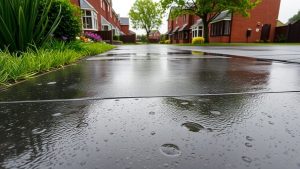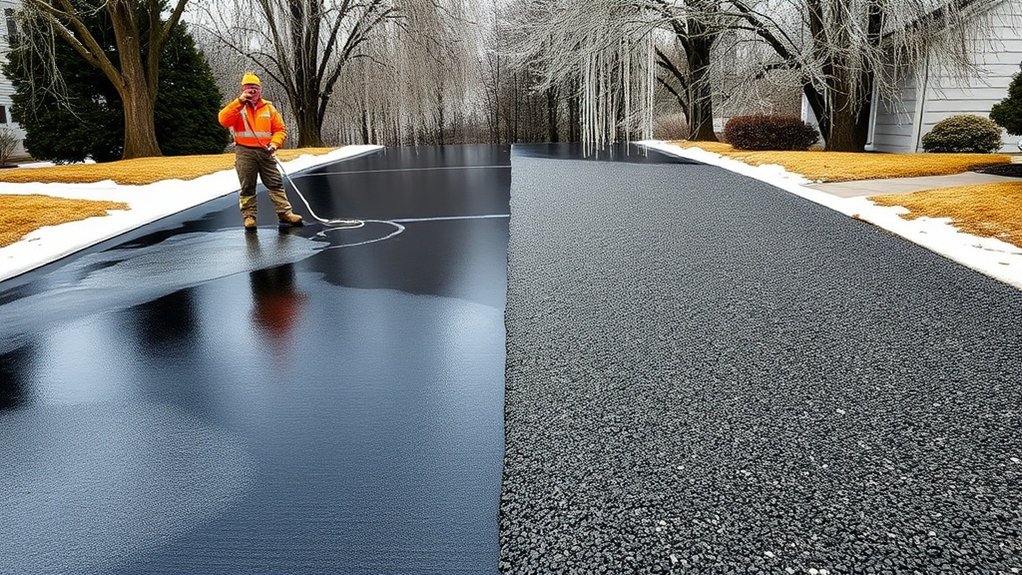
Yes, you can seal a driveway in cold weather, but there are pros and cons to consider. The benefits include protection against freeze-thaw cycles, which can help prolong your driveway’s life. However, low temperatures can affect how well the sealant adheres, potentially leading to peeling or cracking later on.
Proper preparation is crucial. This means thoroughly cleaning the driveway and choosing the right sealant designed for colder conditions. By taking these factors into account, you can ensure a successful application and make the most of sealing your driveway in winter. Keep in mind that the conditions must be suitable for the sealant you choose.
Key Takeaways
- Sealing driveways in cold weather can help protect against freeze-thaw cycles, potentially extending the lifespan of your driveway by up to 25%.
- However, low temperatures can lead to poor adhesion, risking the effectiveness of the sealant and resulting in peeling or cracking.
- Longer curing times may allow dirt or debris to contaminate the sealant, compromising its integrity.
- It’s advisable to use sealants specifically formulated for cooler conditions to ensure proper bonding and flexibility.
- For a successful sealing project in cold weather, ensure the surface is well prepared and keep an eye on the weather conditions.
Understanding Temperature Requirements for Driveway Sealing
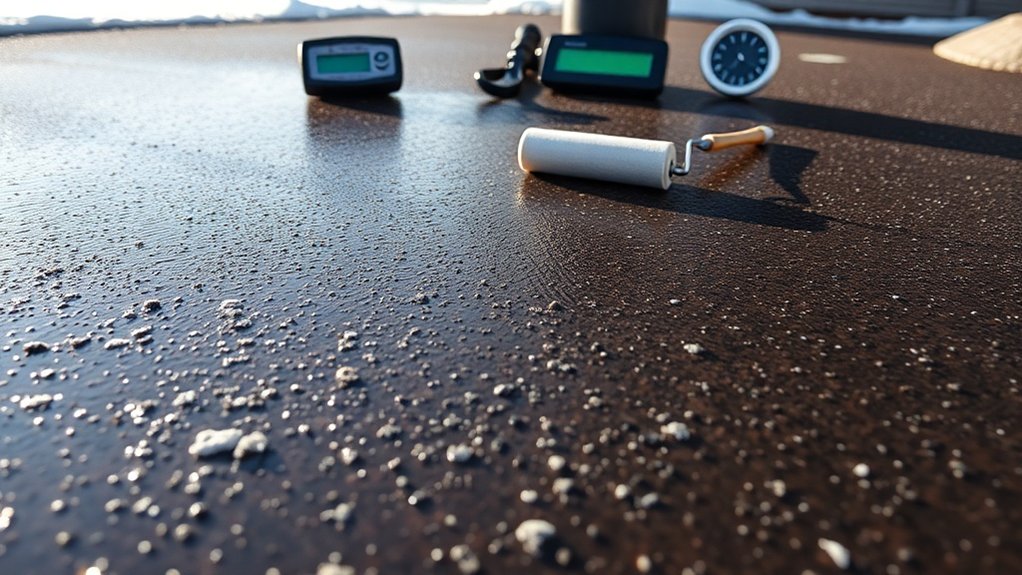
When sealing a driveway, it’s crucial to know the temperature requirements to ensure a successful application. The effectiveness of different sealers can vary with temperature, so understanding the ideal conditions is key.
Aim for temperatures between 24°C and 32°C (75°F to 90°F) for the best adhesion. Avoid sealcoating if air or surface temperatures are below 10°C (50°F). However, specific sealers like Latexite Therma Seal can be applied as low as 4°C (40°F). Be cautious with solvent-based sealers; they should only be used by experienced contractors at temperatures down to -6°C (20°F). It’s also important to keep the temperatures above the minimum for 24 to 48 hours after application to prevent issues like peeling or flaking. Additionally, ensure that the sealcoating season aligns with the weather conditions for optimal results.
Advantages of Sealing Driveways in Cold Weather
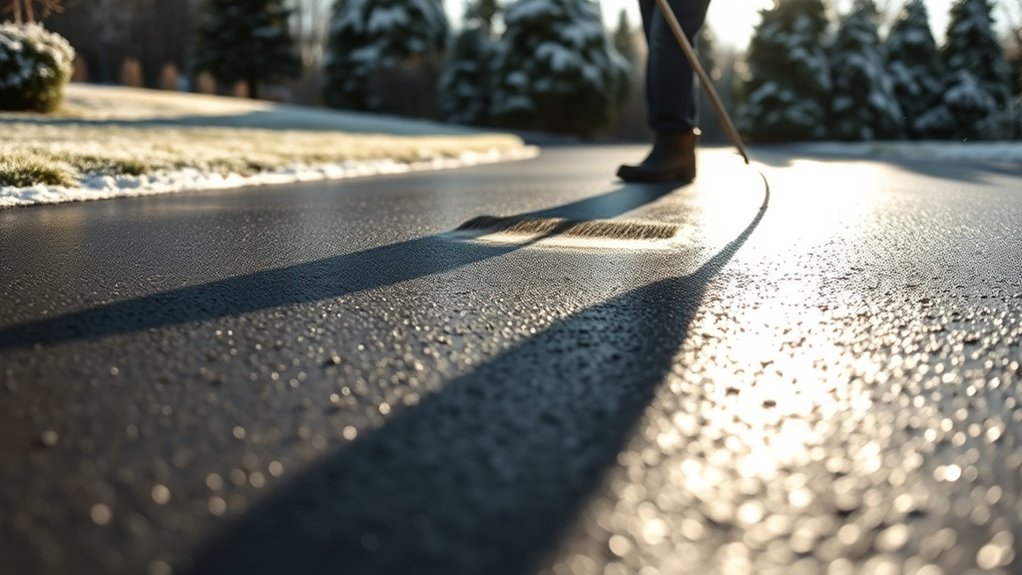
Sealing your driveway during cold weather can offer several important benefits that help protect your investment and prolong its life.
Here are three key advantages:
- Increased Driveway Longevity: Seal coating acts as a protective layer, preventing cracks caused by freeze-thaw cycles and potentially extending the lifespan of your asphalt by up to 25%.
- Cost Savings: By sealing your driveway proactively, you can avoid expensive repairs due to water damage and reduce the need for emergency fixes, ultimately saving money over time.
- Aesthetic Enhancement: A newly sealed driveway presents a smooth, deep black finish, which can boost your property’s curb appeal and market value, making it look more attractive and welcoming. Additionally, effective drainage solutions play a crucial role in maintaining the integrity of your driveway during cold weather.
Disadvantages of Sealing Driveways in Cold Weather
Sealing driveways in cold weather comes with notable drawbacks, particularly poor adhesion and longer curing times.
Low temperatures can prevent the sealant from bonding properly with the asphalt, leaving your driveway at risk of damage. For instance, if the sealant isn’t applied correctly, it could peel or crack, exposing the surface to the elements. Additionally, protection against elements is compromised when sealcoating is performed under unfavorable conditions, as the sealant may not provide adequate coverage against future weather-related damage. Moreover, the extended curing time increases the likelihood of contamination from dirt or debris, as well as weather-related issues like rain or frost before the sealant has had a chance to fully set. This is especially critical because freeze-thaw cycles can exacerbate damage, leading to further deterioration of the driveway.
Poor Adhesion Risk
Sealing a driveway in cold weather might seem wise for protection, but the risk of poor adhesion can seriously undermine the sealant’s effectiveness. Low temperatures reduce the bond strength, jeopardising the driveway’s integrity.
Consider these key issues:
- Weak Bonding: When temperatures drop below 10°C (50°F), the sealant binder hardens, making it tough to form a solid layer. This increases the likelihood of peeling and flaking.
- Surface Vulnerability: A poorly adhered sealant leaves gaps, allowing moisture and chemicals to penetrate, which speeds up deterioration.
- Durability Concerns: Sealants applied in cold conditions tend to have a shorter lifespan and are more susceptible to cracking or flaking during regular use.
Additionally, applying a sealant during cold weather can hinder proper tarmac sealant application, leading to further issues down the line. Disregarding these factors can lead to expensive repairs and more frequent reapplications, ultimately negating your investment in driveway protection.
Extended Curing Times
Extended curing times are a notable downside of sealing driveways in cold weather. When temperatures drop below 13°C (55°F), curing can take 50-100% longer, turning what should be days into weeks.
This delay affects the consistency of the cure, leaving sealants tacky and susceptible to contamination from dust and foot traffic. The necessary chemical reactions for hardening are slowed down, resulting in a softer surface that may not reach maximum hardness until warmer temperatures arrive.
Fluctuating temperatures and high humidity further increase the risk of damage from premature traffic, as the sealant remains soft for longer.
Essential Preparation Steps for Cold Weather Sealing
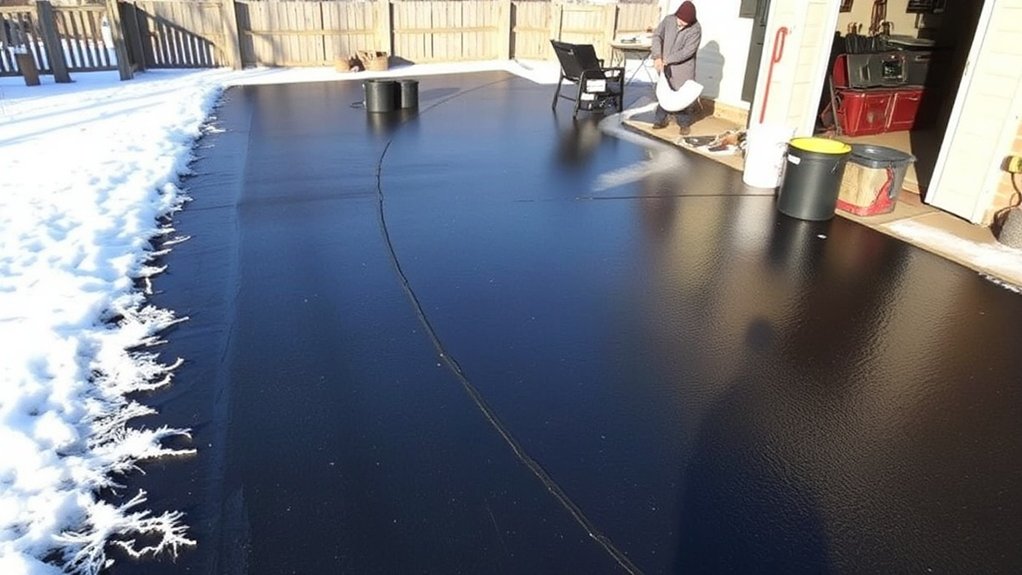
Before sealing your driveway in cold weather, it’s essential to ensure it’s thoroughly cleaned and free of moisture for proper adhesion.
Check for any cracks or potholes and repair them to prevent further damage.
These crucial steps lay the groundwork for a successful application of sealant, even when temperatures are less than ideal.
Driveway Cleaning Importance
Cleaning your driveway is essential for proper preparation before applying cold weather sealant.
Maintaining your driveway ensures a strong bond between the sealant and the surface, which extends its lifespan.
Here are three key reasons why cleaning is important:
- Debris Removal: Clearing away leaves, dirt, and organic matter prevents issues with sealant adhesion and helps avoid discolouration.
- Crack Inspection: Checking for cracks allows for quick repairs, reducing water infiltration during freeze-thaw cycles.
- Optimal Surface Preparation: A thorough clean, including power washing, creates a smooth surface for effective sealant application.
Taking these steps will help protect your driveway and maintain its appearance.
Moisture Removal Techniques
Moisture control is essential when sealing your driveway in cold weather. Start by removing any standing water using a squeegee or absorbent towels. A leaf blower can help dislodge moisture from pores and cracks effectively.
Allow time for natural evaporation, particularly in shaded areas. Use fans or air movers in poorly ventilated spaces to speed up drying. Always check for hidden moisture with a moisture meter or by looking for damp spots.
Avoid sealing if dew is present, and ensure the surface temperature is at least 10°C (50°F) and rising. By managing moisture and employing effective drying techniques, you’ll improve the chances of a successful driveway sealing project.
Repairing Cracks and Potholes
Inspecting your driveway for cracks and potholes is crucial to ensure a successful sealing process, especially in cold weather.
Here’s a straightforward guide to making effective repairs:
- Clean out cracks and potholes to remove any debris and contaminants.
- Use quality fillers for cracks and the right patching mix for potholes, ensuring the surfaces are dry for proper adhesion.
- Allow repairs to cure fully—usually 24-48 hours—before applying sealant.
Application Techniques for Cold Weather
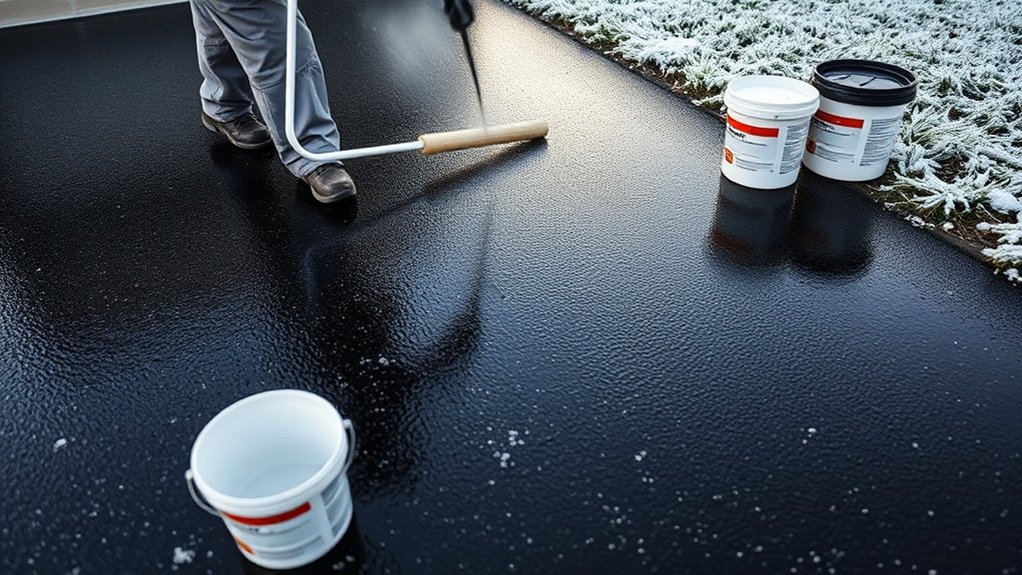
Sealing a driveway in cold weather requires careful application techniques to ensure proper adhesion and durability. Here are some effective methods to consider:
| Technique | Description | Purpose |
|---|---|---|
| Thinner Layers | Apply thinner layers of sealant to speed up drying. | Reduces tracking and creates a smoother finish. |
| Specialised Additives | Use sealant additives containing evaporating solvents. | Helps the sealant dry quicker in cooler temperatures. |
| Proper Temperature | Ensure the pavement temperature is above 10°C (50°F). | Improves adhesion and curing process. |
| Avoid Poor Conditions | Do not seal before rain or when temperatures are below freezing. | Prevents sealant failures and ensures longevity. |
Impact of Cold Weather on Sealant Performance
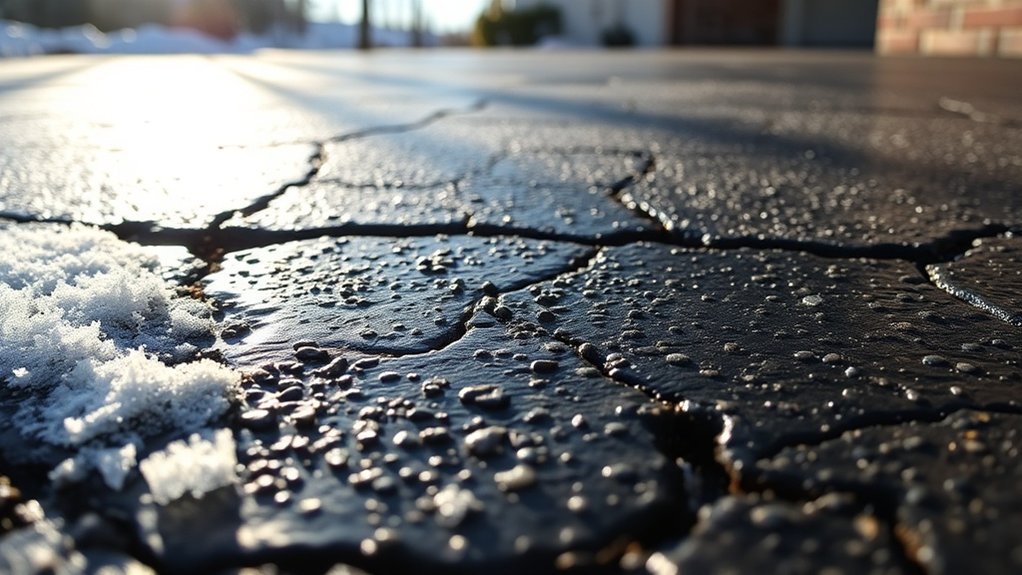
The drop in temperatures during winter months can significantly impact the performance of driveway sealants.
Here are three important effects to consider:
- Adhesion Problems: Sealants struggle to adhere properly when temperatures fall below 10°C (50°F). This can lead to weaker bonds and increased susceptibility to damage.
- Extended Cure Times: Cold weather can delay the curing process, leaving sealants tacky and vulnerable until they fully harden.
- Reduced Flexibility: Low temperatures can make sealants less flexible, raising the likelihood of cracking during freeze-thaw cycles.
These factors underscore the sensitivity of sealants to temperature changes and their effectiveness in cold conditions.
Recommended Sealing Timing in Cold Conditions
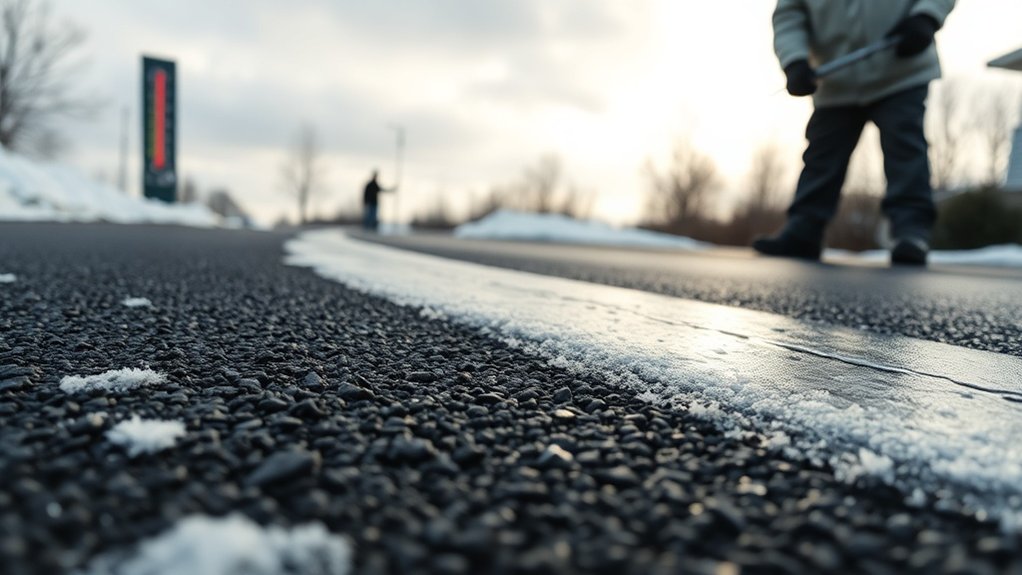
When sealing your driveway in cold weather, timing is crucial for achieving the best results.
Aim to apply the sealant when temperatures are between 10°C to 32°C (50°F to 90°F), ideally in early autumn or spring. This ensures optimal performance of the sealcoat.
Also, pay attention to the weather; choose dry days with stable temperatures for proper curing and long-lasting protection.
Ideal Temperature Windows
To achieve the best results when sealcoating in cold weather, it’s vital to apply the sealer within the recommended temperature range. Here are some key points to consider:
- Minimum Temperatures: Ensure pavement and air temperatures are at least 10°C (50°F); water-based sealers require a minimum of around 4°C (40°F).
- Rising Temperatures: Check that temperatures are on the rise during application and remain above 10°C (50°F) for 48 hours afterwards to prevent adhesion problems.
- Sealant Options: If working in lower temperatures, choose specialised cold-weather sealers, as standard formulations may not perform well in fluctuating conditions.
Following these guidelines will help avoid premature failure and ensure a long-lasting sealcoat.
Best Times of Year
Choosing the right time of year to seal your driveway in colder conditions is crucial for ensuring proper adhesion and durability.
The best period for driveway maintenance in the UK is autumn, specifically from September to November. Early autumn offers mild temperatures, which are ideal for sealer performance before the onset of frost. This timing helps protect your driveway from harsh winter weather.
Sealing in late autumn isn’t recommended due to longer curing times and the risk of freezing.
If you miss this window, spring can be a secondary option, but only once temperatures consistently rise above 10°C (50°F).
Weather Considerations for Application
Sealing your driveway in cold weather requires careful consideration of temperature and environmental conditions, as improper application can lead to serious problems.
To ensure successful sealing, keep these points in mind:
- Temperature Requirements: Ensure the ambient temperature is at least 10°C (50°F) and that the surface of the pavement reaches this temperature for proper adhesion.
- Sealant Selection: Opt for sealers specifically formulated for cooler conditions, as standard products may not bond effectively with fluctuations in temperature.
- Curing Time: Be prepared for longer drying times, as cold temperatures slow evaporation, increasing the likelihood of peeling and surface damage.
Selecting the Right Sealant for Cold Weather
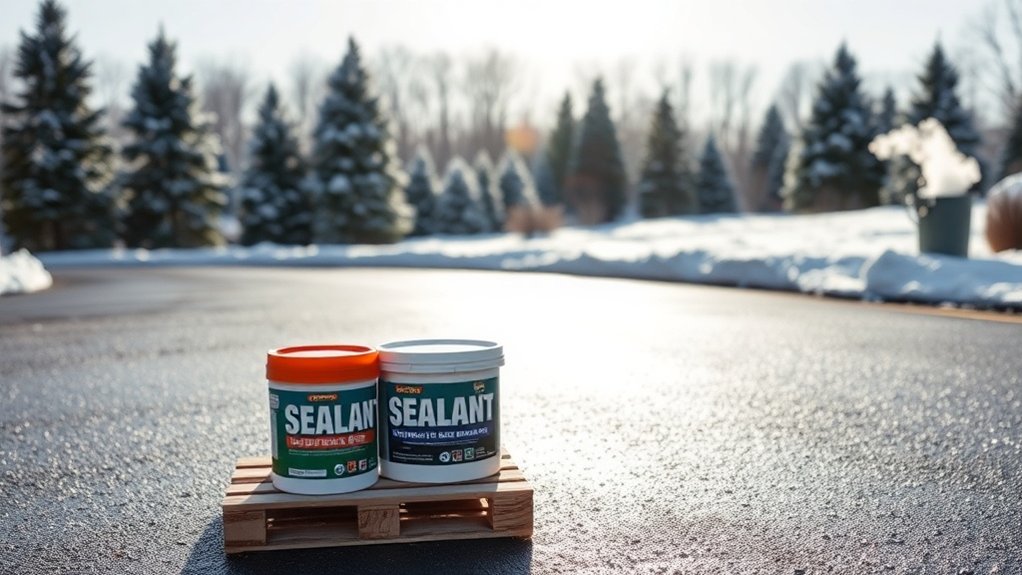
When temperatures drop, choosing the right sealant for cold weather is crucial for protecting your driveway.
Opt for sealants like Latexite Therma Seal or Drive Max 1000, which can be applied at temperatures as low as 4-7°C. These products ensure proper curing without sacrificing quality.
Avoid standard asphalt emulsion sealers, as they can become brittle in colder conditions. Instead, look for rubberised gel or urethane-enhanced sealers that provide the flexibility to withstand freeze-thaw cycles.
It’s also important to consider the environmental impact; eco-friendly sealants with lower VOCs are a better choice.
Always check local regulations and climate factors to ensure your sealant selection is effective and compliant.
Choosing the right product can significantly extend the life of your driveway.
Common Mistakes to Avoid When Sealing in Cold Weather
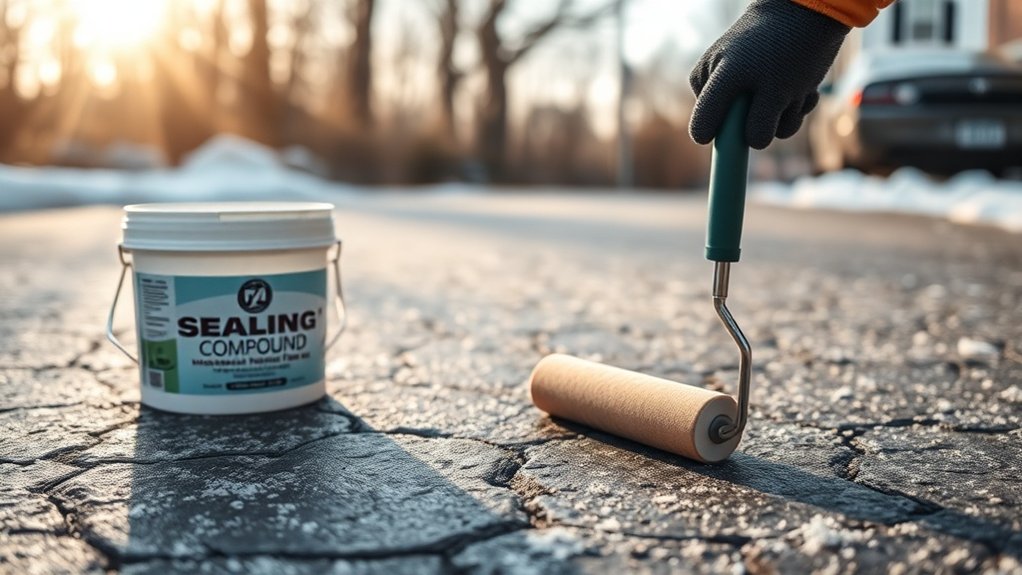
As temperatures drop, it’s crucial to avoid common pitfalls that can jeopardise your driveway sealing project.
Here are three key mistakes to steer clear of:
- Ignoring Temperature Requirements: Sealant needs to cure properly; applying it in temperatures below 10°C or during high humidity can result in poor adhesion and reduced durability.
- Neglecting Surface Preparation: If you don’t clean the asphalt or repair cracks beforehand, water may seep in, increasing the risk of damage from freeze-thaw cycles.
- Rushing the Curing Process: Insufficient curing time in cold conditions can weaken the sealant, leading to premature failure.
Taking these precautions will help ensure a successful sealing project, even in winter.
Long-Term Benefits of Proper Winter Sealing
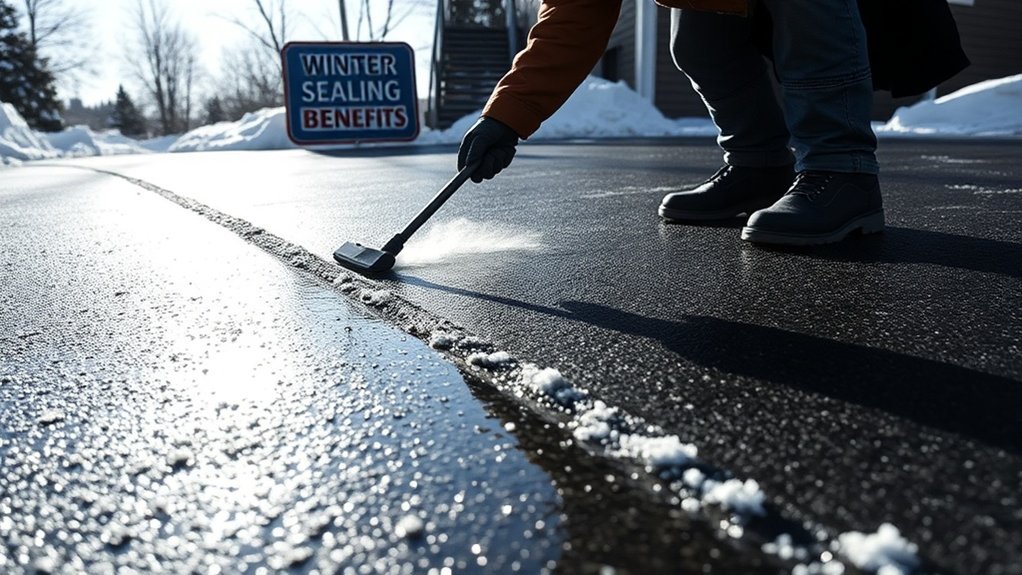
Proper winter sealing of your driveway not only shields it from harsh weather but also provides significant long-term benefits, enhancing both its durability and appearance.
By applying a quality sealant, you can effectively extend your driveway’s lifespan, preventing freeze-thaw damage and reducing the need for costly repairs. A well-sealed surface is less prone to cracking and potholes, maintaining its structural integrity despite fluctuating temperatures.
Moreover, a good sealant reduces water infiltration, helping to protect against deterioration caused by environmental factors such as UV rays and chemicals.
Regular sealcoating every 2–3 years can add an impressive 15–20 years to your driveway’s life, leading to lower maintenance costs and improved aesthetics.
Investing in proper sealing now can significantly boost your driveway’s durability and increase your property’s value in the long run.
Final Thoughts on Cold Weather Driveway Sealing
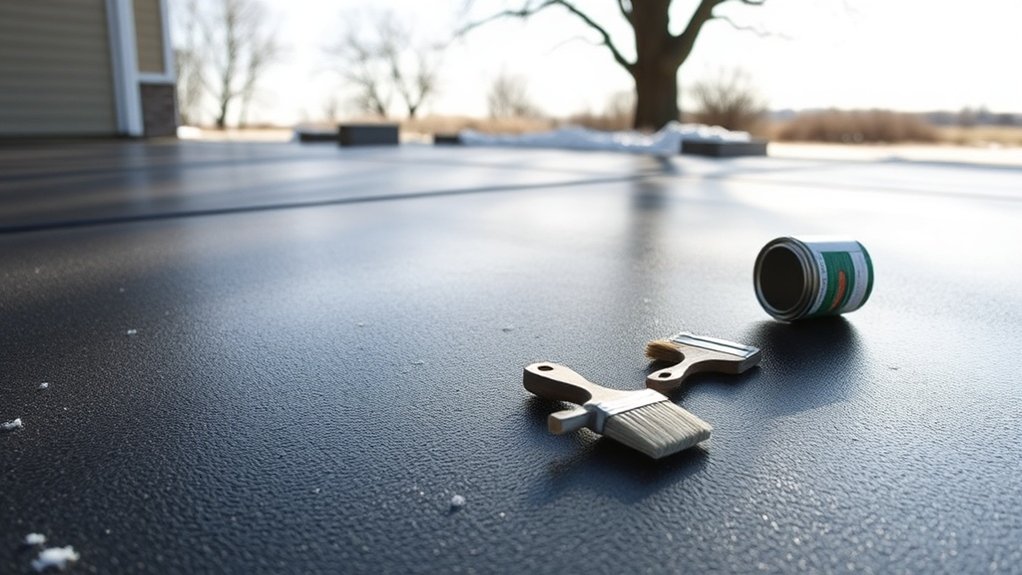
Final Thoughts on Cold Weather Driveway Sealing
Cold weather can make driveway sealing tricky, but knowing the right conditions for application is crucial for effective protection. Here are some key points to consider:
- Temperature Matters: Ensure temperatures remain above 10°C during and after application to prevent adhesion issues.
- Timing is Key: Delaying sealing until spring can save you from costly reapplications and premature wear due to cold weather conditions.
- Monitor Conditions: Keep an eye on the weather for 48 hours after sealing to avoid rain or temperature drops that could damage the sealcoat.
Frequently Asked Questions
Can I Seal My Driveway if It Recently Rained?
You shouldn’t seal your driveway if it has recently rained. Ensure proper preparation by allowing at least 24 to 48 hours for it to dry completely. Using effective sealing methods, such as moisture testing, helps achieve better adhesion and extends the lifespan of the seal.
How Long Does Sealant Take to Dry in Cold Weather?
In cold weather, drying times for sealants can significantly increase. When temperatures drop below 10°C (50°F), sealants may take 48 to 72 hours or even longer to cure properly. Cold temperatures can affect adhesion, leading to premature wear if applied in these conditions. Always check the weather forecast before sealing to ensure optimal results.
What Type of Sealant Is Best for Winter Applications?
For winter applications, epoxy sealants provide excellent durability and resistance to chemicals, making them ideal for heavy-duty protection. In contrast, acrylic sealants are easy to apply and flexible, perfect for quick DIY projects in colder conditions. Choose epoxy for robust needs and acrylic for simple fixes.
Will Snow Affect the Sealant’s Effectiveness After Application?
Yes, snow can significantly affect the longevity of sealant. It can trap moisture, impede the curing process, and weaken adhesion. If snow settles after application, it can compromise the sealant’s protective properties, leading to faster deterioration and potentially requiring reapplication sooner than expected.
How Often Should I Seal My Driveway in Cold Climates?
You should seal your driveway every 2-3 years in colder climates to keep it in good condition. This regular maintenance helps protect against freeze-thaw cycles, which can significantly damage asphalt surfaces over time. For instance, if you live in an area with harsh winters, sealing your driveway can prevent cracks and potholes from forming, saving you money on repairs in the long run.
Conclusion
Sealing your driveway during cold weather can be a wise choice if done correctly. It’s important to know the temperature requirements and choose the appropriate sealant to protect your investment and extend its lifespan. Think of it like dressing for a chilly day; the right preparation is key. By taking the right steps now, you can avoid expensive repairs down the line.
Knowing whether your tarmac driveway needs sealing can save you money, but there's much more to consider before making a Read more
Keep your driveway looking pristine with our step-by-step guide to sealing, complete with pro tips that will transform your approach!
On a resin driveway, rock salt can be effective for ice management, but could it also cause unforeseen damage? Discover Read more