In Manchester, you typically need planning permission for a driveway if it covers more than 50% of your front garden or if it uses an impermeable surface that exceeds 5m². Additionally, if you’re creating a new access point from a public road, you’ll need permission for that as well. It’s important to note that stricter rules apply in conservation areas and for listed buildings. To ensure you comply and avoid any fines, it’s best to familiarise yourself with the specific regulations for your property. Understanding these requirements can help you manage your driveway project smoothly.
Key Takeaways
Do You Need Planning Permission for a Driveway in Manchester?
- If you’re planning to create new access points from public roads in Manchester, you’ll need planning permission.
- Covering more than 50% of your front garden or using impermeable surfaces that total over 5m² typically requires formal approval.
- Driveways larger than 40 square metres often need planning permission, particularly if they’re made from concrete or tarmac.
- Choosing permeable materials can help you avoid needing extra permits and also support better drainage.
- It’s a good idea to consult Manchester City Council for detailed regulations and pre-application advice for your driveway project.
Understanding Permitted Development Rules for Driveways
When planning a driveway in Manchester, it’s important to be aware of the permitted development rules that dictate what you can do without needing formal permission.
If you want to avoid planning permission, consider using permeable materials like gravel or porous asphalt. These not only look good but also help manage rainwater runoff, which can reduce the risk of flooding. Additionally, planning permission may be required if you are creating a new access point from a public road, so always check local regulations. Compliance with planning regulations can prevent costly legal issues down the line.
On the other hand, if you opt for impermeable surfaces, you’ll need to seek approval, as regulations were tightened in 2008.
Additionally, if your property is in a designated area or conservation zone, stricter rules may apply, affecting your design choices.
It’s wise to consult with your local planning authority to clarify what’s required and ensure you stay compliant with the regulations.
Key Size and Surface Area Regulations
When planning your driveway in Manchester, it’s crucial to be aware of surface area limits and allowed materials.
You can’t cover more than 50% of your front garden without securing planning permission. Additionally, using impermeable materials for areas over 5m² usually requires formal approval. Opting for permeable materials can help you avoid some regulations while maintaining proper drainage and adhering to local guidelines. Understanding planning permission requirements ensures a smoother installation process and helps you avoid potential legal issues. Ensuring compliance with local council regulations is essential to prevent complications during the installation.
Surface Area Limits
Understanding the surface area limits for driveways in Manchester is crucial due to regulations established on 1st October 2008. According to these regulations, if your driveway has an impermeable surface exceeding 5 square metres, you need to obtain permission, unless it drains directly to a lawn. Non-compliance can lead to issues such as flooding and pollution. Additionally, compliance with drainage regulations is essential to ensure proper water management.
Here’s a quick overview:
| Surface Type | Planning Permission Required? |
|---|---|
| Impermeable surfaces | Yes |
| Permeable surfaces (e.g., gravel) | No |
| Driveways over 40 square metres | Yes |
For example, if you’re thinking of paving your driveway with concrete or tarmac and it exceeds the stated size, be sure to check if you need permission. On the other hand, a gravel driveway typically won’t require any. Always ensure that your plans align with local regulations to avoid future complications. Additionally, be aware that different rules apply to hard surfaces at or near ground level elsewhere around the house.
Permissible Materials Choices
Selecting the right materials for your driveway is crucial for staying compliant with Manchester’s planning regulations.
It’s important to know the difference between permeable and non-permeable options to avoid complications.
- Gravel is a great choice as it allows for drainage and doesn’t require planning permission.
- Porous asphalt is also a suitable permeable option.
- Resin-bound surfaces on a permeable base can be installed without needing approval.
- Traditional concrete requires permission due to potential runoff issues.
- Standard asphalt is non-permeable and necessitates a permission application.
Make your choice wisely to ensure compliance and avoid unnecessary hassle.
Drainage and Sustainable Drainage Solutions
When planning your driveway, it’s crucial to consider effective drainage solutions to manage surface water runoff.
Using sustainable drainage systems (SuDS) not only meets regulations but also helps reduce flood risks and supports environmental sustainability.
For instance, permeable paving allows water to soak through, reducing the risk of pooling.
Importance of Drainage Solutions
Effective drainage solutions are crucial for the durability and functionality of your driveway. Poor drainage can lead to serious structural and environmental issues, making efficient water management essential to avoid costly repairs.
Here are some key points to consider for your driveway:
- Use drainage pipes with a minimum diameter of 15 inches.
- Ensure storm sewer pipes in paved areas are at least 12 inches deep.
- Driveway approaches should be a minimum of 6 inches deep for residential properties.
- Incorporate expansion joint materials that are at least ½ inch thick at critical points.
- Install underground storm drains in line with local regulations.
SuDS Compliance Benefits
Implementing Sustainable Drainage Systems (SuDS) not only tackles drainage issues but also prepares you for new regulations coming into force in 2024. The benefits of SuDS go beyond just compliance; they significantly lessen your property’s environmental footprint.
| Benefit | Description |
|---|---|
| Flood Risk Mitigation | Reduces surface water runoff, minimising flood risks. |
| Enhanced Biodiversity | Supports natural habitats through green systems. |
| Improved Water Quality | Filters contaminants, improving local water quality. |
| Increased Property Value | Eco-friendly features can boost market value. |
| Regulatory Compliance | Meets required standards, avoiding future fines. |
Managing Surface Water Runoff
Managing surface water runoff is crucial for protecting property and promoting environmental sustainability, particularly in urban areas like Manchester.
Effective drainage techniques can significantly reduce surface runoff problems and ensure adherence to local regulations. Here are some straightforward strategies:
- Opt for permeable paving to enable water to soak through.
- Install soakaways or attenuation trenches to manage runoff on-site.
- Use linear drains to direct water effectively.
- Create rain gardens or swales for natural filtration and water retention.
- Ensure that connections to stormwater systems meet local council standards.
Local Manchester-Specific Guidelines

When planning a driveway in Manchester, it’s crucial to be aware of the local guidelines regarding surfacing materials and drainage. To avoid needing planning permission, prioritise permeable surfaces. Here’s a quick overview of the key points:
| Requirement | Details |
|---|---|
| Surfacing Material | Opt for permeable options like gravel |
| Drainage Management | Ensure rainwater drains to lawns or borders |
| Approved Modifications | Dropped kerbs require separate approval |
| Conservation Areas | Planning consent may be necessary |
| Pre-application Advice | Consult Manchester City Council staff |
Adhering to these guidelines helps prevent issues and encourages sustainable practices for your driveway. Always check with local planning officers for any specific regulations that may apply to your property.
Exceptions and Special Cases for Driveways
Understanding the exceptions and special cases for driveway planning in Manchester is crucial for navigating the local regulations. Here are the key points to consider:
- For flats and maisonettes, you’ll need full planning permission for any driveway.
- If your driveway covers more than five square metres and uses non-permeable materials, you must seek approval.
- In conservation areas or for listed buildings, stricter rules apply, requiring permission for any changes.
- New access points from public highways usually require planning permission as well.
- Properties under Article 4 Directions or with specific planning conditions will also need permission.
Being aware of these exceptions can help you avoid issues and ensure compliance with local rules before starting your driveway project.
Practical Steps Before Starting Your Driveway Project
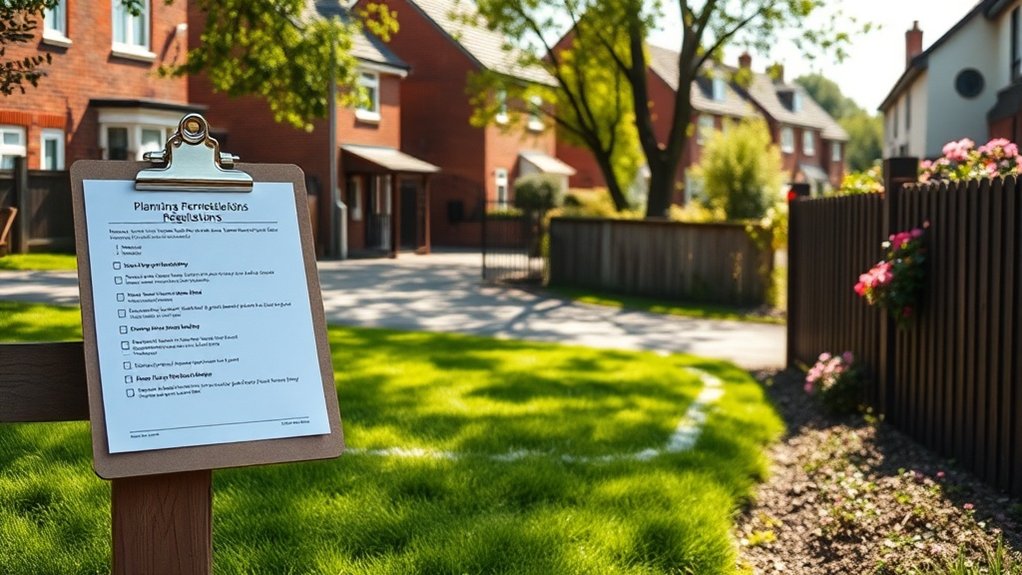
Before starting your driveway project, it’s important to take some practical steps to ensure you comply with local regulations.
First, assess your driveway design and check if your property is subject to any restrictions, such as being in a conservation area or having an Article 4 Direction. If you’re planning to create a new driveway or change access points, you may need planning permission. Using permeable materials can help you avoid needing extra permits.
Make sure to gather all necessary documentation, including a completed permit application, a scaled site plan, and proof of ownership.
Don’t forget to contact your local council for specific advice. For Manchester residents, you can submit your application through their online portal.
Keep in mind that approval times can range from two days to eight weeks, so plan your project timeline accordingly.
Risks of Non-Compliance and Enforcement Actions
Failing to secure the necessary planning permission for your driveway can have significant consequences that you mightn’t expect. The repercussions can be serious, affecting your property ownership in various ways.
- You could face fines for making unauthorised changes to your driveway.
- There may be orders requiring you to remove or alter non-compliant structures.
- Selling your property could become difficult if there are unresolved planning breaches.
- Future development permissions might be blocked as a result of past violations.
- Enforcement actions could be publicly listed, damaging your reputation.
Local councils actively investigate reported breaches, and any unauthorised work can lead to enforcement notices and legal issues.
Ignoring these regulations can complicate your plans and lead to costly and stressful demolition orders.
It’s crucial to understand these risks before starting your project.
Contacting Local Authorities for Guidance
When planning your driveway, it’s important to contact your local planning authority to ensure you comply with regulations and avoid any issues.
In Manchester, the Manchester City Council is your go-to for questions about driveway permissions. You can reach out via phone or email to the Development Control team for guidance on whether you need planning permission for your project.
Be prepared for them to ask for more information or drawings to assess your application properly.
Certain situations, like creating a new access point or installing a dropped kerb, will always require prior consultation.
Engaging with local authorities helps you navigate planning requirements smoothly, protecting your investment in the long run.
Frequently Asked Questions
Can I Install a Driveway Without Notifying My Neighbors?
You can install a driveway without informing your neighbours, as consent is generally not required. However, it’s wise to maintain good relations and follow common courtesy to prevent any potential disputes. For instance, if your driveway might block their view or access, giving them a heads-up could go a long way in keeping the peace.
How Long Does Planning Permission Typically Take to Process?
When you apply for planning permission, it usually takes about 8 weeks to process, although this can vary based on the specifics of your application. For example, a simple home extension might be approved in around 6 weeks, while more complicated projects could take several months to sort out.
Will I Need to Pay a Fee for Planning Permission?
Yes, you’ll need to pay application fees for planning permission, which usually include permit costs. The fee varies depending on the specifics of your project, such as its size and type. For example, a small extension might cost less than a new build. Make sure you check the applicable fees for your situation before moving forward.
Can I Use Recycled Materials for My Driveway?
Yes, you can use recycled materials for your driveway! They provide environmental benefits and can save you money. For example, using crushed concrete or reclaimed bricks can add character to your property. It’s a sustainable choice that combines practicality with style.
What Happens if My Driveway Doesn’T Meet Local Guidelines?
If your driveway doesn’t comply with local guidelines, you could face several issues. The local council may issue enforcement notices requiring you to make changes or even remove the driveway. This could result in fines, legal disputes, and might even affect your property’s value. For instance, if your driveway is too wide or lacks proper drainage, you may need to invest in costly modifications to avoid penalties.
Conclusion
In today’s world, driveways are almost as essential as Wi-Fi, so it’s important to understand the regulations surrounding them. Avoid the risk of fines or enforcement actions by ensuring you have the necessary planning permission. Familiarise yourself with Manchester’s guidelines to ensure your driveway project runs smoothly and stays compliant. Always consult with local authorities to prevent any issues, and transform your home into the envy of the neighbourhood without any legal headaches.
Know the essential steps to secure planning permission for your tarmac driveway—discover key insights that could save you time and Read more
Learn about driveway width regulations and discover the essential requirements that could affect your property—find out how wide your driveway Read more
Comprehend the essential UK driveway regulations to ensure compliance and discover key factors that could impact your project and budget. Read more