When deciding between tarmac and resin driveways for your Manchester home, consider factors such as cost, appearance, and durability. Tarmac is generally more affordable and quicker to install, providing a sturdy surface that can withstand Manchester’s unpredictable weather. In contrast, resin driveways offer a range of attractive design options and superior drainage. While both materials have their advantages, resin typically lasts longer. Ultimately, your choice will depend on your specific needs and preferences. Read on to discover more details to help you make the right decision for your property.
Key Takeaways
- Tarmac is usually more affordable, costing around £55 per m², whereas resin starts at about £70 per m².
- Resin allows for a wide range of design options, while tarmac offers a consistent look but can replicate the appearance of pricier materials.
- Tarmac generally lasts between 15-20 years, whereas resin can endure for 20-30 years with proper care, making resin the more durable choice.
- Tarmac installation often requires heavier machinery, allowing for a quicker setup (1-2 days) compared to resin’s 2-3 days, which is beneficial for urgent projects.
- Resin driveways effectively manage water runoff, minimising pooling, while tarmac may necessitate additional drainage solutions due to Manchester’s frequent rainfall.
Cost Comparison: Tarmac Vs Resin
When choosing a new driveway, the cost difference between tarmac and resin is noticeable.
Tarmac generally costs between £40 and £120 per m², leading to total project expenses of £1,500 to £5,000. For instance, a 20m² tarmac driveway might set you back between £1,100 and £2,400. Additionally, the average cost per square metre for tarmac is around £55, making it a competitive option. Tarmac requires regular maintenance, such as sealing every 2 to 5 years, which can add to long-term expenses.
On the other hand, resin starts at around £70 per m², often exceeding tarmac prices by £20 to £40 per m². This means that for comparable sizes, resin projects tend to be pricier. Additional costs for excavation and sub-bases can further increase the overall price, making tarmac a more economical choice for many homeowners.
Aesthetic Appeal: Choosing the Right Look
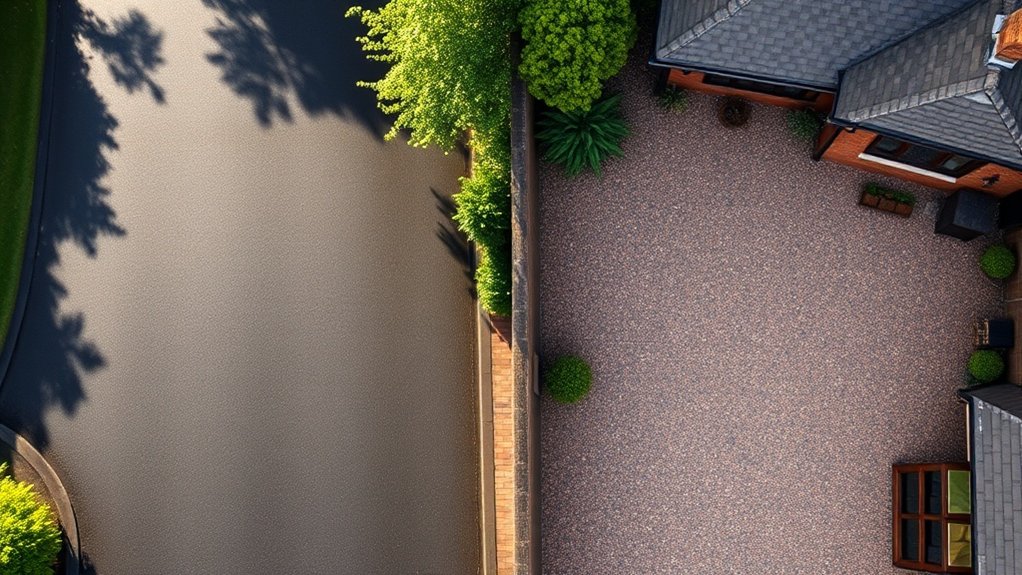
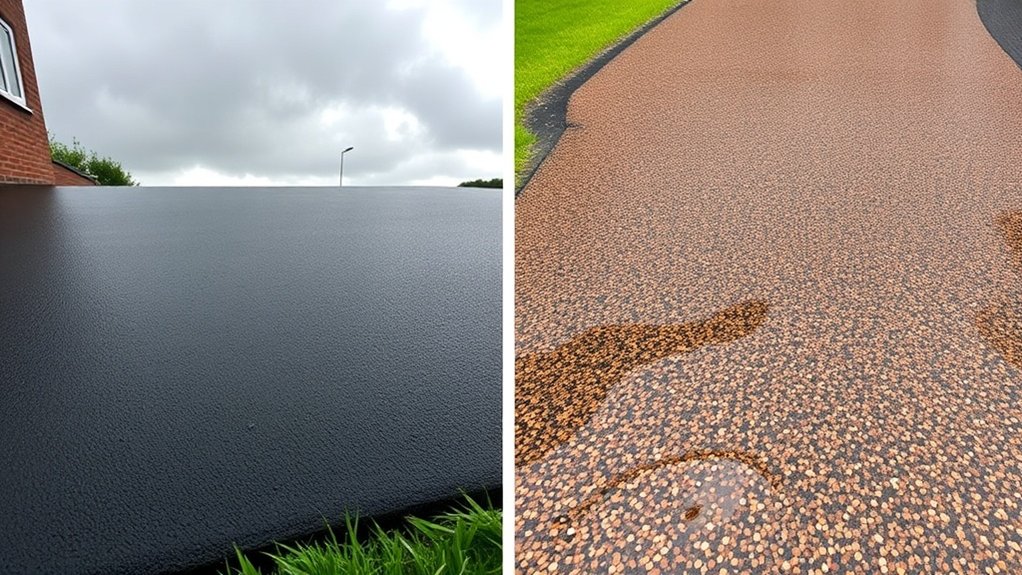
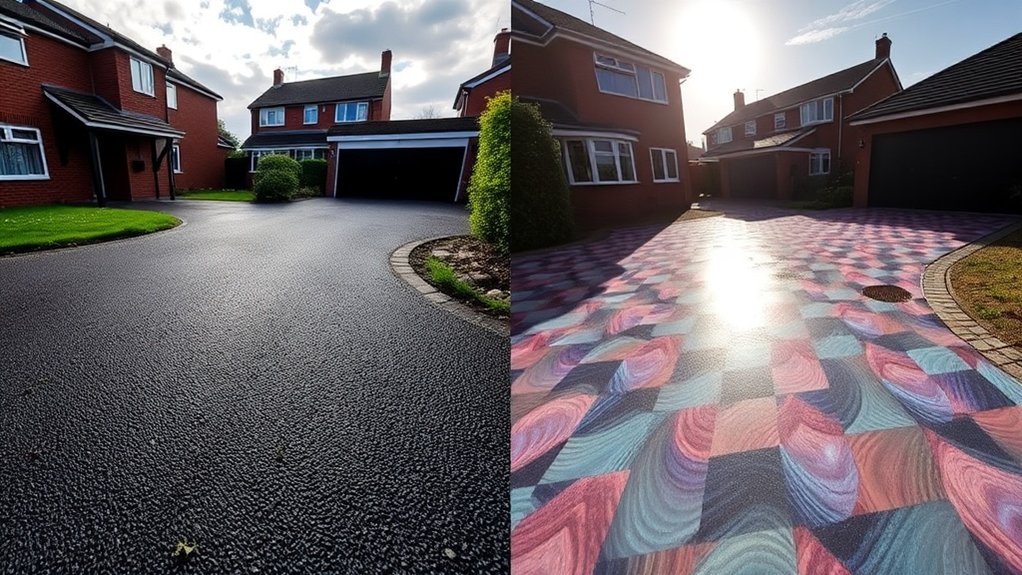
When considering aesthetic appeal, the choice between resin and tarmac driveways boils down to colour and design options.
Resin offers a wide range of colours and textures, allowing you to create a distinctive look that complements your home. For example, if you want to match your driveway to your house’s exterior or garden, resin can provide that flexibility. Additionally, customization options available for resin driveways enable homeowners to achieve a unique finish tailored to their personal style. The remarkable durability of resin, with a lifespan of up to 25 years, ensures that your chosen aesthetic will last.
On the other hand, tarmac delivers a more uniform appearance. While it has a modern feel, it lacks the visual variety to truly stand out, especially in a vibrant neighbourhood.
Colour and Design Options
Selecting the right style for your driveway can significantly enhance your home’s curb appeal, combining practicality with aesthetic appeal. Tarmac offers a traditional grey that complements Manchester’s architecture well, while vibrant reds and unique colours like green and salmon can add a touch of personality. Innovative designs, such as imprinted patterns, can replicate the look of brick or stone, providing sophistication without a hefty price tag. Additionally, custom colours can enhance curb appeal and reflect personal style, increasing property value by complementing home architecture. Alternatively, resin driveways come in a variety of earthy tones and lively colours, reflecting the city’s dynamic spirit. Resin surfaces are known for their exceptional durability, making them a practical choice for homeowners looking to invest in long-lasting aesthetics. Custom designs are also available, allowing you to tailor your driveway to match your home’s style perfectly. With the latest colour trends, both options serve as a great way to express your personal taste while enhancing your property’s visual charm.
Visual Impact Comparison
The visual impact of your driveway is crucial in shaping your home’s image, making the choice between tarmac and resin driveways significant. Each option offers distinct aesthetic benefits, especially when considering current trends and curb appeal:
- Smooth Finish: Resin provides a sleek, refined look, whereas tarmac is uniform but lacks design flexibility.
- Durability: Resin maintains its colour and texture over time, while tarmac can fade and stain.
- Damage Resistance: Resin is less prone to cracking and chipping, while tarmac can soften or become brittle.
- Customisation Options: Resin allows for tailored designs to boost visual appeal, whereas tarmac tends to be basic.
- Weather Suitability: Resin’s UV and frost resistance make it ideal for the unpredictable UK climate.
Durability and Longevity of Driveways
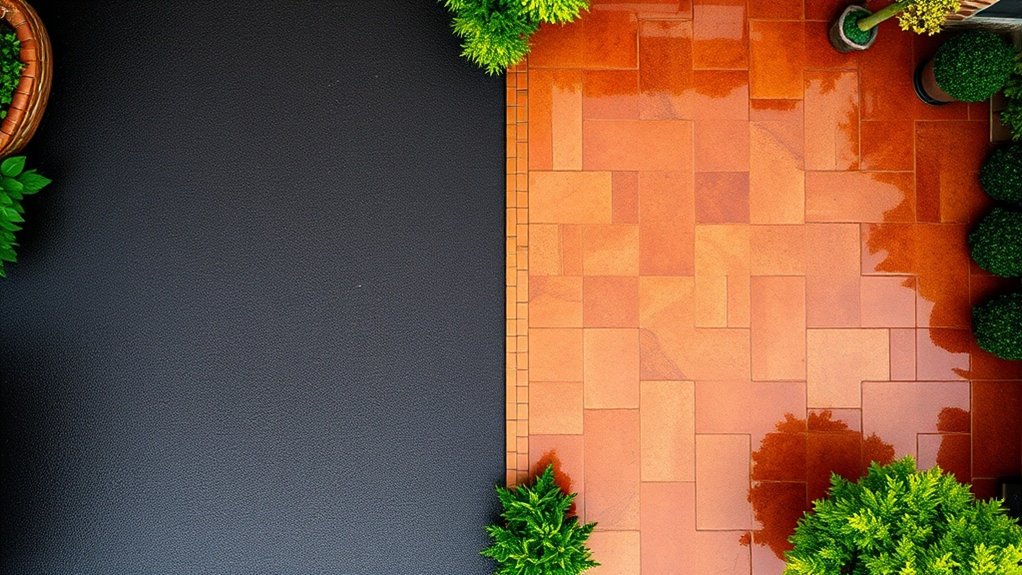
When it comes to durability and longevity, tarmac driveways usually last around 15-20 years, whereas resin driveways can last between 20-30 years with proper maintenance.
Both surfaces can handle Manchester’s unpredictable weather, but they perform differently under heavy traffic and harsh conditions.
Knowing these differences can help you choose the best driveway option for your needs.
Lifespan Comparison
When choosing between tarmac and resin driveways, it’s crucial to consider their longevity.
Here’s what you need to know about tarmac:
- A well-installed tarmac driveway can last up to 20 years.
- On average, tarmac remains functional for 15 to 25 years, depending on how it’s used.
- High-quality installation can significantly enhance its lifespan.
- Regular maintenance, such as sealing, can extend its life to 30 years or even more.
On the other hand, resin driveways lack specific lifespan data, so further investigation is necessary to gauge their durability.
If a long-lasting surface is your main concern, tarmac driveways provide a more reliable option, while resin requires more clarity on its longevity.
Weather Resistance Factors
When considering the unpredictable weather in places like Manchester, it’s important to understand the weather resistance of tarmac and resin driveways. Both materials adapt well to different climates, but they each have unique benefits.
| Feature | Tarmac | Resin |
|---|---|---|
| Waterproofing | Naturally resists water damage | Permeable, allowing effective drainage |
| Temperature Flexibility | Withstands freeze-thaw cycles | Flexible, preventing cracking |
| UV Stability | Less likely to fade | UV-stable, preventing degradation |
Tarmac performs well in heavy rain and cold conditions, while resin’s permeable design effectively manages water. Regular maintenance, such as sealing, can enhance their durability, ensuring your driveway can handle Manchester’s weather challenges.
Maintenance Requirements: What to Expect
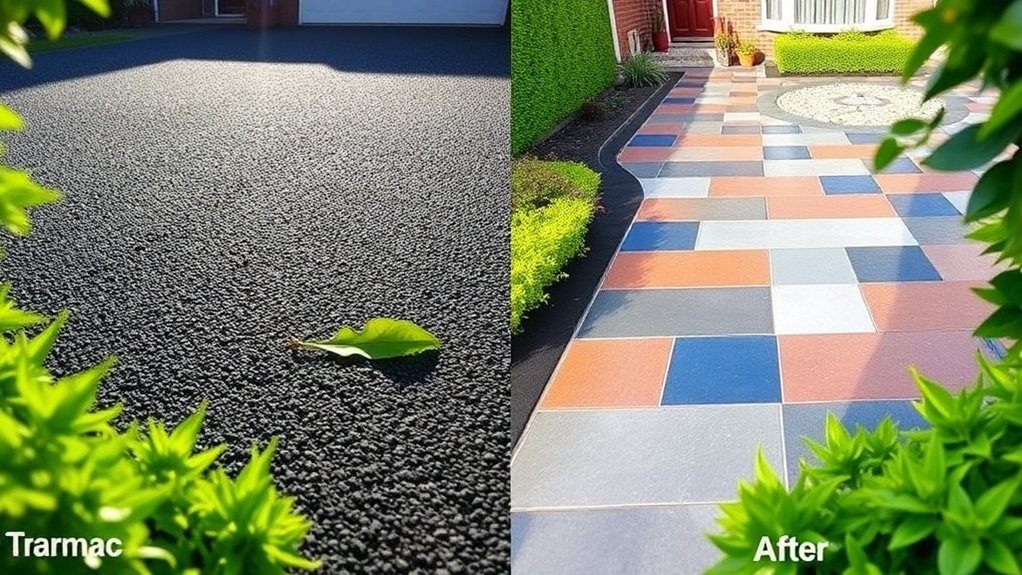
Understanding the maintenance needs of tarmac and resin driveways is crucial for their durability and effectiveness. While both surfaces require regular care, the methods differ.
Here are some straightforward maintenance tips:
- Regularly sweep away debris to stop moisture build-up.
- Pressure wash every 3 to 6 months to remove dirt and stains.
- Treat oil spills quickly using soap and baking soda.
- Use eco-friendly cleaners to tackle moss and algae for a tidy surface.
- Conduct an annual inspection for cracks and fix them promptly to prevent further issues.
Installation Process: Time and Complexity
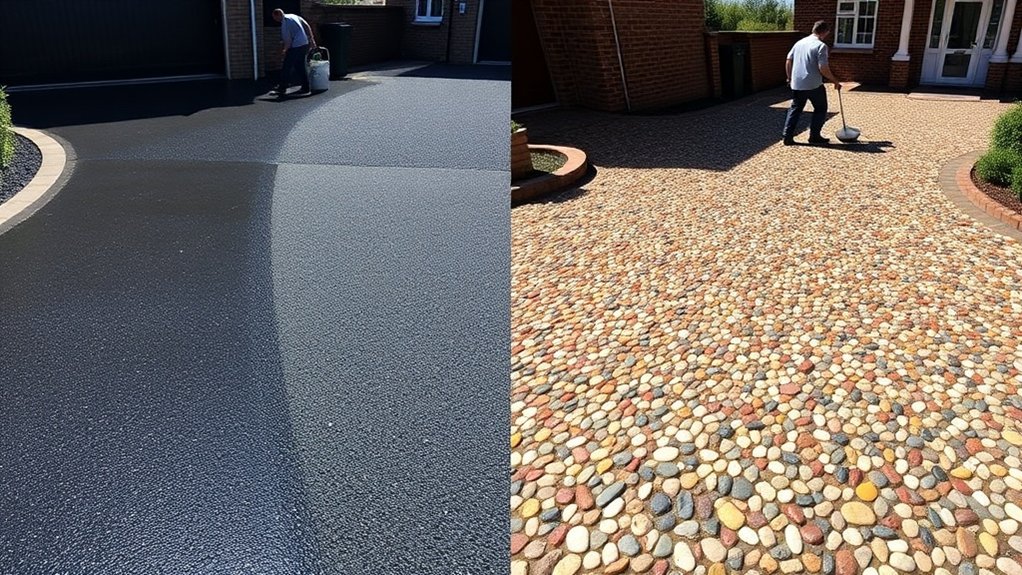
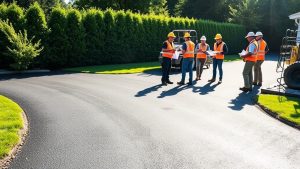
When installing a driveway, the process can differ significantly between tarmac and resin surfaces, which affects both the time needed and the complexity involved. Tarmac generally allows for quicker installation, typically taking about one day for laying and compacting. In contrast, resin can take two to three days due to the necessary base preparation and curing times.
Here’s a straightforward comparison of the installation processes:
| Feature | Tarmac | Resin |
|---|---|---|
| Excavation Depth | 200-250 mm | 50-100 mm |
| Labour Requirements | 1 day | 1-2 days |
| Equipment Complexity | Heavy machinery needed | Smaller, skilled tools |
| Cure Time | 24-48 hours for light use | 48-72 hours for vehicles |
| Total Installation Time | 1-2 days | 2-3 days |
Drainage Solutions for Driveway Types
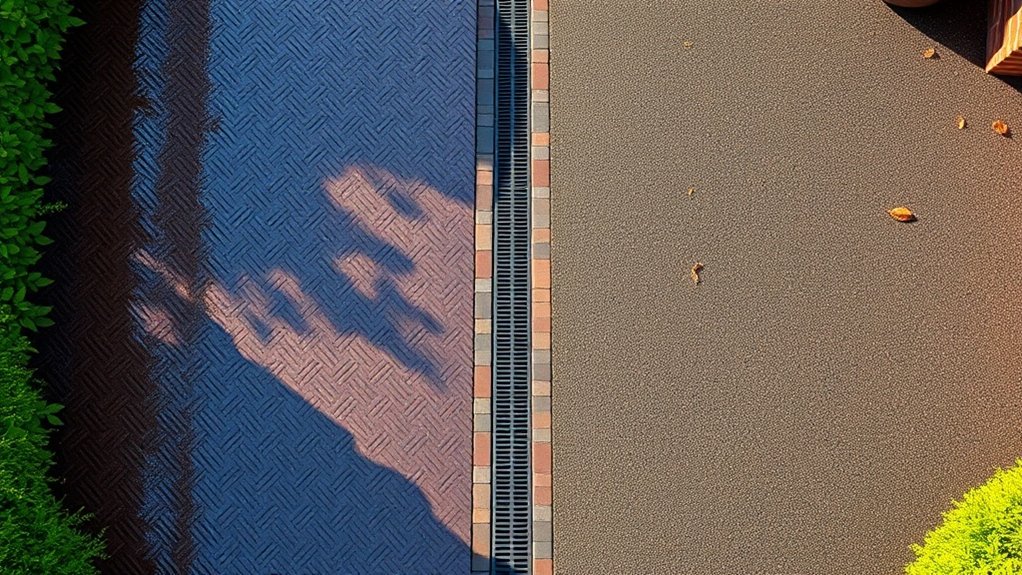
When deciding between tarmac and resin driveways, it’s important to consider drainage solutions.
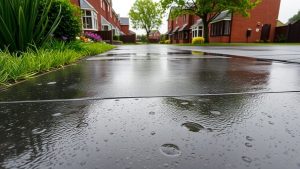
Resin-bound surfaces tend to be more permeable, which helps manage water runoff and comply with local regulations. In contrast, tarmac is impermeable and often requires additional drainage systems.
It’s crucial to factor in your local weather and soil conditions to ensure your driveway functions well and meets planning permissions.
For example, in areas prone to heavy rainfall, a resin driveway might be the better choice for preventing water pooling.
Permeability and Runoff Management
Driveway permeability is crucial for effective runoff management and drainage. When choosing between tarmac and resin driveways, it’s important to consider their water absorption and drainage capabilities:
- Resin driveways are permeable, allowing water to pass through, which helps prevent pooling, especially in areas that experience heavy rainfall.
- Their porous design supports sustainable urban drainage systems (SuDS), reducing the risk of flooding.
- Resin is flexible enough to adapt to ground movement, maintaining its drainage efficiency.
On the other hand, tarmac driveways are generally non-permeable. They rely on grading and drainage systems, which can exacerbate runoff problems.
Planning Permission Considerations
Understanding the planning permission requirements for your driveway is crucial, particularly when it comes to drainage solutions. In Manchester, local regulations state that traditional impermeable surfaces need planning permission if they cover more than 5 m² and drain into the public highway.
On the other hand, permeable options like resin-bound surfacing can often bypass this requirement, as long as you manage runoff on your property.
It’s important to consider your property’s classification and the specific drainage solutions you intend to use, as these factors can influence planning decisions. If your property is listed or located in a conservation area, you may still need permission even with permeable materials.
To avoid any issues, it’s wise to conduct pre-application checks with Manchester City Council. This can clarify what you need and minimise the risk of enforcement actions.
Make sure to clearly outline your proposed drainage solutions to ensure compliance with local regulations.
Environmental Impact and Sustainability
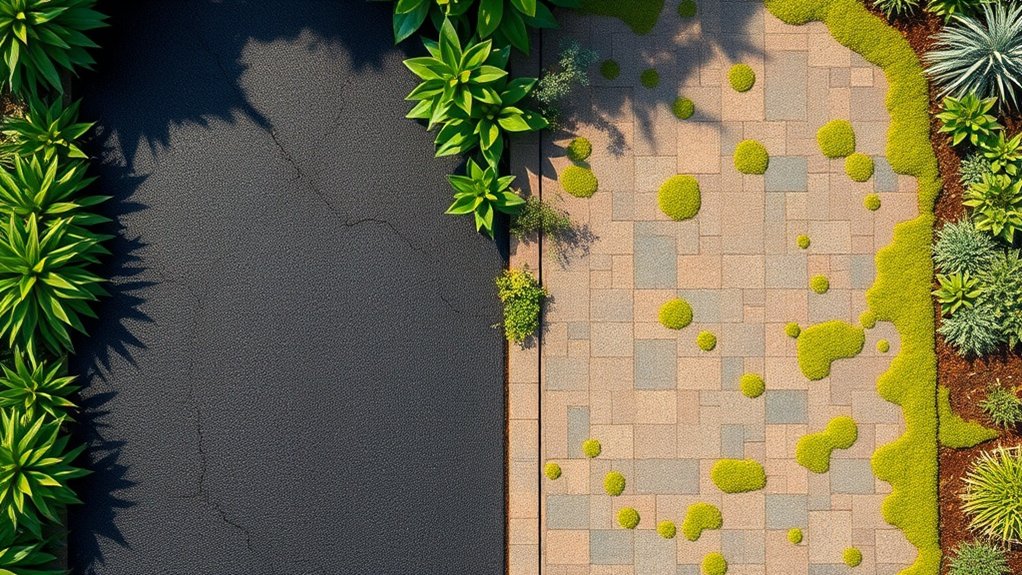
Tarmac and resin driveways each have their benefits, but their environmental impacts differ significantly. Tarmac is a more sustainable choice, thanks to its use of recycled materials and energy-efficient practices.
Here are some of the key environmental advantages of tarmac:
- Incorporates reclaimed asphalt, which lessens the need for new materials.
- Requires less energy to produce than concrete.
- Its porous surface helps manage rainwater, reducing the risk of flooding.
- Techniques like cold mix asphalt help lower emissions.
- Highly recyclable, which helps reduce long-term environmental effects.
On the other hand, resin driveways can be less eco-friendly, as they often use non-recyclable materials and may lead to increased surface runoff.
For environmentally conscious homeowners in Manchester, tarmac is the more sustainable option.
Weather Resistance: Performance in Manchester
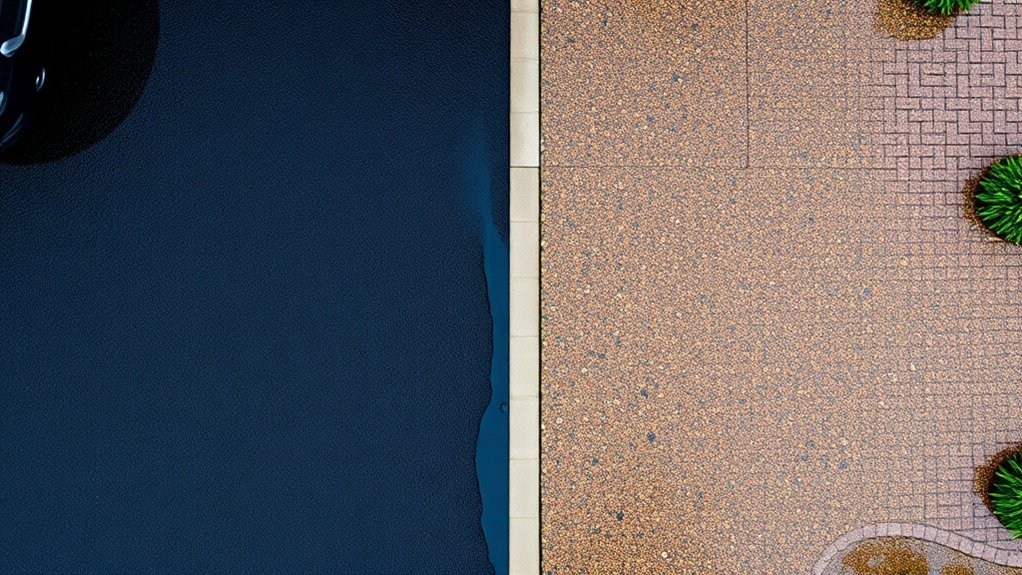
When it comes to weather resistance in Manchester, tarmac and resin driveways have their pros and cons, given the area’s frequent rain and fluctuating temperatures.
Tarmac, if installed and sealed correctly, provides excellent water resistance, which helps prevent potholes and freeze-thaw damage. It’s also durable against grit and salt, making it a solid option for winter weather.
On the other hand, resin driveways can look great but may struggle with issues like pooling after heavy rain and becoming brittle in colder temperatures, particularly if they’re not designed for such conditions.
While resin can offer some slip resistance in icy weather, tarmac typically delivers better long-term performance, requiring less upkeep and standing up to Manchester’s unpredictable climate.
Customization Options for Personal Touch
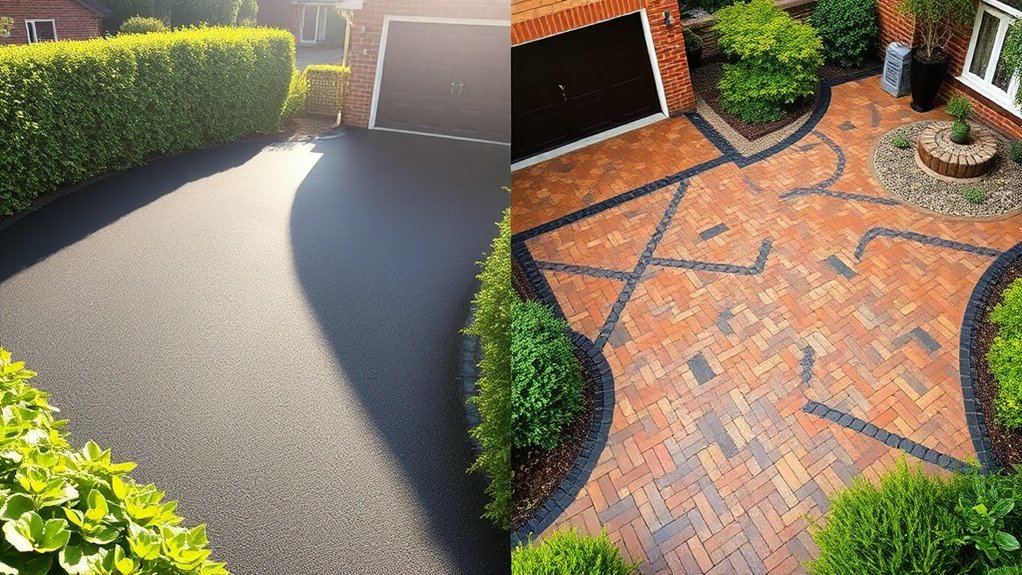
Customising your driveway can significantly improve its look and practicality, particularly in a lively city like Manchester. Here are some straightforward options to consider:
- Coloured Tarmac: Pick from natural shades or bright colours to complement your home’s style.
- Imprinted Patterns: Choose designs that mimic brick or stone for a more refined appearance.
- Borders and Edging: Use block paving to add eye-catching details.
- Patterns and Textures: Consider herringbone or basketweave for a unique flair.
- Design Finishes: Go for finishes that blend seamlessly with your property’s exterior.
These choices not only add character to your driveway but also enhance its overall appeal.
Final Thoughts on Driveway Selection
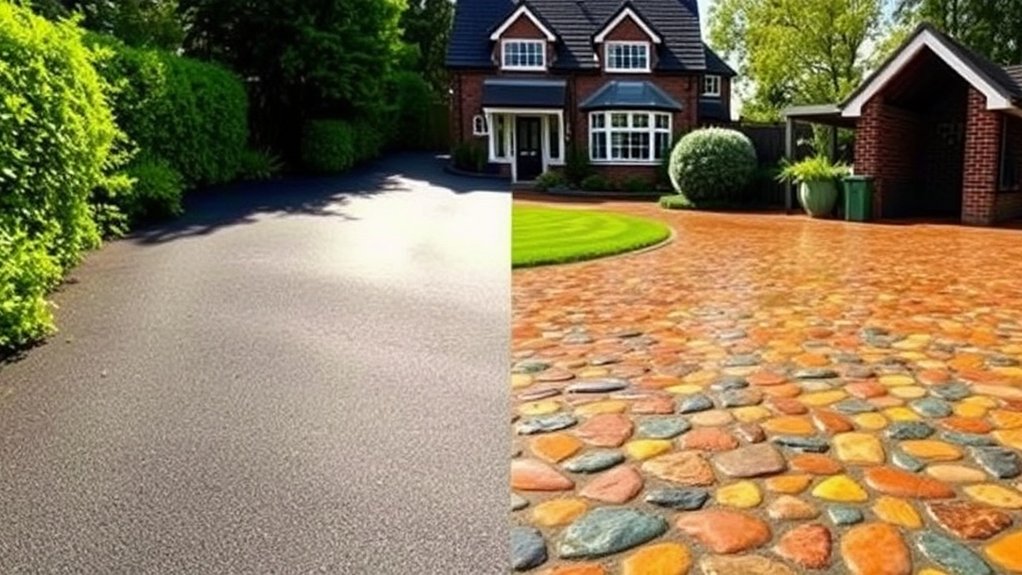
Choosing the right driveway material can significantly influence your property’s look and practicality. In Manchester, it’s essential to understand the differences between tarmac and resin driveways.
Tarmac is a budget-friendly option that boasts quick installation and robust durability, making it ideal for homeowners looking to save money. On the other hand, resin is a more long-lasting investment; its strength and permeability help prevent flooding and add visual appeal to your home.
Both materials can withstand Manchester’s unpredictable weather, but resin typically requires less upkeep.
Ultimately, consider your priorities: if affordability and speed are your main concerns, tarmac is a solid choice. However, if you’re after enhanced aesthetics and functionality, resin may be the driveway solution for you. Your decision will impact your home for years to come.
Frequently Asked Questions
Can I Install Resin Over Existing Tarmac?
Yes, you can install resin over existing tarmac, provided you ensure the tarmac is well-maintained first. Check that the surface is structurally sound and clean it thoroughly. This will improve the durability of the resin and help prevent issues like peeling or cracking in the future.
How Do Temperature Fluctuations Affect Resin Driveways?
Temperature fluctuations can impact resin driveways by affecting their stability and durability throughout the year. While resin can adapt to some expansion and contraction, significant temperature changes might lead to slight surface shifts. For instance, during a particularly hot summer, the resin may soften, while freezing winter temperatures could make it more rigid. Despite these changes, a well-installed resin driveway should remain both resilient and visually appealing over time.
Are There Any Specific Regulations for Driveway Materials in Manchester?
In Manchester, if you’re installing a driveway with non-permeable surfaces covering more than 5 m², you’ll need to obtain a permit. It’s essential to ensure that any surface drainage directs water to permeable areas to prevent issues. Always check local regulations for specific requirements before you start your installation.
Can I Use Tarmac for a Sloped Driveway?
Yes, you can use tarmac for a sloped driveway. It’s durable and can handle the demands of a slope, while proper drainage helps manage rainwater to prevent erosion. Just ensure the base is well-prepared for the best performance and stability over time.
How Does Resin Perform in Snowy Conditions?
Resin performs well in snowy conditions, offering great traction and reducing snow build-up. Its textured surface helps prevent slipping, making it safer to walk on in winter. Additionally, its permeable design stops water from pooling, which can help avoid ice hazards.
Conclusion
When it comes to choosing a driveway for your home, the decision between tarmac and resin is important. Tarmac is known for its durability and strength, making it a solid choice for heavy traffic areas. It’s a classic option that withstands the test of time. On the other hand, resin driveways offer a more contemporary look, with vibrant colours and patterns that can enhance your property’s appearance.
Consider your needs: if you require a robust surface for vehicles, tarmac might be the way to go. However, if you’re after aesthetics and versatility, resin could be the better option. Ultimately, think about what fits best with your home’s style and your personal preferences. Choose wisely to ensure your driveway is both functional and appealing.
How can a tarmac driveway enhance your home's appeal? Discover the key aspects of cost, installation, and maintenance in our Read more
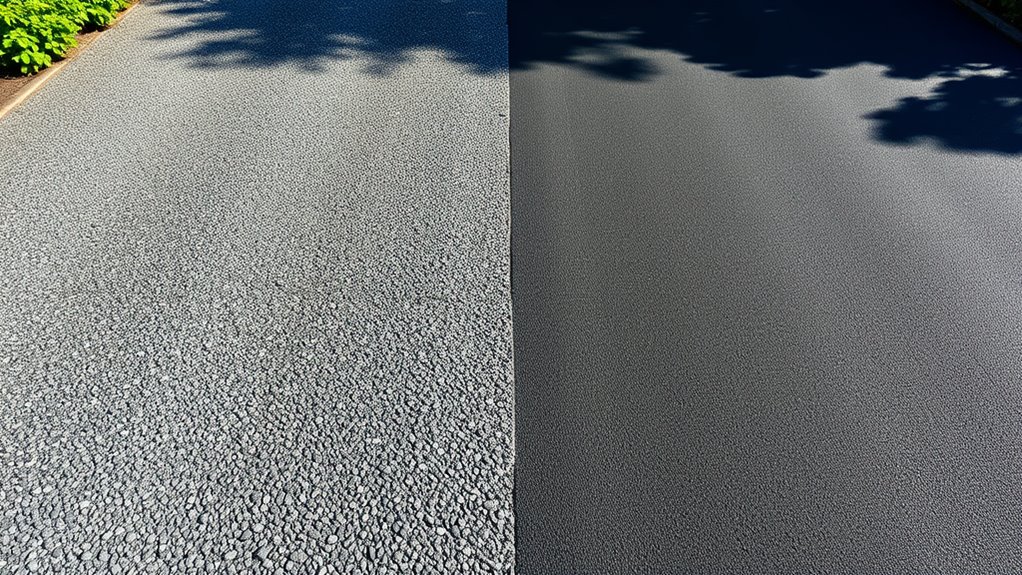
Beneath the surface of tarmac and asphalt driveways lies a world of differences; discover which option suits your needs best.
Uncover the hidden environmental costs of tarmac driveways and explore whether they truly align with sustainable living—what alternatives could be Read more