Winter Damage to Driveways in Manchester: Prevention Tips
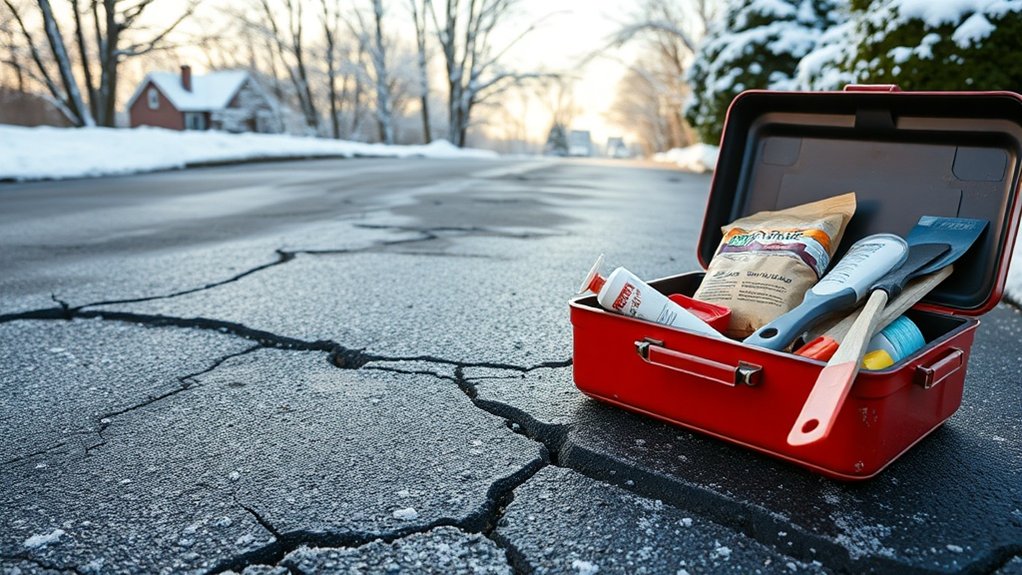
To prevent winter damage to your driveway in Manchester, seal it regularly to create a barrier against water and frost. Use effective drainage solutions, such as channel drains, to direct water away. Regularly check for cracks and repair them promptly. When clearing snow, opt for ergonomic tools and non-corrosive materials to minimise wear and tear. By following these tips, you can significantly extend your driveway’s life and performance during the harsh winter months. Explore more preventative measures to keep your driveway in excellent condition.
Key Takeaways
- Regularly seal your driveway to create a protective barrier against moisture and UV rays, which can significantly extend its lifespan.
- Implement effective drainage solutions such as channel drains to direct water away from your driveway and prevent freeze-thaw damage.
- Inspect your driveway twice a year for cracks and surface damage, and address any hairline cracks quickly to avoid further deterioration.
- Use non-corrosive materials and ergonomic tools for clearing snow to reduce wear and damage during the winter months.
- Consider using asphalt for your driveway; its flexibility and dark colour help with snow melting and minimise freeze-thaw issues.
Understanding Freeze-Thaw Damage
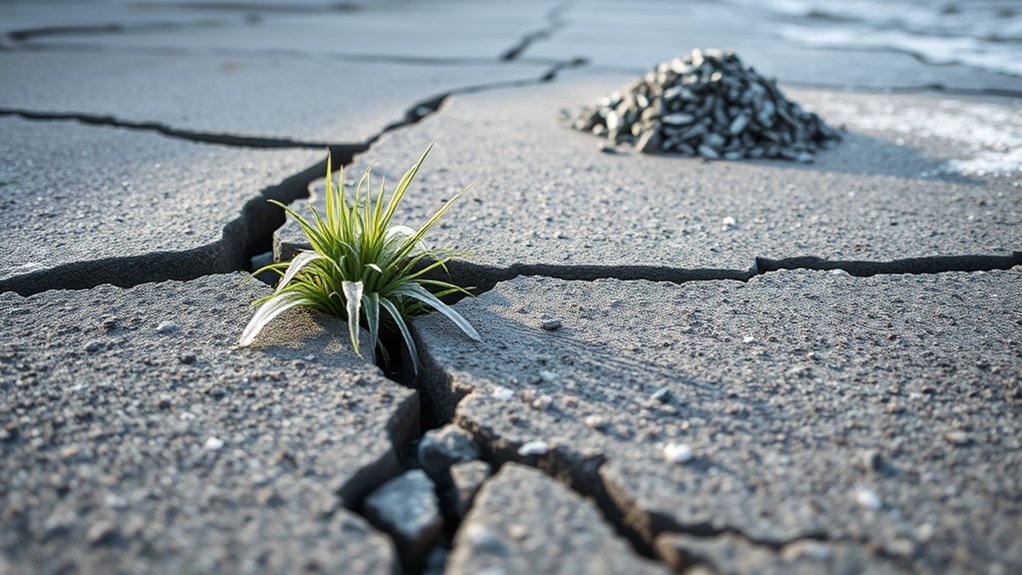
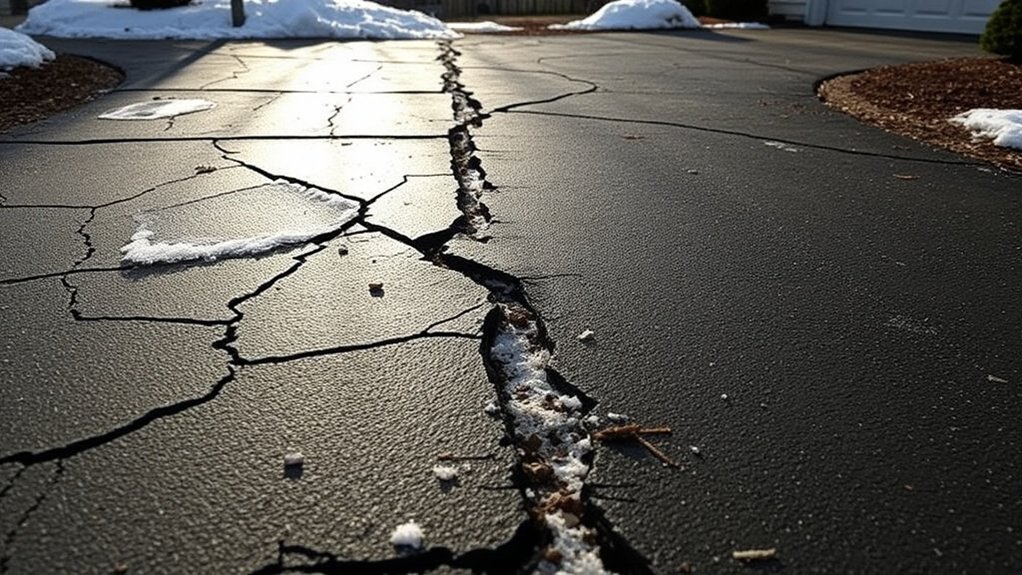
Understanding freeze-thaw damage is crucial for maintaining your driveway. On milder days, water seeps into cracks and pores in the surface. When temperatures drop, this water freezes and expands, putting pressure on the asphalt or concrete that can exceed its strength. Each freeze-thaw cycle worsens existing damage, causing cracks to widen and voids to grow. This process also weakens the binder properties, compromising the overall integrity of the pavement. Microcracks develop, and repeated cycles lead to cumulative damage. Ultimately, this can result in more serious problems like potholes and alligator cracking. By recognising these patterns, you can take proactive steps to protect your driveway from the harsh effects of winter. Notably, freeze-thaw damage can penetrate 2-4 inches deep, highlighting the importance of early intervention. Regular inspections for potential issues can help maintain your driveway’s integrity and extend its lifespan.
The Importance of Sealing Your Driveway
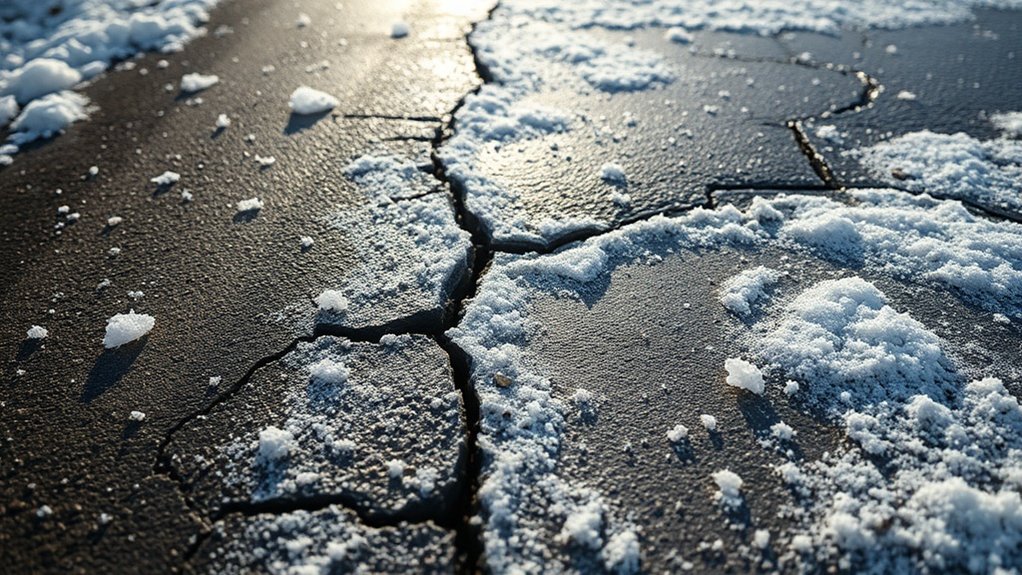
Sealing your driveway is more than just making it look good; it’s about protection.
A sealant provides a barrier against water, chemicals, and damaging UV rays. With proper sealing, your driveway can last up to 30 years, compared to just 10-15 years for unsealed surfaces. Regularly applying sealant not only prevents costly repairs but also keeps your driveway in prime condition throughout the year. Moreover, seal coating extends driveway lifespan significantly, making it a smart investment for any homeowner. Additionally, regular sealing discourages weed and moss growth, helping to maintain the integrity of your driveway.
Protective Barrier Benefits
Sealing your driveway not only improves its appearance but also extends its lifespan and performance. A protective barrier significantly enhances the surface’s integrity by preventing water from seeping into the asphalt or concrete, reducing the risk of freeze-thaw damage and cracking.
Here are some key benefits of sealing your driveway:
- Waterproofing: Stops moisture from penetrating, preventing damage from freeze-thaw cycles that lead to cracks.
- Chemical Resistance: Safeguards against de-icing salts and oil stains that can harm the surface.
- Easier Maintenance: Creates a smoother surface, making cleaning and upkeep much simpler. Additionally, sealing a driveway can extend its lifespan by 10% to 25%, making it a wise investment for homeowners. Regularly applying a sealant is an effective way to maintain this protective barrier.
Investing in a sealed driveway is a straightforward way to protect your property.
Extended Lifespan Advantages
Applying a sealant to your driveway can significantly extend its lifespan and improve its performance. Regular sealing not only prevents water damage but also minimises long-term repair costs, keeping your driveway in excellent condition.
| Benefit | Details |
|---|---|
| Lifespan Extension | Can add 10–15 years to your driveway’s life |
| Cost Savings | Saves you thousands on repairs with proactive sealing |
| Structural Integrity | Reduces moisture, preventing cracks and potholes |
| Property Value Retention | Boosts curb appeal and resale value |
Incorporating effective sealing into your driveway maintenance can shift you from reactive repairs to planned upkeep, ultimately preserving your investment for years to come.
Effective Drainage Solutions
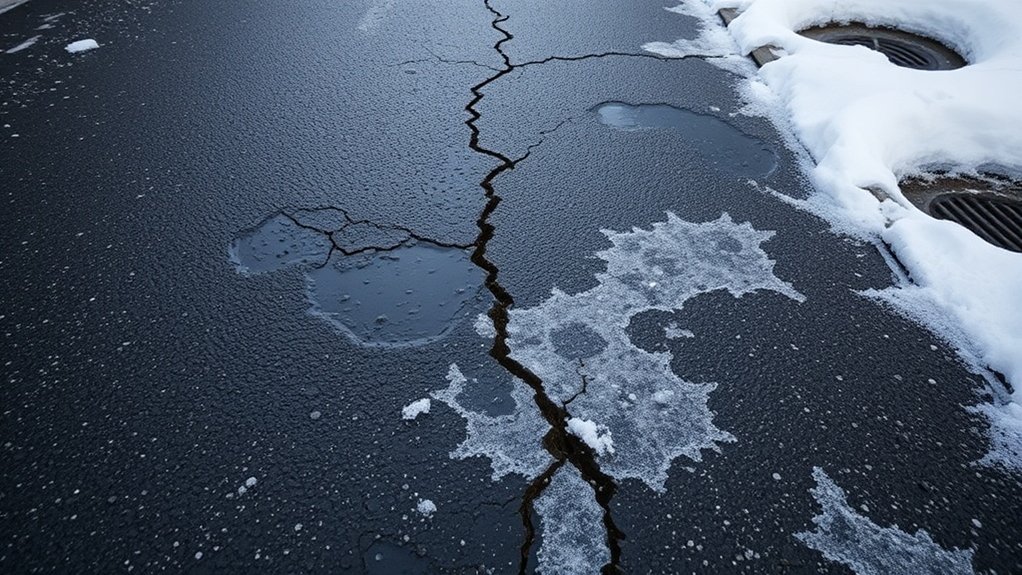
To effectively manage winter runoff and prevent damage to your driveway, it’s crucial to implement suitable drainage solutions. Here are some options to consider:
- Channel Drains: These rectangular drains, fitted into sloped driveways, capture water and direct it away from areas prone to pooling, thus reducing erosion.
- Slot Drain Systems: With no grates, these slotted drains allow for high flow rates and help prevent ice from forming, making them particularly effective in colder weather.
- French Drains: These consist of perforated pipes surrounded by gravel that absorb excess water and safely channel it away from your driveway’s foundation.
Conducting a Pre-Winter Inspection

As winter approaches, it’s essential to carry out a thorough pre-winter inspection of your driveway to avoid costly damage.
Start by checking for cracks in the asphalt or concrete; water can seep in and expand when it freezes. Use a sealant to fill any small cracks quickly to prevent them from worsening.
Next, clear away leaves and debris to avoid moisture build-up. Ensure that drainage is effective, directing water away from your driveway to prevent pooling, which can cause freeze damage.
Lastly, consider applying a quality sealcoat to protect against moisture and salt. Regular inspections in the autumn are crucial for maintaining your driveway’s condition throughout the winter.
Best Practices for Snow and Ice Removal
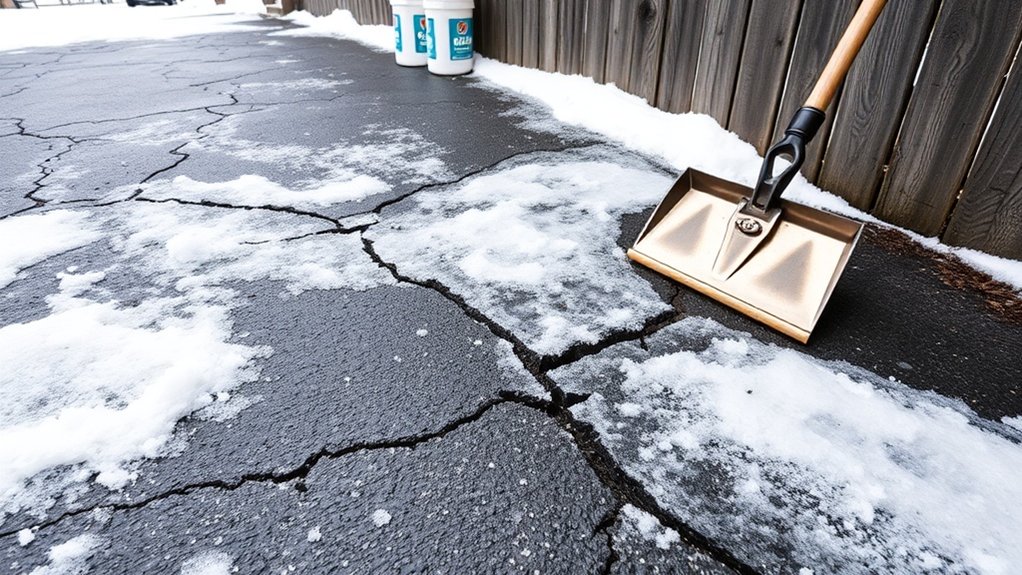
When it comes to snow and ice removal, using safe shovelling techniques is crucial to protect both your driveway and your back.
Consider eco-friendly de-icing options that won’t damage your driveway or the environment.
Let’s look at how to clear your space effectively while minimising harm and ensuring safety.
Safe Shoveling Techniques
Winter can create beautiful scenes, but it also brings challenges like snow-covered driveways that need clearing safely. Here are some straightforward tips for safe shovelling:
- Use ergonomic tools, such as a curved shovel, to maintain a straight back and bent knees.
- Push the snow rather than lifting it to minimise strain. If you must lift, do so with your legs, not your back.
- Clear your driveway regularly before heavy snow builds up to avoid dealing with compacted snow.
Always remember to stretch beforehand, take regular breaks, and pay attention to your body. If you start to feel tired or notice any discomfort, stop immediately.
Keeping safe while shovelling is crucial for your well-being and the condition of your driveway.
Eco-Friendly De-Icing Options
After clearing your driveway, it’s important to manage ice effectively. Choosing eco-friendly de-icing options not only protects your driveway but also reduces environmental impact. Here are some sustainable alternatives:
| Eco-Friendly Option | Benefits |
|---|---|
| Baking Soda | Safe for pets, provides traction, gentle melt |
| Beet Juice Brine | Biodegradable, less corrosive than salt |
| Calcium Magnesium Acetate | Effective in low temperatures, plant-friendly |
Consider mixing baking soda with water for a mild solution or using beet juice brine as a proactive measure. Additionally, wood ash or sand can provide traction without melting the ice. By opting for these eco-friendly methods, you’re helping to protect both your driveway and the environment.
Enhancing Surface Durability

To enhance surface durability during winter, it’s vital to select materials and treatments that can endure harsh conditions.
Choosing high-quality options improves surface flexibility and winter resilience, helping you avoid costly repairs.
- Use polymer-modified asphalt mixes to prevent thermal cracking and pothole formation.
- Select concrete mixes with air entrainment for improved freeze-thaw resistance.
- Apply effective sealants to reduce moisture penetration and chemical damage.
Repairing and Maintaining Cracks
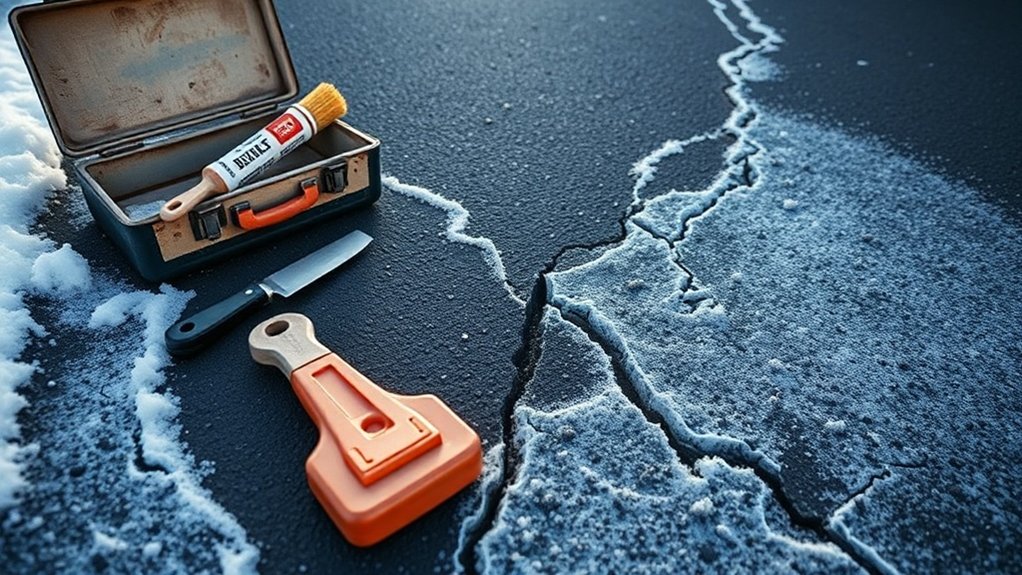
Winter can wreak havoc on driveways, causing cracks that need immediate attention.
Begin with a careful assessment of the cracks to establish their size and type. Determine if they’re structural or non-structural, and check for hairline, medium, or deep cracks.
Next, prepare the surface: clean the cracks with a wire brush to remove any debris. Dampen the surface for better adhesion, and use a chisel to widen or undercut the cracks if necessary.
Ensure there are no air pockets by tamping the area down. Avoid making repairs in cold or damp weather to ensure proper curing.
Choosing the Right Materials for Winter Conditions
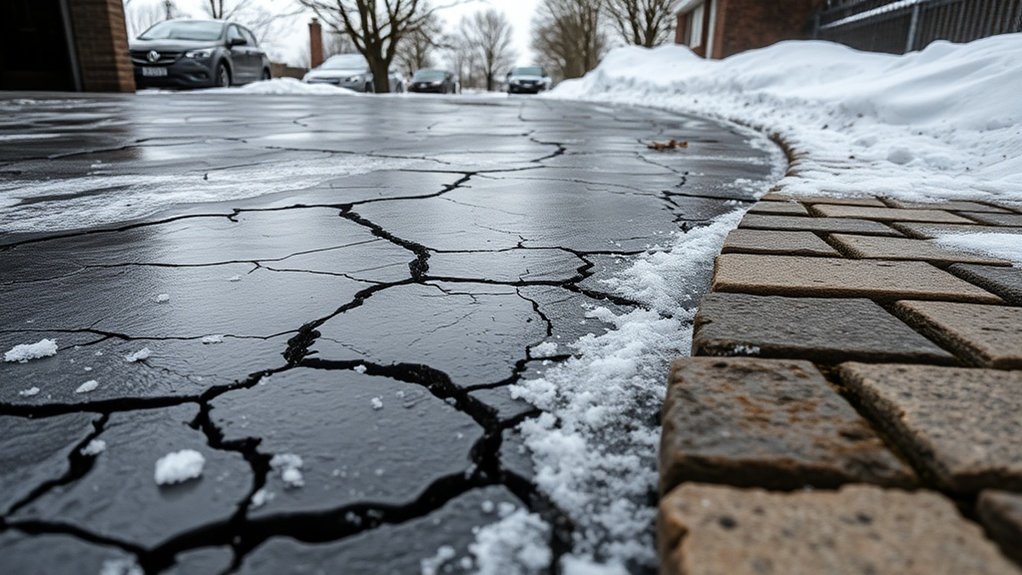
Choosing the right materials for your driveway can significantly affect its performance during the winter months. The right selection enhances durability, reduces maintenance, and ensures safety.
Here are some options to consider:
- Asphalt: A flexible and dark material, asphalt absorbs heat, helping to melt snow faster and making it easier to clear.
- Concrete: While durable under heavy loads, concrete requires careful installation to avoid cracking due to freeze-thaw cycles.
- Permeable systems: These allow for quick drainage, reducing ice formation and providing a textured surface for better traction.
Selecting the appropriate material can greatly improve winter performance, helping you avoid costly repairs and safety hazards.
Long-Term Care for Driveway Longevity
It’s easy to overlook driveway maintenance during the colder months, but neglecting it can lead to costly problems later on. To ensure your driveway lasts, establish a routine for regular inspections.
Check for cracks, spalling, and drainage issues at least twice a year, particularly after freeze-thaw cycles. Address any hairline cracks promptly and repair larger damages before they worsen.
Consider resurfacing every 3–7 years, especially if your driveway is aging. Seasonal maintenance is also key; apply sealants to protect against moisture and UV damage.
When clearing snow, use non-corrosive materials to reduce wear. These simple practices will help keep your driveway in good shape and extend its lifespan.
Frequently Asked Questions
How Does Temperature Fluctuation Affect Driveway Materials?
Temperature extremes can put a strain on driveway materials, leading to reduced durability. For instance, you might notice cracks forming as materials expand in heat and contract in the cold. To counteract these effects and prolong the life of your driveway, regular maintenance is essential. This will help keep it looking good and in good condition.
What Are the Signs of Freeze-Thaw Damage?
Signs of freeze-thaw damage include visible cracking patterns, such as spider-web cracks, and surface erosion that results in pitting. It’s important to monitor these issues to prevent further deterioration of your driveway.
Can Winter Conditions Affect Driveway Color?
Yes, winter conditions can impact the appearance of your driveway, leading to colour fading. Cold weather and exposure to moisture can cause asphalt to lighten, while paving stones may lose their vibrancy. Regular maintenance, such as sealing and cleaning, is essential to preserve your driveway’s look and extend its lifespan.
How Often Should I Conduct Driveway Inspections?
Think of your driveway as a canvas that requires regular inspections. It’s best to check it at least twice a year, ideally during the change of seasons. This helps you spot any cracks early, ensuring it stays in good condition for years to come.
Are There Specific Sealers for Cold Climates?
Yes, there are sealers specifically formulated for cold climates, suitable for effective use in low temperatures. These products remain flexible, adhere well, and can endure freeze-thaw cycles, ensuring your driveway is protected during the harsh winter months.
Conclusion
To protect your driveway from winter damage, follow these simple tips. First, apply a sealant to create a barrier against moisture. Ensure proper drainage to prevent water accumulation, which can lead to cracks. Regularly inspect your driveway for any signs of wear and tear. Promptly clear away snow and ice to keep the surface intact. Choosing durable materials, like reinforced concrete or quality paving stones, can also enhance longevity. By taking these proactive measures, you can maintain a sturdy driveway that withstands the harsh winter months. Don’t let winter take a toll on your pavement—act now to keep it looking great year after year!
Be proactive in protecting your driveway from cold weather cracks by learning essential sealing techniques that could save you costly Read more
Achieve a pristine tarmac driveway this winter—discover the best snow removal methods that will keep your surface safe and clear.
Uncover the ideal driveway material for frigid temperatures and discover which option can withstand winter's harshest challenges effectively.