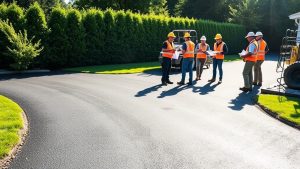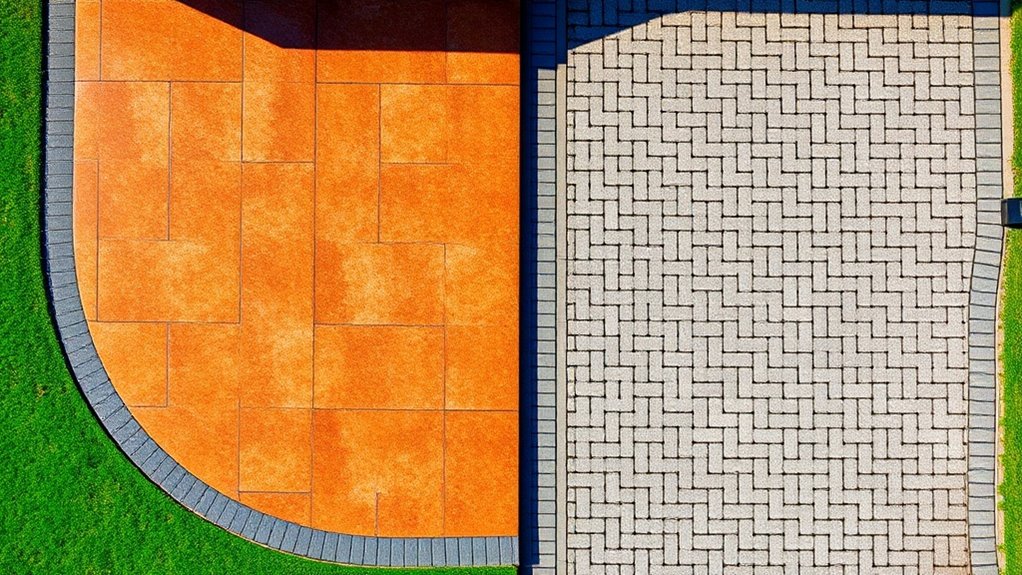
When choosing a driveway in Manchester, resin driveways are generally more affordable than block paving. The cost for installing resin ranges from £45 to £75 per square metre, whereas block paving can be between £90 and £130. Additionally, resin driveways require less upkeep and tend to last longer, which can lead to savings over time. If you’re also considering durability and appearance, there are plenty of aspects to compare between the two options.
Key Takeaways
Resin driveways are generally more affordable upfront, costing between £45 and £75 per square metre, while block paving ranges from £90 to £130. For example, a small resin driveway of 20m² typically costs between £1,600 and £2,000, whereas a standard block paving driveway of 50m² would set you back around £5,250.
However, installation costs for resin driveways can be higher due to the need for specialised skills, while block paving installation tends to have more uniform labour costs.
In terms of maintenance, resin driveways require less frequent upkeep, usually every 6 to 24 months, compared to block paving, which needs attention every 3 to 12 months.
Although resin driveways have a lifespan of 15 to 25 years, which can make them more cost-effective in the long run, it’s important to consider all factors when choosing between the two options.
Overview of Driveway Options
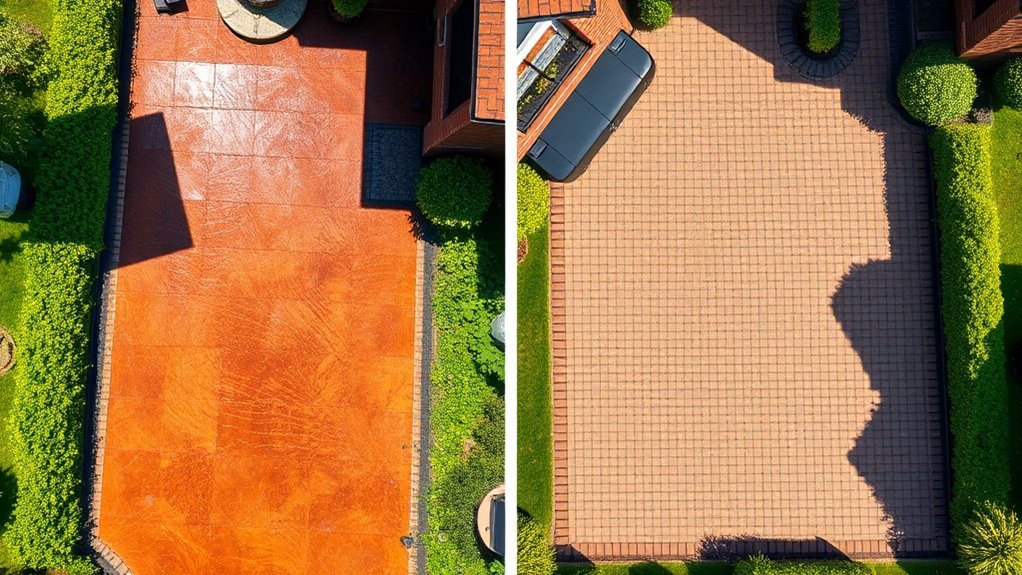
When choosing a driveway, it’s important to compare the pros and cons of resin driveways and block paving.
Resin-bound driveways provide a stylish, porous surface that promotes drainage, aligning well with modern trends and sustainability. They offer a range of finishes and colours to suit different tastes. Additionally, incorporating sustainable drainage systems (SuDS) can enhance the environmental benefits of resin surfaces. Furthermore, resin driveways are known for their exceptional durability, making them a long-term investment.
On the other hand, block paving features a robust, interlocking system that’s ideal for heavy vehicles, with a lifespan of 25-50 years when maintained properly.
While both options need upkeep, resin surfaces tend to resist weeds better, although repairs can be challenging.
Ultimately, your decision will hinge on your priorities, whether that’s appearance, durability, or environmental impact.
Initial Costs of Resin Driveways
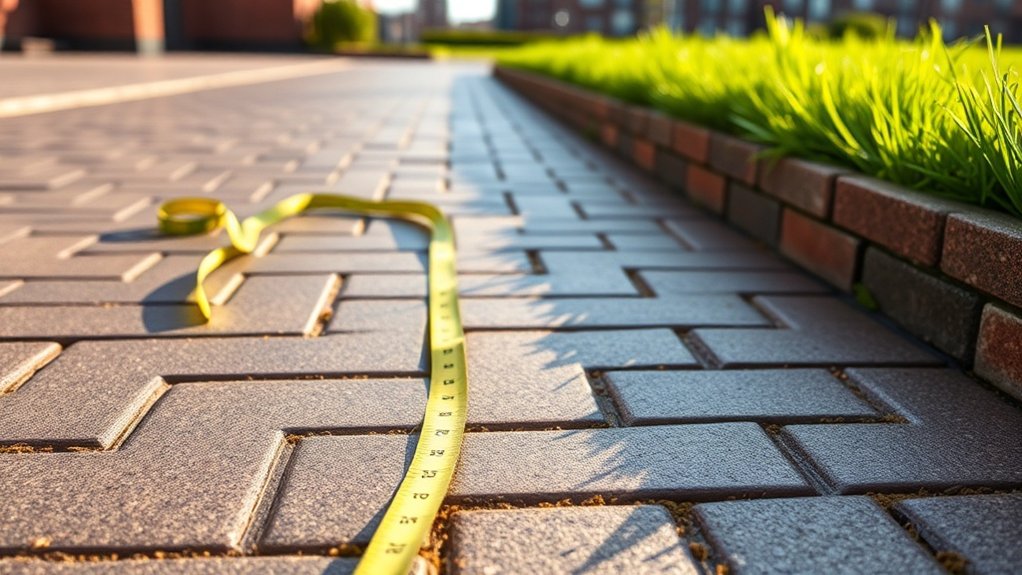
The initial costs of resin driveways in Manchester can vary significantly based on factors like size, material choice, and installation complexity.
Generally, prices range from £45 to £75 per square metre, with an average of around £60 per square metre. For a small driveway of 20m², you can expect to pay between £1,600 and £2,000. While these upfront costs may seem steep, it’s important to consider the longevity of resin driveways. A well-installed driveway can last for many years with minimal maintenance, thanks in part to its durability and drainage capabilities. Additionally, the maintenance efficiency of resin driveways contributes to their overall affordability in the long run.
When comparing costs with block paving, resin driveways often prove to be more cost-effective over time due to their durability and lower upkeep requirements. In the long run, the initial investment may lead to significant savings.
Initial Costs of Block Paving
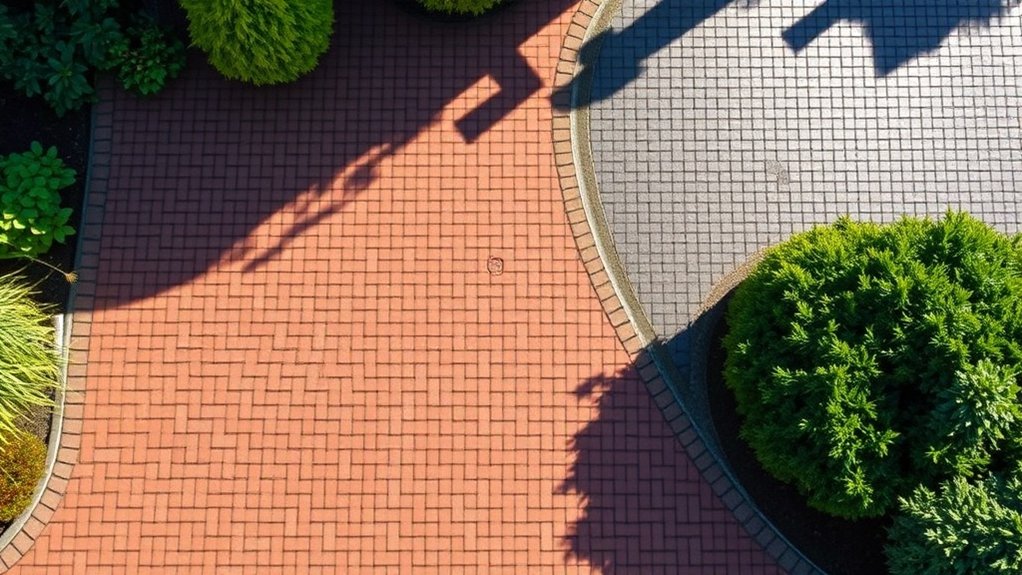
When it comes to initial costs, block paving is priced between £90 and £130 per m², which includes installation.
The material choice significantly affects this price. Concrete blocks are the most budget-friendly option, costing between £20 and £60 per m² for materials.
For a typical 50m² driveway, you could spend around £5,250 for concrete blocks or up to £5,750 for brick blocks, which offer a more attractive finish. Notably, tarmac installation costs are generally lower, making it a more budget-friendly choice for those prioritizing cost.
Remember that complex designs or high-end materials can increase your overall costs. Additionally, factors influencing cost include material choice and ground preparation requirements, making it crucial to consider these factors to make a well-informed decision about your driveway investment.
Groundwork Requirements for Both Options
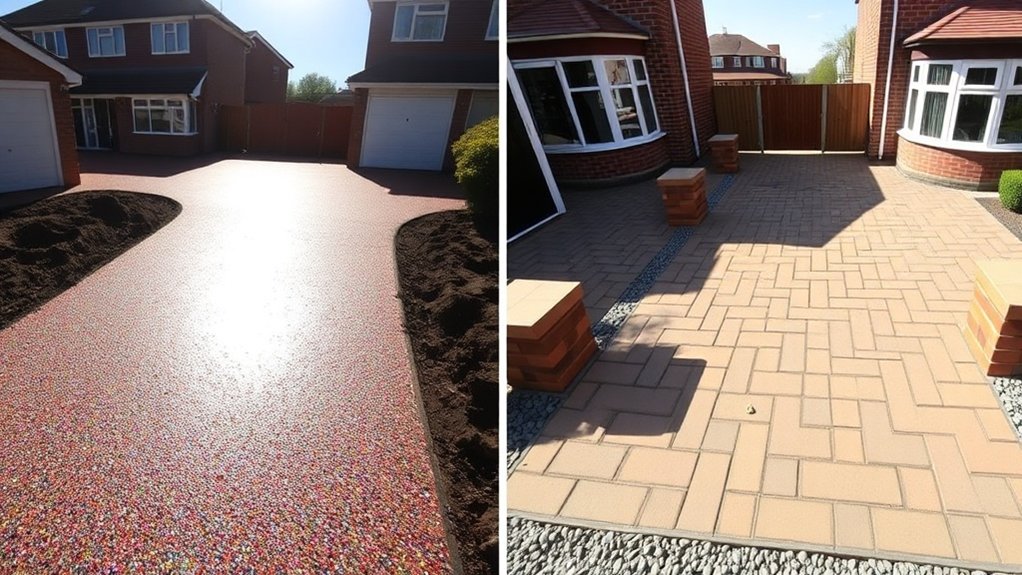
When preparing for resin driveways and block paving, the excavation depth is crucial for stability and performance.
For resin installations, you’ll need to remove the topsoil and dig down to 250mm before laying a proper sub-base.
In contrast, block paving requires a compacted sand base supported by a solid sub-structure.
Adequate preparation is key to preventing future movement issues and ensuring effective drainage.
Excavation Depth Considerations
Excavation depth is crucial for ensuring the longevity of resin driveways and block paving in Manchester.
Generally, both methods require an excavation of about 250mm. For resin driveways, you’ll need a top layer of 15-30mm and a sub-base of 150mm. It’s important that the resin depth aligns with the aggregate size, which ranges from 15mm to 30mm.
On the other hand, block paving requires a deeper profile for added stability, which includes bedding mortar and edging.
Both options demand precise excavation to create a strong foundation that can support vehicle loads, making your choice essential for durability and performance.
Sub-Base Preparation Importance
The importance of sub-base preparation is crucial when installing resin driveways and block paving in Manchester. Proper groundwork ensures stability and improves drainage, which helps prevent future surface problems.
| Aspect | Resin Driveways |
|---|---|
| Recommended Material | MOT Type 3 (permeable) |
| Compaction Requirement | 120mm depth |
| Stability Layer | Geotextile membrane |
| Surface Layer | 15-18mm resin |
For both resin driveways and block paving, it’s essential to compact the subgrade soil and evenly distribute materials like MOT Type 1 or Type 3. Skipping these steps can result in movement and surface failure, so it’s vital to invest time in sub-base preparation before installation.
Installation Labour and Timeframes
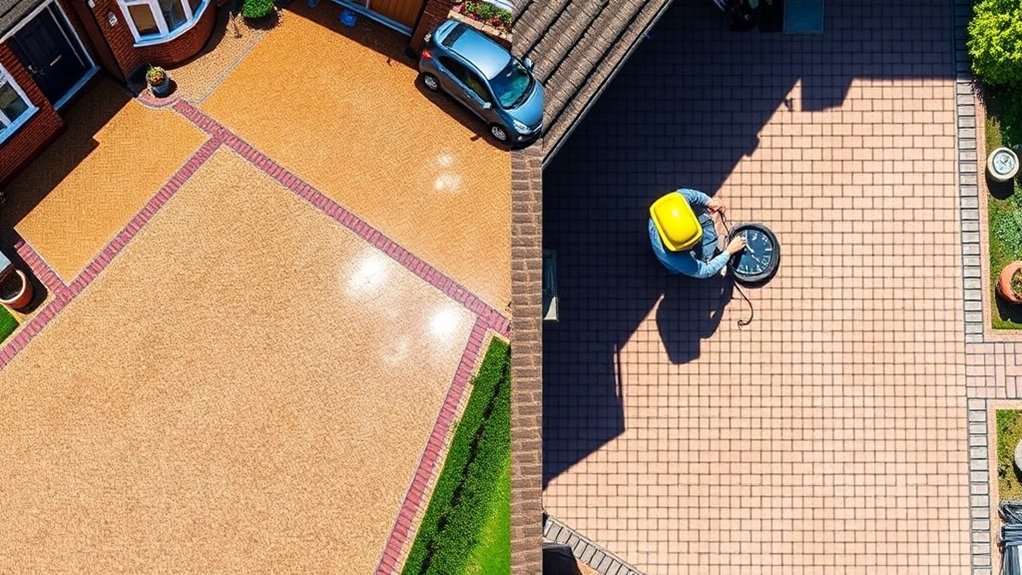
When comparing installation labour and timeframes for resin driveways and block paving, you’ll find notable differences.
Resin driveways usually incur higher labour costs due to the need for specialist skills and equipment, but they can often be installed more quickly, typically within a few days.
In contrast, while block paving might seem cheaper per square metre, its installation can take longer, sometimes stretching over several days or even weeks, particularly with intricate designs.
Labour Costs Comparison
Labour costs for resin and block paving installations are similar at £50 per m². However, the preparation and execution differ significantly, affecting overall expenses.
Resin installations require more expertise, with skilled mixing and laying, leading to labour rates of £25-£40 per m². On the other hand, block paving uses standard rates, making it a more straightforward option.
When considering total costs, resin can reach £120 per m² due to material and curing requirements, while block paving usually totals around £100.
Therefore, although basic labour costs seem equal, the complexities of resin preparation can result in higher overall labour expenses.
Installation Duration Differences
Understanding the differences in installation times between resin driveways and block paving is essential for effective project planning.
For resin driveways, the preparation phase usually takes 1-2 days, depending on the existing conditions and the size of the driveway. The actual resin application is quick, typically taking 2-3 days. Overall, you can expect the entire installation process to take about 3-4 days, including curing time.
In contrast, block paving involves more complex installation steps, which can lead to longer timelines.
Weather conditions can also significantly affect installation times for both options; resin installations perform best in dry weather, while block paving may take longer in adverse conditions.
If you’re looking for a faster completion, resin driveways have a clear advantage.
Long-Term Maintenance Considerations
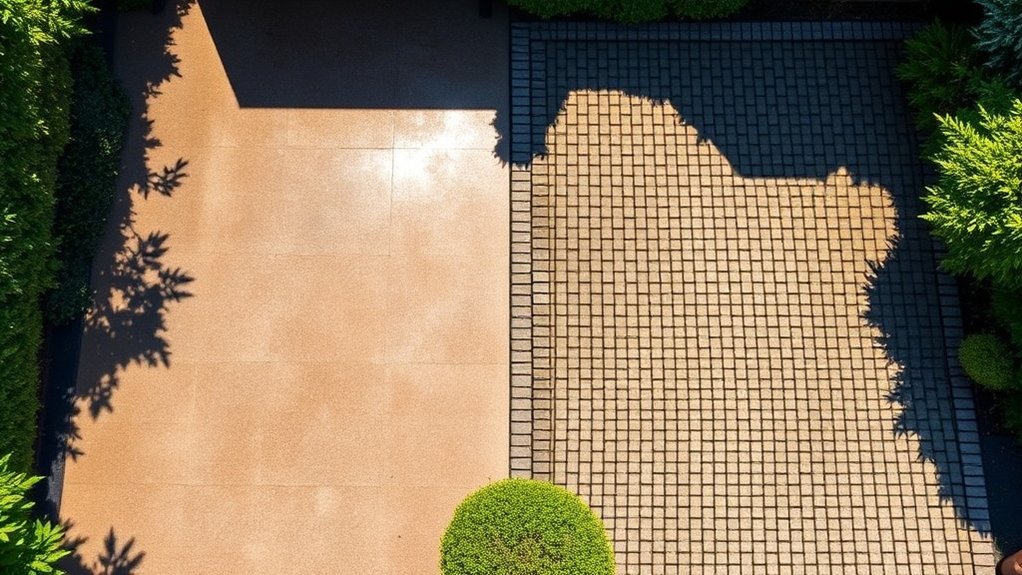
When considering long-term maintenance for your driveway, it’s important to compare resin and block paving, as both materials have distinct upkeep requirements.
1. Repair Frequency: Resin surfaces usually require occasional spot repairs for minor issues, while block paving often needs more regular attention, including joint maintenance and paver replacements.
2. Cleaning Needs: Resin surfaces generally need cleaning every 6 to 24 months, which can be done by sweeping and low-pressure washing.
In contrast, block paving requires more frequent cleaning, typically every 3 to 12 months, to maintain its appearance.
3. Durability: Resin driveways can last between 15 to 25 years, whereas block paving can endure for 20 to 30 years if properly maintained.
4. Repair Costs: Fixing resin can be more expensive, especially if you need to match the colour, while repairs for block paving are generally cheaper but may be needed more often.
Regional Factors Affecting Costs in Manchester
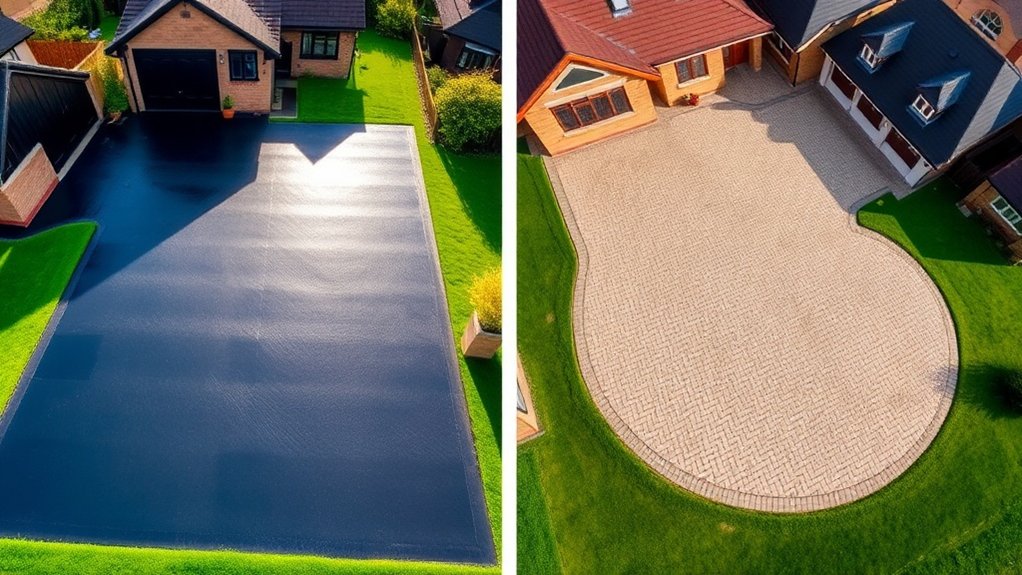
Cost factors for driveways in Manchester are shaped by various local elements, including labour rates and material availability. Labour costs can vary significantly, typically ranging from £50 to £100 per hour. Material prices also fluctuate based on regional market trends. Here’s a quick comparison for clarity:
| Material Type | Cost per Square Foot | Total for 55 sq m (600 sq ft) |
|---|---|---|
| Gravel | £11.50 | £800 |
| Tarmac | £12.00 | £850 |
| Concrete | £24.00 | £1,125 |
| Pavers | £107.00 | £6,000 |
| Resin | £120.00 | £6,600 |
Being aware of these regional factors can help you make an informed choice for your driveway project.
Aesthetic Appeal and Design Options
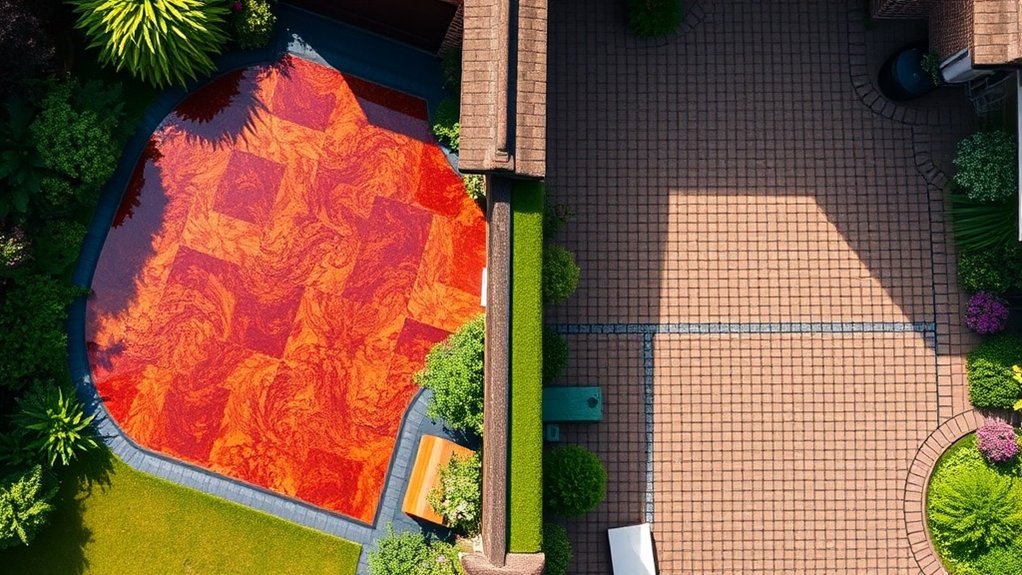
When deciding between resin driveways and block paving, you’re not just picking a surface; you’re shaping your property’s look.
Resin driveways come in a wide range of colours and textures, allowing you to create a finish that matches your home’s style perfectly.
On the other hand, block paving offers structural flexibility with its intricate patterns and sharp edges, delivering a classic appearance while still enabling personalised design options.
Colour and Texture Variety
Resin driveways and block paving each have their own appeal, but resin stands out thanks to its wide range of colours and textures.
With nearly 30 natural stone hues and over 50 specialist options, resin offers the chance to create unique blends that reflect your personal style.
You can select from:
- Neutral shades like grey and beige for a classic look.
- Bold colours such as ruby red and sapphire blue for a striking effect.
- Smooth, seamless finishes or textured patterns for added character.
- Custom aggregate mixes for truly one-of-a-kind designs.
In contrast, block paving has limited colours and standard shapes, making it less versatile than resin.
This extensive variety makes resin a fantastic choice for any driveway.
Custom Design Flexibility
Custom design flexibility distinguishes resin driveways from block paving, enabling homeowners to create driveways that meet their specific requirements and aesthetic tastes. With a range of design options, you can achieve adaptable layouts suitable for any property size and style, boosting your home’s curb appeal.
| Feature | Resin Driveways | Block Paving |
|---|---|---|
| Aggregate Blending | Unique visual effects with blends | Limited to standard block colours |
| Shape Adaptability | Custom shapes to fit any layout | Fixed shapes, less adaptable |
| Edging Options | Various materials for added contrast | Standard borders only |
| Installation Flexibility | Suitable for uneven surfaces | Requires a level base |
| Integration with Landscape | Seamless integration with outdoor spaces | Often looks out of place |
This versatility allows you to create a driveway that truly reflects your individual style.
Surface Finish Options
Surface finish options for resin driveways provide a fantastic combination of style and practicality, allowing you to customise your driveway to match your home’s character.
With choices that enhance durability and maintain their appearance, you can create an impressive entrance. Here are some options to consider:
- Resin Colour Variety – Select from a broad spectrum of colours and natural stone aggregates that suit both contemporary and traditional properties.
- Natural Stone Effects – Enjoy a seamless finish using 100% natural stone, offering a sophisticated and robust look.
- Contemporary Finishes – Choose sleek, vibrant surfaces that make a striking impression and boost your home’s curb appeal.
- Traditional Finishes – Preserve a classic look while benefiting from durable, long-lasting materials.
Your driveway can truly reflect your personal style!
Environmental Impact and Drainage Solutions
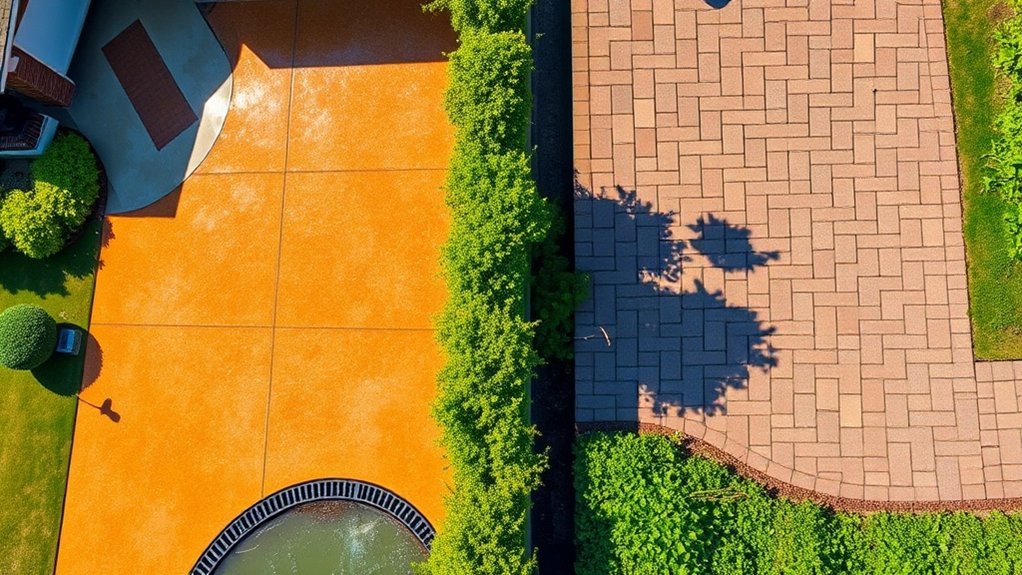
As urban areas in the UK encounter more heavy rainfall and flooding, choosing between resin driveways and block paving is crucial for effective drainage.
Resin-bound surfaces are permeable, meaning rainwater can pass through, which significantly improves drainage. This feature helps reduce surface runoff and localised flooding, effectively managing excess water in line with Sustainable Drainage Systems (SuDS) guidelines.
Moreover, resin driveways can be more environmentally friendly as they often use locally sourced aggregates, which can lower their carbon footprint compared to traditional paving.
They also encourage groundwater recharge and support urban soil health, which is vital for biodiversity. While the resin binder does have some environmental impact, the long lifespan and low maintenance of resin driveways help minimise ecological effects over time.
Final Thoughts on Cost-Effectiveness
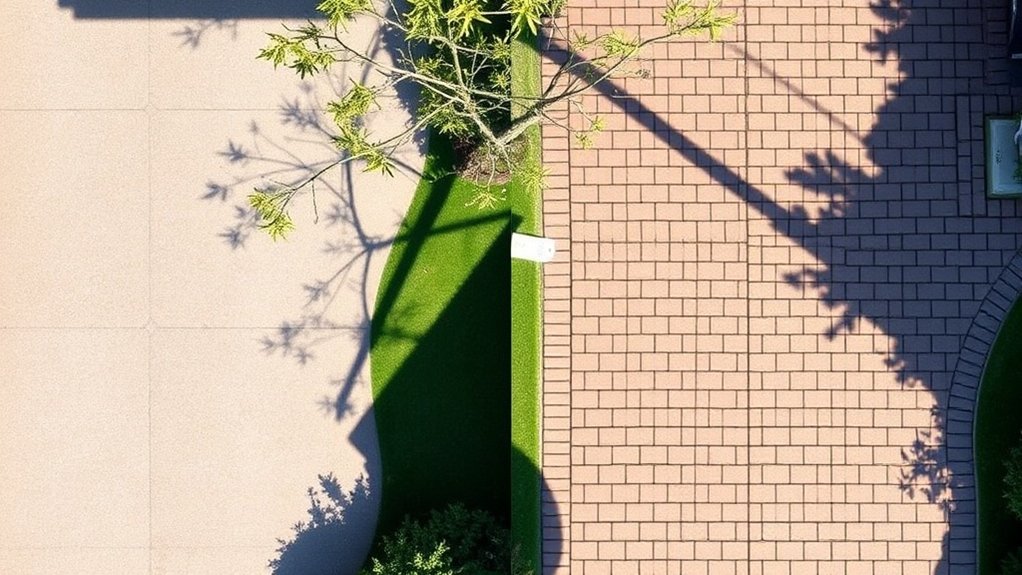
When it comes to choosing a driveway, it’s not just about looks or drainage; it can have a significant impact on your finances.
Let’s compare resin driveways and block paving to see why resin might be the smarter choice:
- Initial Costs: Resin typically costs around £125 per m², while block paving can be over £134.
- Maintenance: Resin is nearly maintenance-free, whereas block paving requires regular weeding and resealing.
- Durability: Resin lasts longer, meaning you’ll spend less on replacements over time.
- Home Value: A resin driveway can boost your property’s appeal with its modern look and low upkeep.
In terms of value, resin clearly stands out as the more economical option, especially for high-traffic driveways in Manchester.
Make a choice that benefits your finances in the long run.
Frequently Asked Questions
How Do Weather Conditions Affect Resin and Block Paving Durability?
Weather conditions significantly impact the durability of both resin and block paving. In the UK, temperature changes can lead to cracking or softening of resin, while block paving is generally more adaptable to movement. To ensure longevity, proper installation and effective drainage are crucial, especially given Manchester’s unpredictable climate.
Can I Install a Resin Driveway Over an Existing Surface?
Yes, you can install a resin driveway over an existing surface, but proper preparation is crucial. It’s important to ensure that the base is stable and suitable for a successful installation. For example, if you’re laying resin over an old tarmac or concrete driveway, make sure there are no cracks or loose sections. This will help prevent any issues down the line.
What Are the Color Options Available for Resin Driveways?
Resin driveways come in a broad range of colours, providing plenty of design flexibility. You can choose from subtle neutrals to vibrant shades, allowing you to create a personalised look that enhances your property’s appeal. For instance, a classic grey can give a modern touch, while earthy tones like terracotta can add warmth. Whether you want something understated or eye-catching, there’s a colour to suit your style.
How Does Soil Type Impact Driveway Installation Costs?
Soil type significantly affects your driveway installation costs—imagine constructing on marshland compared to a hillside! Clay soils with poor drainage require costly solutions, while sandy soils often need stabilisation to avoid future problems.
Are There Any Warranties for Resin or Block Paving Installations?
Yes, resin and block paving installations come with warranty coverage. Resin typically offers guarantees of 5 to 21 years, while block paving warranties range from 2 to 10 years, depending on the materials used and the quality of installation.
Conclusion
When deciding between resin driveways and block paving in Manchester, it’s important to weigh your needs and budget. Resin driveways offer a smooth, modern look, while block paving is known for its durability and traditional appeal. Think about what’s more important for you—style or longevity?
Take into account the costs of installation and ongoing maintenance for both options. For instance, block paving might require occasional repairs or replacements, while resin is often lower maintenance but can come with a higher initial price. Ultimately, it’s about finding the right balance that enhances your home’s curb appeal while fitting your budget.
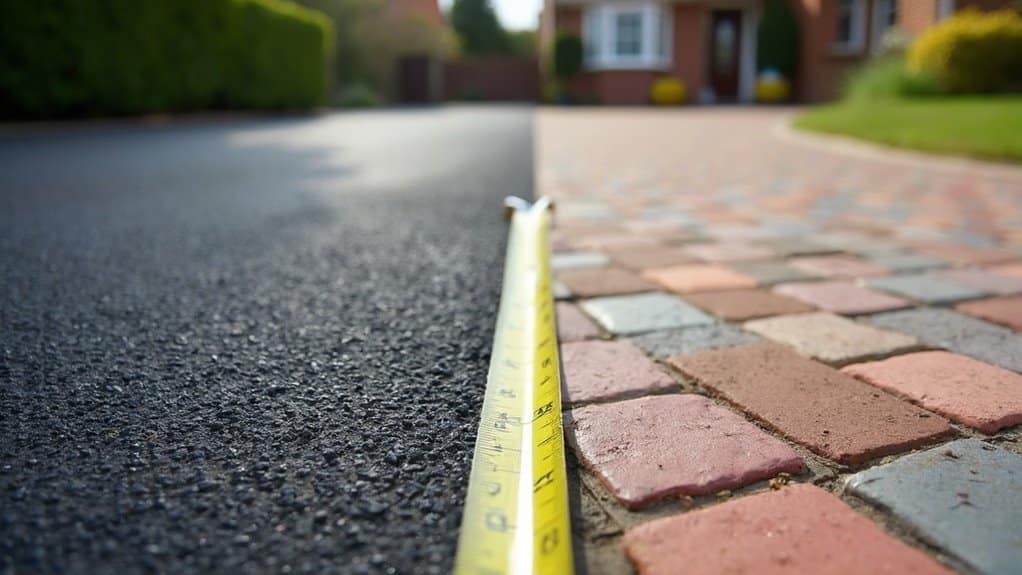
Looking for an affordable driveway option? Discover the cost differences between tarmac and block paving that could impact your decision.
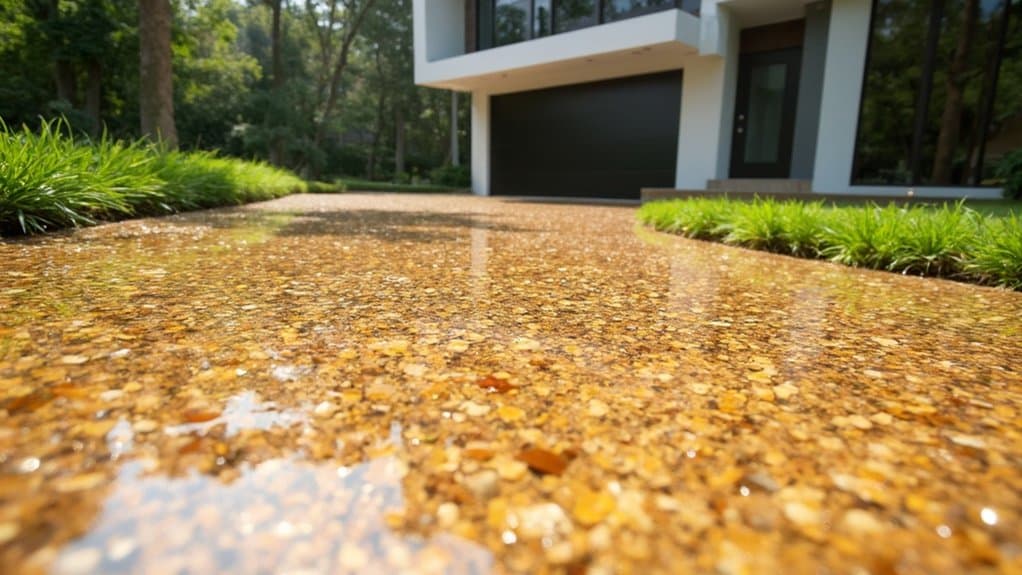
Learn about the benefits, types, and installation process of resin driveways, and discover why they might be the perfect choice Read more
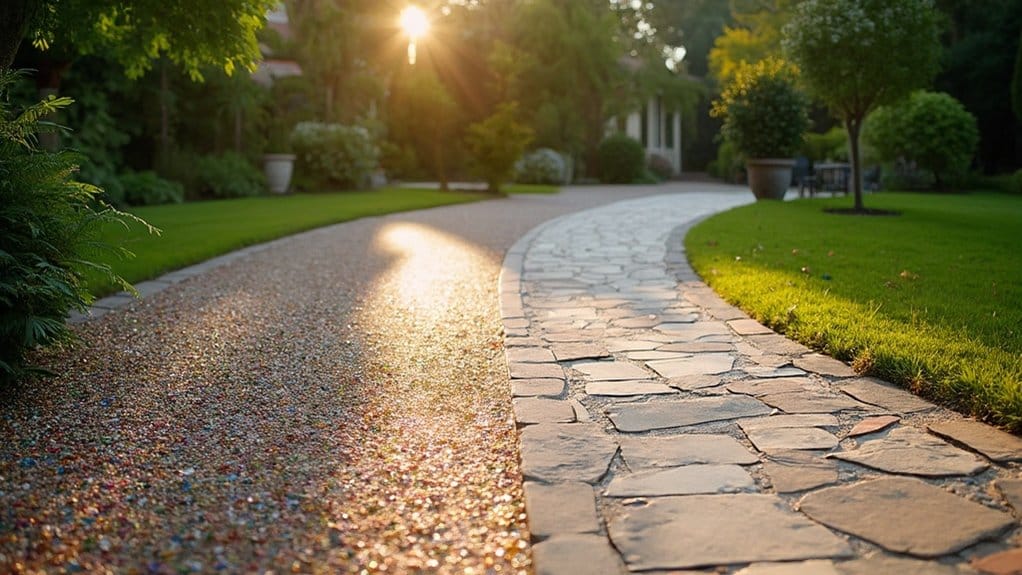
Are you confused about resin-bound and resin-bonded driveways? Discover the key differences that could impact your property choice.