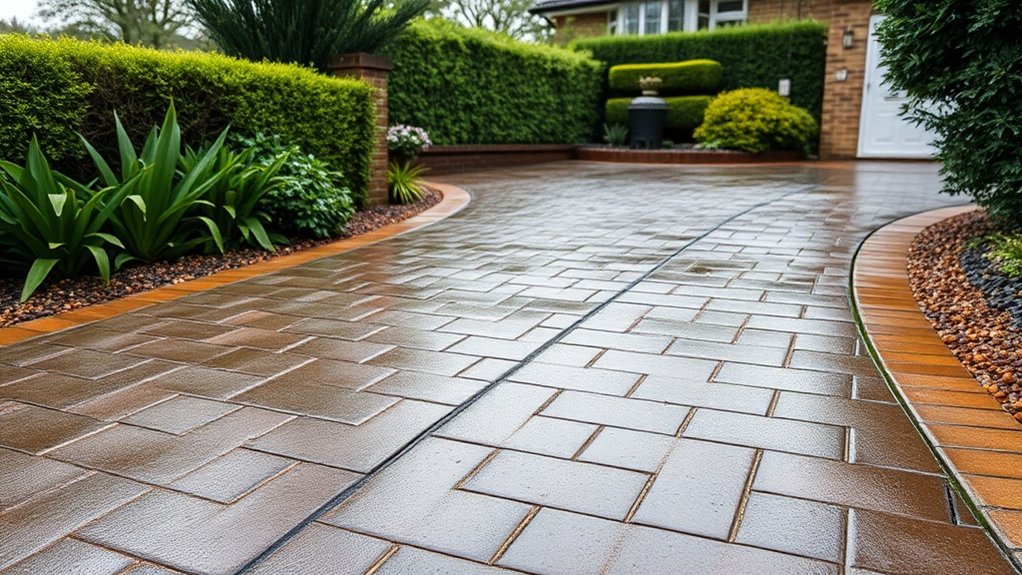
When choosing driveway materials for Manchester’s unpredictable weather, it’s essential to opt for options that offer durability and require minimal maintenance. Tarmac and asphalt are excellent choices due to their weather resistance and low upkeep. Concrete is another strong contender, providing impressive longevity and the ability to withstand heavy rain and fluctuating temperatures. Permeable paving is worth considering as well, as it allows for effective drainage, helping to reduce surface runoff. Each material has its own advantages and costs, so it’s important to weigh them carefully. Take the time to explore the unique features of each option to find the best fit for your needs.
Key Takeaways
- Tarmac/Asphalt is a top choice for Manchester’s weather, thanks to its durability, low maintenance, and quick installation. It can last anywhere from 15 to 30 years.
- Concrete driveways are built to last, with a lifespan of 30 to 100 years. They hold up well against extreme temperatures and heavy rain.
- Permeable paving allows rainwater to drain through, reducing surface runoff and helping to recharge groundwater, making it a smart option for our rainy climate.
- Regular maintenance is essential; sealing tarmac every few years and caring for block paving can extend the life of your driveway despite Manchester’s challenging weather.
- Durable materials like resin-bound systems and permeable concrete are designed to handle heavy rainfall, minimising the need for frequent replacements and ensuring long-lasting performance.
Understanding Manchester’s Climate Challenges
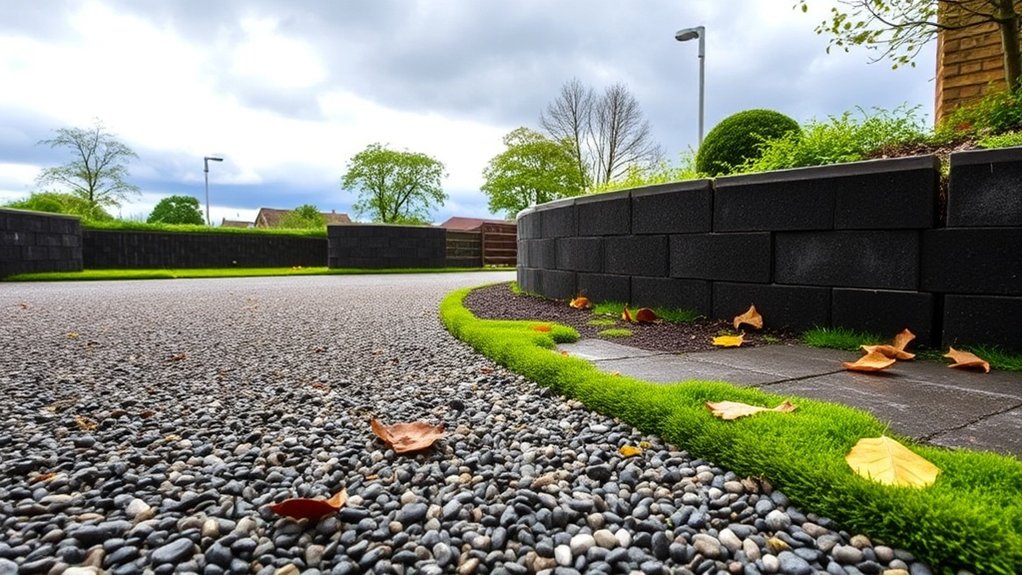
As Manchester experiences more unpredictable weather, it’s crucial to choose the right materials for driveways. The city’s average annual temperature is 9.4°C, with a historic rise of 1.1°C, highlighting the need for resilience against climate impacts.
With average rainfall at 806.6 mm and more rainy days, adapting to wet conditions is essential. Proper drainage solutions, such as Sustainable Urban Drainage Systems (SUDS), are vital for effective water management to prevent flooding. High humidity levels, typically between 81-87%, can accelerate material wear, making moisture-resistant options important. Furthermore, the region’s average annual precipitation 830 mm adds to the necessity for robust drainage solutions to prevent flooding.
Additionally, average wind speeds of 15.9 kph can make winters feel colder, so selecting durable materials that endure harsh weather is vital. By considering these factors, you can make informed choices that will enhance your driveway’s lifespan and functionality, supporting Manchester’s changing climate.
The Importance of Selecting the Right Driveway Material
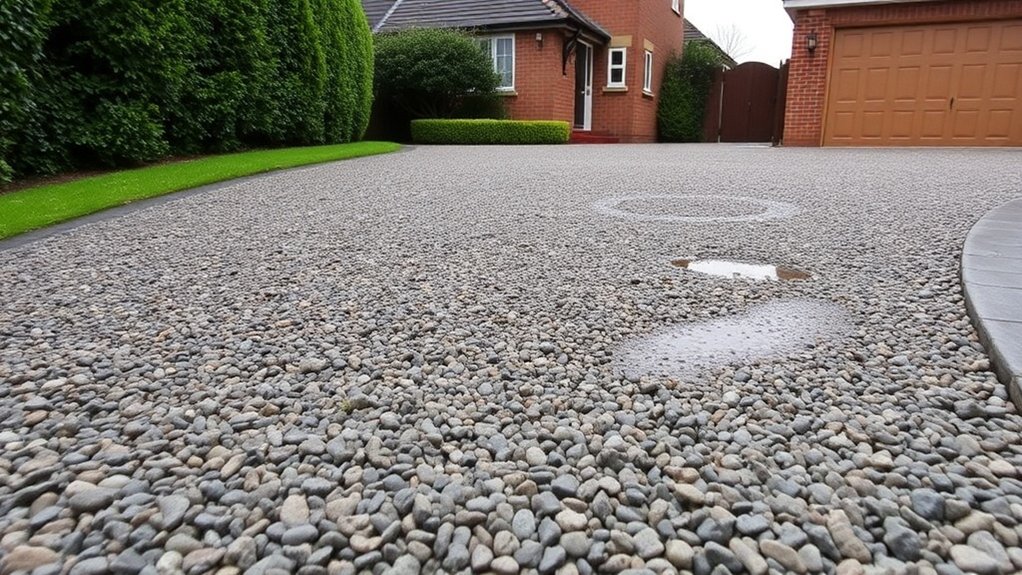
Choosing the right driveway material is crucial for durability and functionality, particularly in Manchester’s unpredictable weather. The material you pick will not only affect how long your driveway lasts but also its appearance. Here’s a straightforward comparison of common driveway materials:
| Material | Expected Lifespan |
|---|---|
| Concrete | 25–40 years |
| Asphalt/Tarmac | 15–25 years |
| Block Paving | 20–40 years |
| Gravel | 5–20 years |
It’s important to understand that concrete and block paving are robust options that handle weight well, while gravel can require more upkeep to prevent deterioration. By opting for a durable material, you enhance both the lifespan and visual appeal of your driveway, which can save you money on repairs and replacements in the long run. Additionally, professional installations ensure long-term investment benefits, making your choice even more impactful. Considering the maintenance requirements, tarmac requires regular sealcoating to prolong its lifespan, which is a significant factor in its long-term costs.
Overview of Permeable Paving

Permeable paving provides an effective way to manage water runoff while improving the look of driveways. This system features porous surfaces that allow rainwater to seep through gaps into gravel reservoirs, significantly reducing surface runoff. Materials like pervious concrete and porous asphalt create spaces filled with aggregates, enabling quick drainage and natural filtration of pollutants. This is particularly beneficial for areas like Manchester, which experiences heavy rainfall. Permeable paving helps prevent flooding and ensures good traction during icy weather. It also contributes to sustainable water management, filters out contaminants, and helps combat the urban heat island effect. Additionally, these driveways support groundwater recharge, making them an environmentally friendly option. With low maintenance and impressive durability, it’s a smart choice for homeowners who want a practical yet attractive driveway.
Benefits of Tarmac/Asphalt for Manchester Driveways

When considering driveway options in Manchester’s unpredictable weather, tarmac and asphalt are excellent choices due to their affordability and strength.
Here are some key advantages:
- Durability: Tarmac can last between 15 to 30 years, making it ideal for handling heavy vehicles and regular traffic.
- Weather Resistance: It stands up well to Manchester’s rain, snow, and temperature fluctuations, meaning fewer repairs are needed over time.
- Low Maintenance: Tarmac requires little upkeep—just occasional sealing and crack repairs, which keeps long-term costs down.
- Quick Installation: Installation is typically quicker and more cost-effective, allowing you to enjoy your new driveway sooner.
Advantages of Concrete Driveways

When choosing a driveway material that can endure Manchester’s unpredictable weather, concrete driveways are an excellent choice due to their remarkable durability and low maintenance requirements.
They’re built to withstand extreme temperatures without cracking, and they resist heavy rain, snow, and even corrosive coastal air. With a lifespan ranging from 30 to 100 years, concrete driveways can handle daily vehicle traffic and heavy use without shifting or sinking.
Concrete is also crack-resistant and frost-proof, making it particularly suited to Manchester’s climate. Sealing can further enhance its ability to withstand rain and temperature changes, ensuring it lasts longer.
Exploring Gravel as a Driveway Option
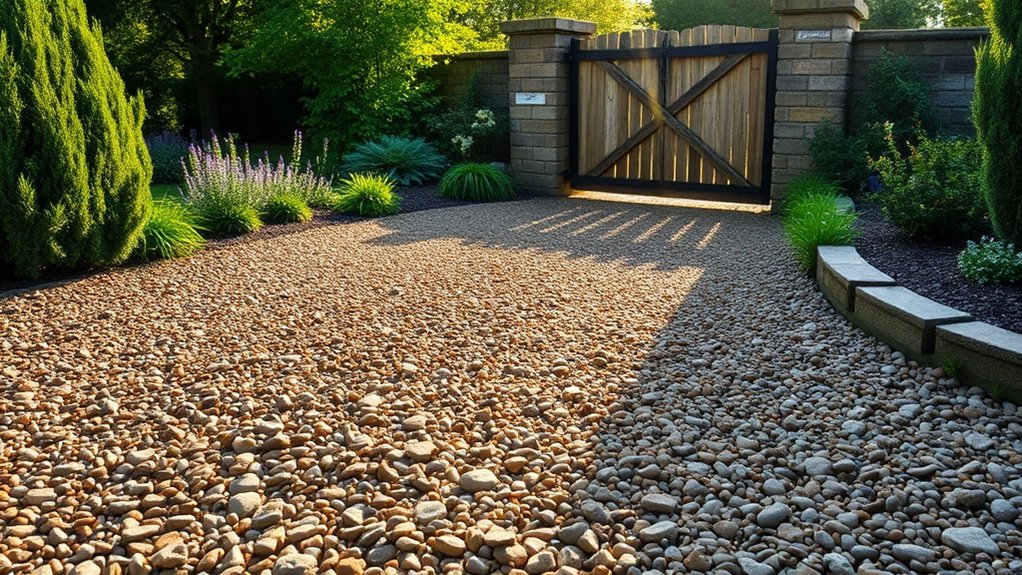
- High Permeability: Gravel allows rainwater to drain quickly, reducing the risk of surface water pooling.
- Moisture Resistance: Using materials like pea gravel or crushed granite improves resistance to the weather.
- Stabilisation Solutions: Installing permeable grid systems can help keep the gravel in place during heavy rain.
- Cost-Effective: Gravel driveways typically have lower initial costs than solid surfaces, though they do require regular upkeep.
To ensure durability and performance, proper installation is key. This includes a well-compacted sub-base and edge restraints, making gravel a sensible choice for driveways in Manchester’s unpredictable weather.
Block Paving: Aesthetic and Functional Choices

Gravel driveways are practical for Manchester’s weather, but block paving combines visual appeal with functionality.
Concrete and brick pavers are durable enough to handle Manchester’s temperature swings, ensuring they perform well even in colder months. The interlocking designs help prevent cracking, and permeable options improve drainage, effectively managing stormwater runoff.
To keep your block paving looking good, be mindful of potential staining from algae and weeds due to damp conditions. Regular maintenance, like resealing, is key to preserving both its appearance and structural integrity.
It’s best to install block paving during dry periods, as heavy rain can interfere with the jointing process. With proper care, your block paving won’t only last but also enhance your property’s overall look.
Resin-Bound Surfaces: Pros and Cons
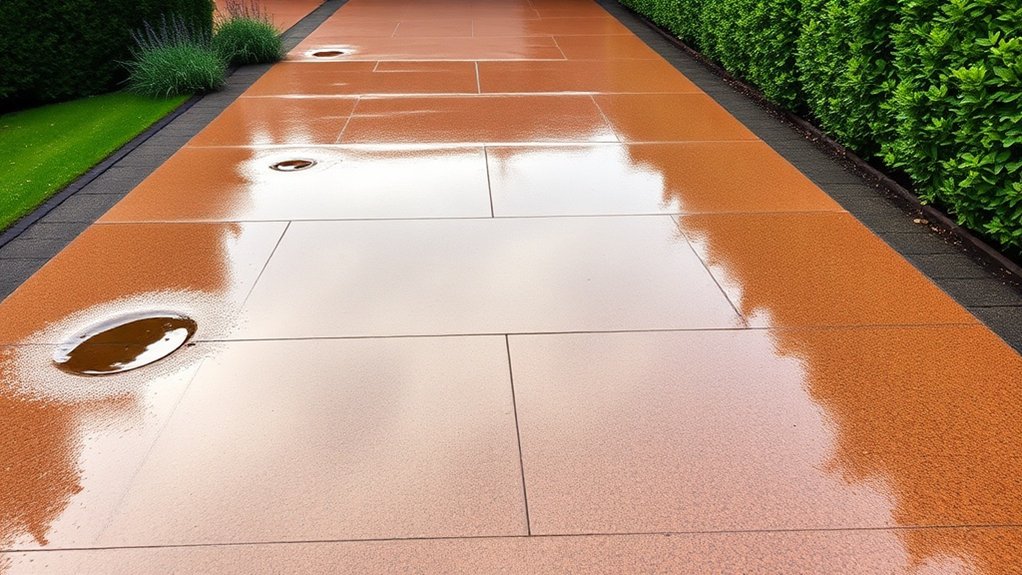
Resin-bound surfaces provide a contemporary option for driveways, especially in challenging weather like that experienced in Manchester. Here’s a straightforward look at the pros and cons:
- Advantages:
- Porous: Helps reduce surface water runoff, which minimises puddles.
- Durable: With proper installation and upkeep, it can last over a decade.
- Aesthetic Variety: Available in a wide range of natural stone finishes to suit your style.
- Frost Resistant: When installed correctly, it withstands freeze-thaw cycles effectively.
- Disadvantages:
- Installation Sensitivity: Needs a well-prepared base; inadequate preparation can lead to issues.
- Load Limitations: Not ideal for areas with heavy traffic unless reinforced.
- Staining Risk: Some resins may stain from oil or fuel spills if not treated.
- Weather Dependent: Installation must be carried out within certain temperature ranges for best results.
Maintenance Considerations for Driveway Materials
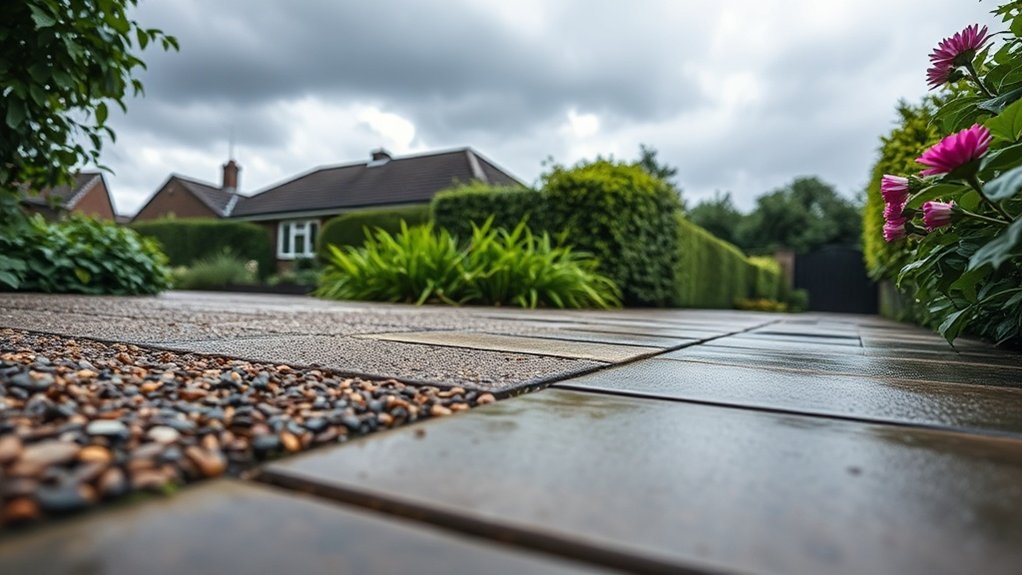
Choosing the right driveway material for Manchester’s weather is just the start; regular maintenance is vital for longevity and performance.
For tarmac, it’s important to clean and re-seal every few years to keep it looking good and extend its life.
Block paving requires sealing, weed control, and re-sanding of joints to prevent weeds from taking hold.
Gravel needs regular weeding and stabilising grids to stop stones from shifting, particularly during heavy rain.
Permeable surfacing must be cleaned to prevent clogging, and using a jet washer can help maintain its drainage capabilities.
Regular inspections and prompt crack repairs are essential for all materials.
Aim for a maintenance schedule of every 2-4 years for sealing to significantly enhance your driveway’s durability in Manchester’s challenging climate.
Cost Comparison of Driveway Options
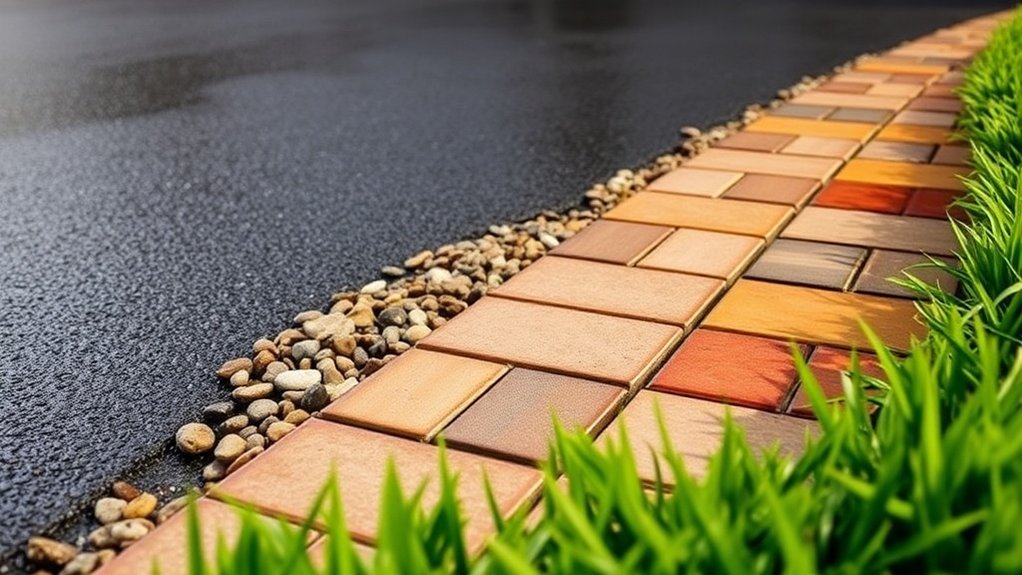
When comparing driveway options in Manchester, it’s crucial to consider the costs of different materials to make a well-informed choice.
Here’s a quick overview of typical prices:
- Tarmac: £90 per m² installed. It’s affordable and durable.
- Concrete: About £95 per m² installed. Offers good durability and a neat finish.
- Block Paving: Approximately £100 per m² installed. Attractive but requires more maintenance.
- Resin-bound: Can go up to £180 per m² installed. It looks great and lasts long, but it’s a bigger upfront investment.
While options like gravel might seem cheap, they can lead to higher maintenance costs over time, affecting overall value.
Weighing both initial prices and durability will guide you to the right choice for your driveway.
Environmental Impact of Driveway Materials
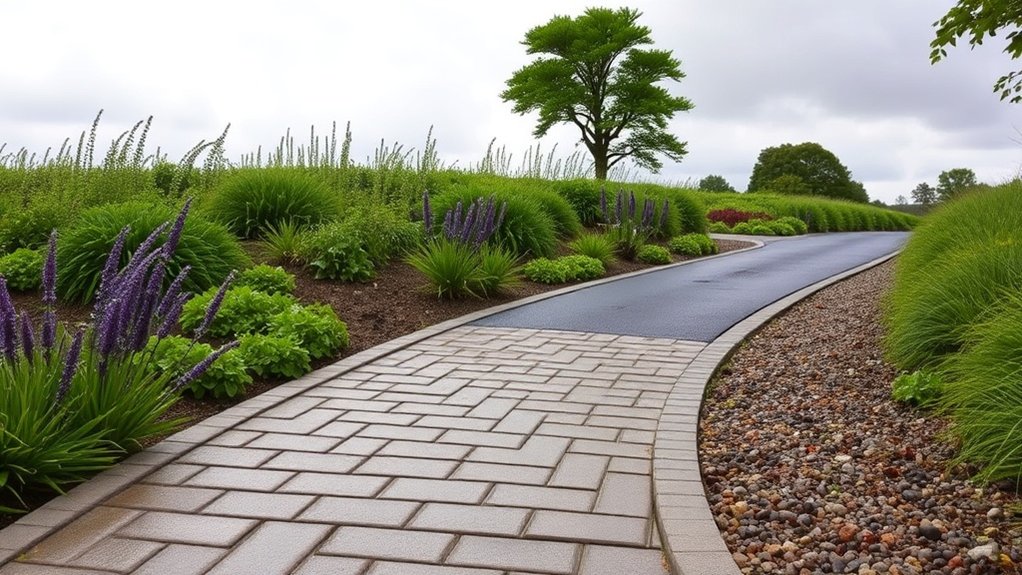
When choosing driveway materials, it’s important to consider their sustainability and carbon footprint.
Options such as permeable paving and recycled aggregates can significantly reduce environmental impact while also aiding in drainage and groundwater recharge.
Sustainable Material Choices
Choosing sustainable materials for your driveway is crucial for reducing environmental impact, particularly in areas like Manchester where the weather can be unpredictable.
By selecting eco-friendly alternatives, you can help create a healthier ecosystem. Here are some sustainable material options to consider:
- Permeable surfaces: These allow rainwater to drain, which helps prevent flooding and supports natural filtration.
- Recycled content: Look for materials such as Recycle Bound, which use waste plastics, helping to reduce landfill waste.
- Durability: Opt for options like resin-bound systems that can last 15-20 years, cutting down on the need for frequent replacements.
- Low maintenance: Smooth surfaces deter weed growth and require less water and energy for upkeep.
These choices reflect a commitment to sustainable sourcing, ensuring your driveway is both practical and environmentally friendly.
Carbon Footprint Considerations
Sustainable material choices significantly affect the carbon footprint of driveway installation. By evaluating various materials, you can implement effective carbon offsetting strategies and adopt eco-friendly practices. Here’s a concise overview of different driveway materials:
| Material | Carbon Footprint | Environmental Benefits |
|---|---|---|
| Resin Driveways | Low | Recyclable, permeable, heat-reflective |
| Asphalt | High | Absorbs heat, non-porous |
| Concrete | Medium | Moderate heat absorption, significant emissions |
| Recycled Materials | Low | Reduces waste, sustainably sourced |
| Pervious Concrete | Medium | Allows groundwater recharge, reduces heat |
Opting for materials with lower carbon footprints, such as resin and recycled options, not only cuts emissions but also promotes sustainability, especially in a climate like Manchester’s.
Final Tips for Choosing Your Driveway Material

What should you consider to ensure your driveway material can handle Manchester’s unpredictable weather? Focus on durability, maintenance, aesthetics, and installation techniques for lasting satisfaction.
- Durability: Choose materials such as resin bound or permeable concrete, which can endure heavy rainfall and help minimise flooding.
- Maintenance: Opt for low-maintenance solutions like patterned concrete or resin bound to save time and hassle.
- Driveway Aesthetics: Think about design flexibility with block paving or the contemporary appearance of resin bound to boost your home’s curb appeal.
- Installation Techniques: Ensure proper ground preparation and professional installation, especially with block paving, to achieve optimal results.
Frequently Asked Questions
How Do Seasonal Changes Affect Driveway Maintenance in Manchester?
Seasonal weather in Manchester has a significant impact on driveway maintenance. It’s essential to regularly check for cracks and erosion, clear away debris, and use de-icing treatments during winter. By following these straightforward maintenance tips, you can ensure your driveway remains durable and able to withstand the local climate challenges.
What Is the Best Driveway Material for Heavy Vehicles?
For heavy vehicles, reinforced concrete is the most durable and long-lasting option, while heavy-duty asphalt is a more cost-effective choice. Both materials can handle significant weight, but concrete’s strength and lifespan make it the better option for long-term use. For example, if you frequently park large vans or trucks, concrete will likely serve you better over the years.
Can I Install a Driveway Myself, or Should I Hire a Professional?
You can try installing a driveway yourself, but seeking professional advice ensures proper drainage, compaction, and adherence to regulations. Consider the risks of poor execution against the potential long-term savings and value retention before making your decision. For instance, an improperly laid driveway may lead to costly repairs down the line, so it might be wiser to hire a professional to get it right the first time.
How Long Does Each Driveway Material Typically Last?
Driveway longevity depends on the material used: concrete can last between 25 and 40 years, tarmac typically lasts 15 to 30 years, block paving has a lifespan of 20 to 30 years, gravel can last anywhere from 10 to over 50 years, and resin-bound driveways usually last 15 to 25 years. Choosing a durable material is essential for optimal performance and longevity.
Are There Any Local Regulations for Driveway Installations in Manchester?
Yes, you’ll need to consider driveway permits and installation guidelines in Manchester. It’s important to comply with local regulations, particularly regarding the use of permeable materials, drainage requirements, and any specific restrictions in conservation areas or for listed buildings. For example, if your property is in a conservation area, you may need to seek permission before installing a new driveway.
Conclusion
Choosing the right driveway material for Manchester’s unpredictable weather is essential. With heavy rain and freeze-thaw cycles, permeable paving or tarmac are excellent options. A well-chosen driveway not only boosts your home’s curb appeal but also withstands the elements, keeping you on solid ground during storms. Remember, durability is key when selecting a material that can handle Manchester’s climate.
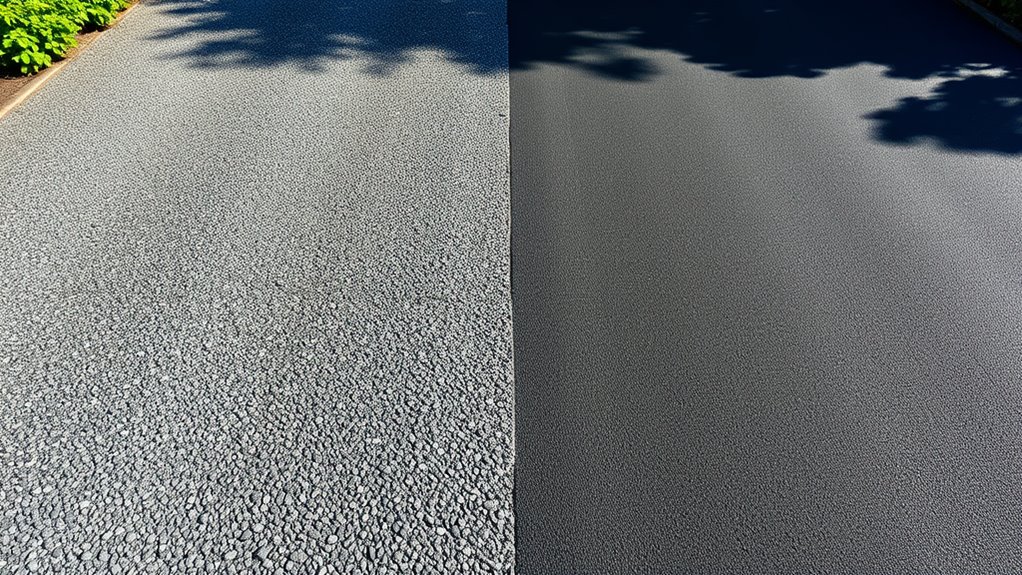
Beneath the surface of tarmac and asphalt driveways lies a world of differences; discover which option suits your needs best.
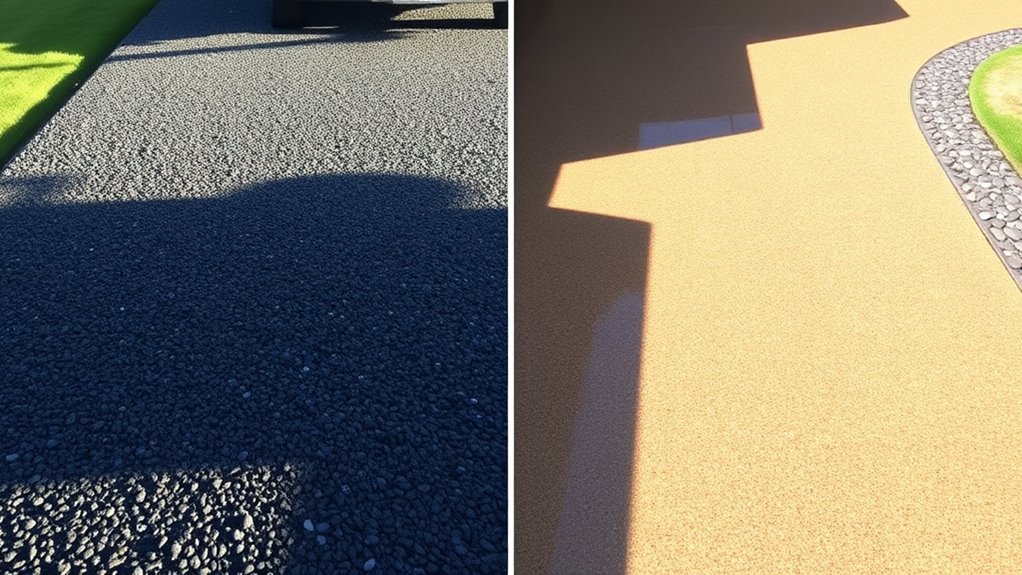
Choosing between a tarmac and resin driveway can be challenging; discover the key factors that could influence your decision.
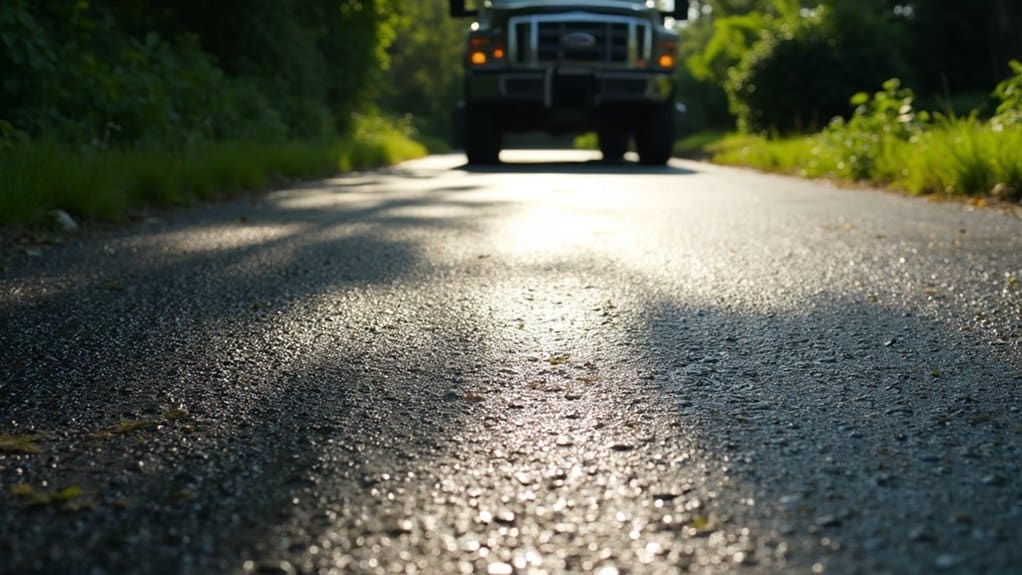
Tarmac driveways can support impressive weights, but understanding the key factors will help you determine just how much yours can Read more