
To prevent water damage on your driveway, ensure proper grading with a slope of 6-10% to direct water away effectively. Implement reliable drainage systems like channel drains or French drains to manage runoff. A gravel driveway can also be beneficial, as it absorbs water and reduces pooling. Regularly check and maintain your drainage systems to prevent blockages and other issues. For more tips on managing your driveway effectively, read on.
Key Takeaways
- Ensure proper grading with a slope of 6-10% to direct water away from the driveway and avoid pooling.
- Install effective drainage systems, such as channel drains or French drains, to manage water runoff and reduce erosion.
- Consider using gravel driveways to encourage water infiltration and minimise flooding risks, while also blending in with the landscape.
- Carry out regular inspections and maintenance of drainage systems, clearing debris and replenishing materials as necessary for optimal performance.
- Repair potholes promptly to prevent water infiltration, using quality materials and scheduling repairs during quieter times.
Importance of Proper Grading for Driveways
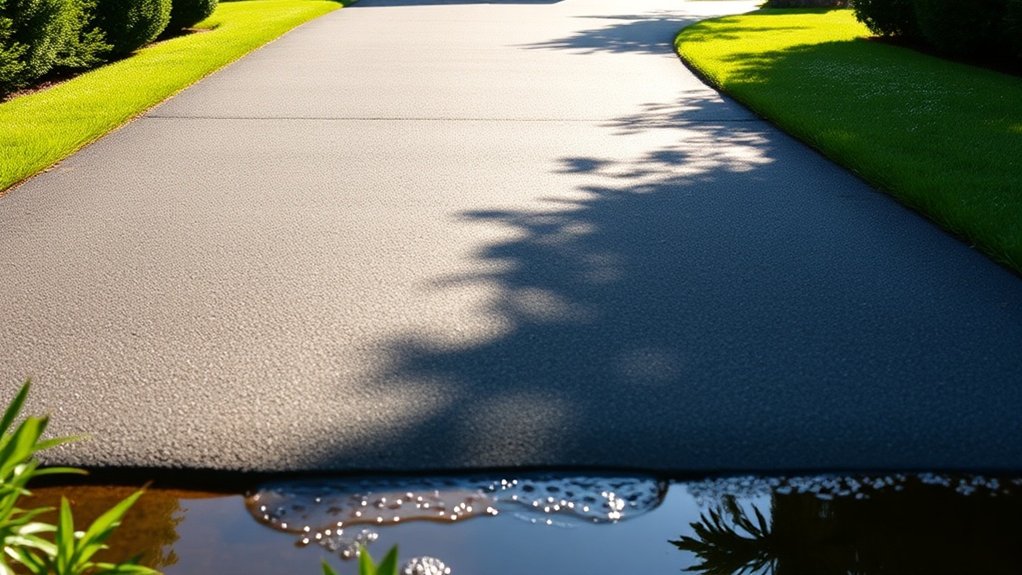
Proper grading is vital for maintaining your driveway, as it directly affects drainage and water management. Effective grading techniques direct water away from the surface, preventing pooling and reducing moisture retention that can weaken driveway materials. By establishing stable, even slopes, you help minimise soil erosion and protect the structural integrity of your driveway, extending its lifespan. Moreover, grading stops water from infiltrating, which can lead to cracks and potholes. It’s important to address low spots and uneven areas that can trap water. Regular grading not only protects your home’s foundation and landscaping but also enhances safety by eliminating hazardous standing water. In the long run, proper grading promotes natural rainwater flow and reduces repair costs while boosting your property’s value. Additionally, proper drainage regulations for driveways help ensure compliance with local standards and enhance water management.
Recommended Driveway Slope and Drainage
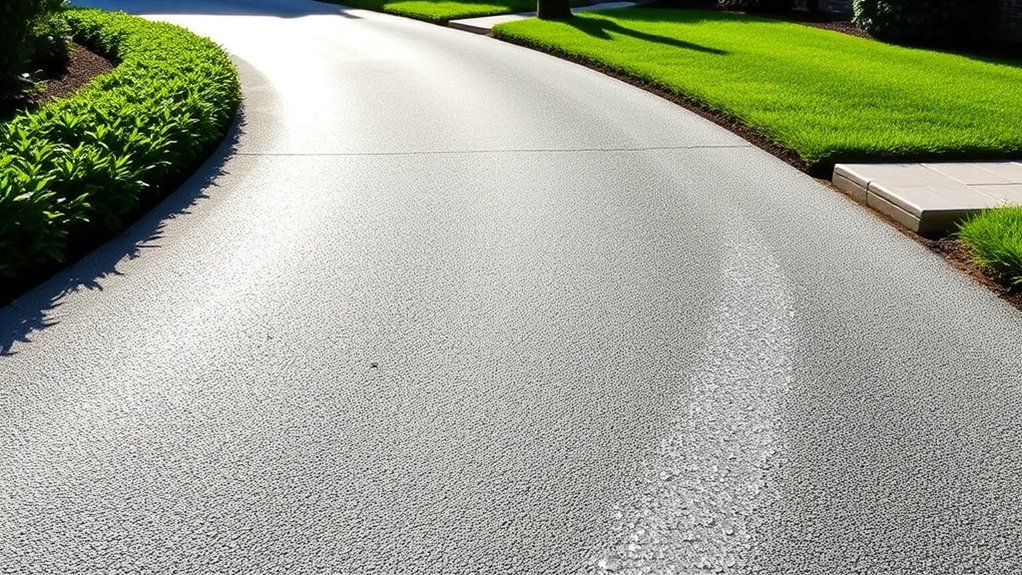
When planning your driveway, aim for a slope of 6-10% to ensure proper drainage and vehicle safety. This slope helps direct rainwater away from the surface, minimising the risk of damage. Consider adding drainage solutions, such as culverts or retaining walls, to improve water management around your property. Implementing an appropriate driveway slope is crucial for effective drainage and overall functionality. Additionally, ensuring that your driveway includes effective drainage solutions can significantly reduce the risk of water pooling and potential damage.
Ideal Slope Guidelines
Maintaining the ideal slope for your driveway is crucial for effective drainage and functionality. For standard residential driveways, a maximum slope of 10% is recommended, while asphalt driveways can safely reach around 15%. This means for every 100 feet of horizontal distance, the driveway should rise no more than 10 feet for a 10% slope. Ensure that drainage flows away from the driveway to prevent water pooling. Additionally, consider the materials used and local building regulations, as these can affect your slope choices. In areas with steeper terrain, you may need to incorporate features like retaining walls to manage water flow and reduce erosion risks. Regularly assessing and improving the surface gradient is essential for optimal water management. Safety considerations for vehicle operation are important when designing driveways with steep slopes.
Effective Drainage Solutions
Effective drainage solutions are essential for maintaining your driveway and preventing water damage. Installing channel drains can be a great option; they capture water runoff on sloped driveways and direct it to drainage outlets. Made from robust materials, these drains can accommodate various traffic loads and need regular maintenance.
Alternatively, French drains discreetly absorb and redirect water, while permeable pavers allow rainwater to seep through, helping to recharge groundwater.
For a more streamlined appearance, consider slot drains, which collect water without visible grates. Catch basins and culverts are also effective for managing larger volumes of water, particularly during heavy rain.
Effective Drainage System Options

To effectively prevent water damage to your driveway, consider a range of drainage system options tailored to your property’s needs.
Trench drains are particularly effective in sloped areas, as they quickly capture water and direct it to lower points. You can opt for traditional concrete, HDPE modular, or modern slot drains for easier maintenance.
Channel grates and drain pipes are also useful for redirecting runoff away from your driveway, minimising the risk of pooling.
If you’re looking for more permeable solutions, permeable pavements allow water to seep into the ground, helping to reduce flooding risks.
Additionally, landscaping swales can improve onsite water absorption, while proper surface grading ensures efficient drainage.
These drainage solutions will help protect your driveway from potential damage.
Benefits of Gravel Driveways for Water Management

Many homeowners are on the lookout for durable driveway options, and gravel driveways are particularly noteworthy for their effective water management. The permeability of gravel allows rainwater to seep through, which reduces surface runoff and prevents water pooling. This not only lowers the chances of localised flooding but also helps to replenish groundwater supplies. Plus, gravel driveways are made from eco-friendly materials, making them a sustainable choice for landscaping.
| Benefit | Description |
|---|---|
| Water Infiltration | Helps rainwater seep through, aiding groundwater replenishment. |
| Erosion Control | Reduces soil erosion by allowing water to infiltrate. |
| Flood Prevention | Prevents water pooling, thus lowering flooding risks. |
| Sustainable Choice | Uses fewer resources and blends well with natural surroundings. |
Installing Trench Drains for Surface Water Control
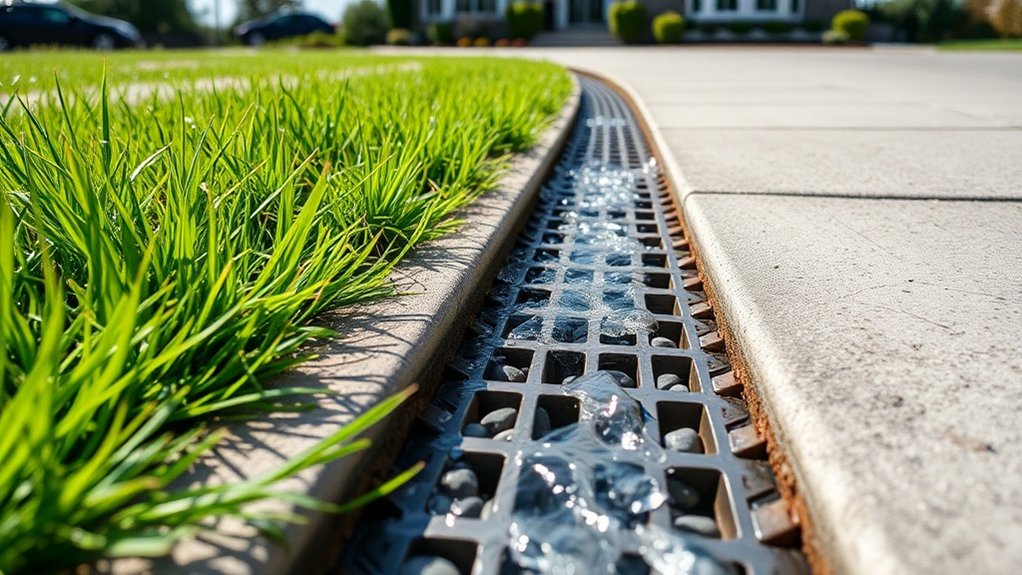
Installing trench drains can significantly improve surface water management on your driveway.
It’s important to choose the right type of trench drain to meet your specific runoff requirements and adhere to best practices during installation for optimal performance.
By ensuring proper placement and alignment, you can prevent water damage and protect the integrity of your driveway.
For instance, positioning the drain at the lowest point of your driveway will effectively direct water away from your property.
Types of Trench Drains
When it comes to managing surface water runoff, knowing the different types of trench drains can greatly help in safeguarding your driveway and garden. Here’s a brief overview:
- Channel Drains: Ideal for flat areas, these feature an open channel and grate to capture runoff effectively.
- Traditional Trench Drains: Commonly used in gardens and driveways, they can be customised in size and are straightforward to maintain.
- Pre-sloped and Neutral Systems: Pre-sloped channels use gravity for effective water flow, while neutral systems are better suited for tight spaces.
- Material Options: Choices range from robust cast iron to lightweight HDPE, which impacts load capacity and how easily they can be installed.
Selecting the right trench drain materials and ensuring proper installation are key to achieving effective drainage and ensuring the longevity of your surfaces.
Installation Best Practices
To install trench drains for surface water control effectively, follow these straightforward steps to ensure proper functionality and durability.
First, measure your drainage path and maintain a 1% slope for efficient water flow. Clearly mark the trench line and verify the dimensions of the drain type you’ve chosen.
For the concrete base, use a water-cooled saw to cut through any existing asphalt or concrete, then dig a trench about 6 inches deep. Make sure to clear out any debris and add a 1-inch layer of compacted gravel for drainage.
Next, pour a 4 to 6-inch concrete footing, ensuring it slopes towards the outlet.
After that, dry-fit the channel sections and securely connect them. Set them in the wet concrete, anchoring them to prevent any movement while the concrete cures. This method will help ensure your trench drain performs well over time.
Utilizing French Drains for Infiltration

Using French drains for water infiltration can significantly enhance drainage around your driveway, particularly in areas that tend to collect water.
Here are some main advantages of this drainage solution:
- Diverts water away from your driveway, reducing the risk of pooling and subsequent damage.
- Minimises soil erosion and prevents substrate saturation, helping to maintain the structure of your driveway.
- Reduces cracking and heaving caused by freeze-thaw cycles associated with inadequate drainage.
- Increases safety by eliminating puddles and ice patches that can pose a hazard.
When installing French drains, it’s important to identify low-lying areas, ensure proper slope, and select suitable materials.
Regular maintenance is crucial to ensure the system operates effectively.
Channel Drains for Garage Water Buildup
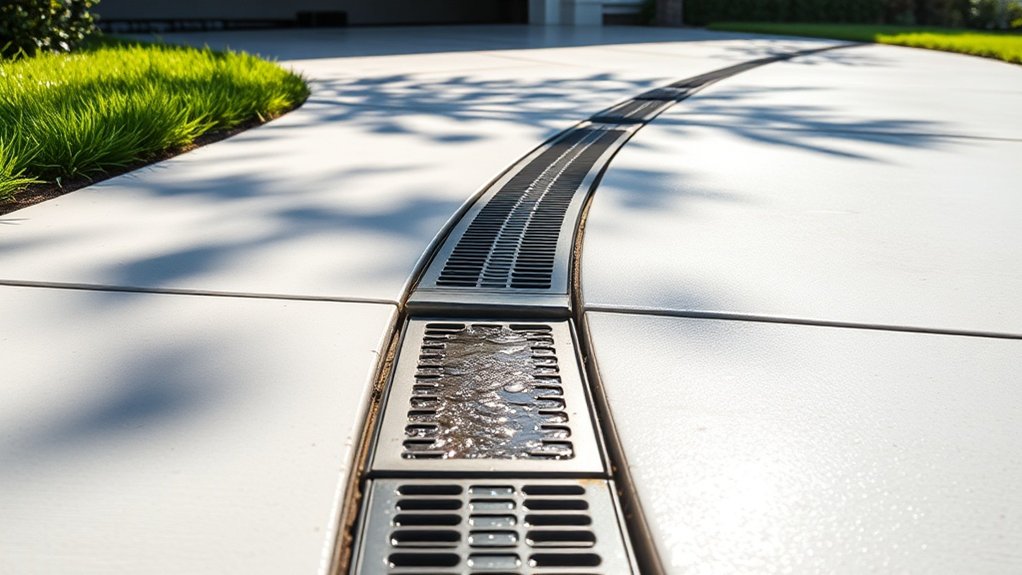
To effectively manage water buildup in your garage, installing channel drains is a practical solution. These drains intercept water before it enters, enhancing their effectiveness.
Start by marking the trench location for the drain and contact local utility services to avoid damaging any underground lines. Dig a trench with a slight slope to promote water flow.
Once the channel drain is installed, connect it to an underground drainage pipe, ensuring proper alignment and sealing. Encasing the drain in concrete will support vehicle loads and prevent damage.
Regular maintenance, such as clearing debris from the grate, is crucial for long-term water prevention. With proper installation and care, you can significantly reduce water-related issues in your garage.
Maintaining Driveway Drainage Systems

Maintaining driveway drainage systems is crucial for preventing water damage and ensuring they function properly. Here are some essential steps to follow:
- Clear Debris Regularly: Routinely remove leaves and dirt with a leaf blower or pressure washer to keep water flowing freely.
- Check for Damage: Inspect drain grates and channels for any cracks or rust. Address any issues quickly to prevent them from worsening.
- Install Drain Guards: Fit plastic or metal guards to reduce the amount of solid waste entering the system, making maintenance easier.
- Seasonal Upkeep: Clean your drains at least twice a year and replenish gravel or porous pavers to ensure effective drainage.
Regular Inspection and Maintenance Practices
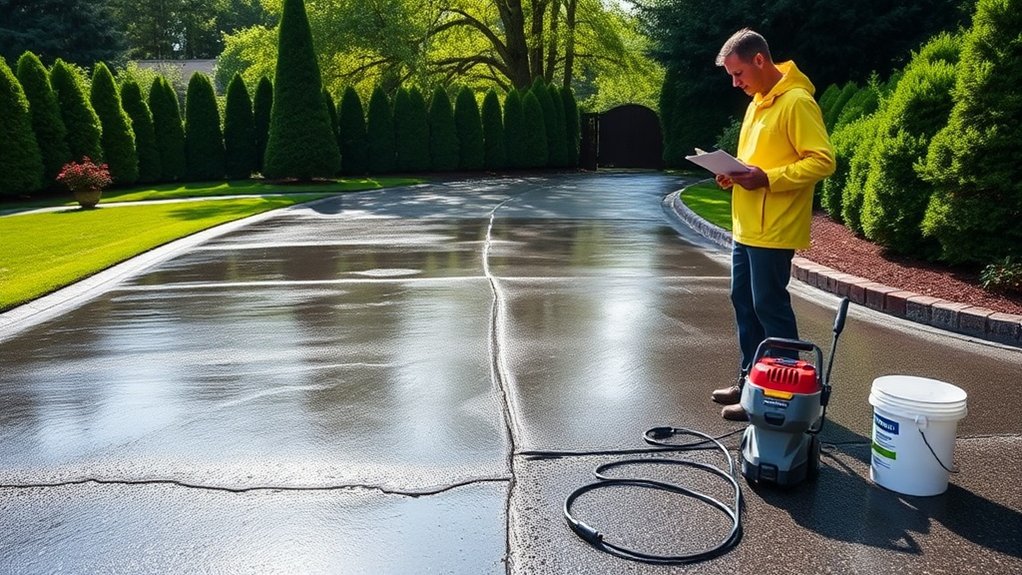
To keep your driveway in good condition, regularly check the drainage to ensure water flows away properly.
Look out for any potholes; fixing these quickly can prevent further damage and stop water from pooling.
Consistent inspections and prompt repairs are essential for maintaining your driveway’s integrity and avoiding expensive water damage.
Routine Drainage Checks
Routine drainage checks are vital for preventing water damage to your driveway.
By regularly assessing drainage effectiveness, you can avoid costly repairs down the line.
Here’s how to carry out effective checks:
- Annual Inspection: Check your driveway at least once a year, ideally during seasonal changes, to spot potential issues early.
- Assess Grading: Ensure the slope directs water away from the driveway to avoid pooling.
- Identify Cracks: Look for surface cracks that could allow water to seep in and cause structural damage.
- Clear Debris: Regularly remove leaves and other debris from drainage areas to ensure proper water flow.
Pothole Repair Timeliness
Effective drainage checks are essential for maintaining your driveway, but timely pothole repairs are just as crucial.
Regular inspections, particularly during freeze-thaw cycles, allow you to catch early signs of damage. Keep an eye out for surface cracks and signs of water pooling to prevent more significant problems down the line.
When you find a pothole, use sharp tools to clean it out before applying a quality repair material, such as UPM cold mix asphalt. This ensures a long-lasting patch, reducing the need for frequent repairs.
Remember, investing in proper pothole prevention can lower overall costs by minimising the need for re-repairs and vehicle damage claims.
Schedule repairs during off-peak hours to improve efficiency and keep your driveway in good condition for years to come.
Cost Considerations for Drainage Solutions
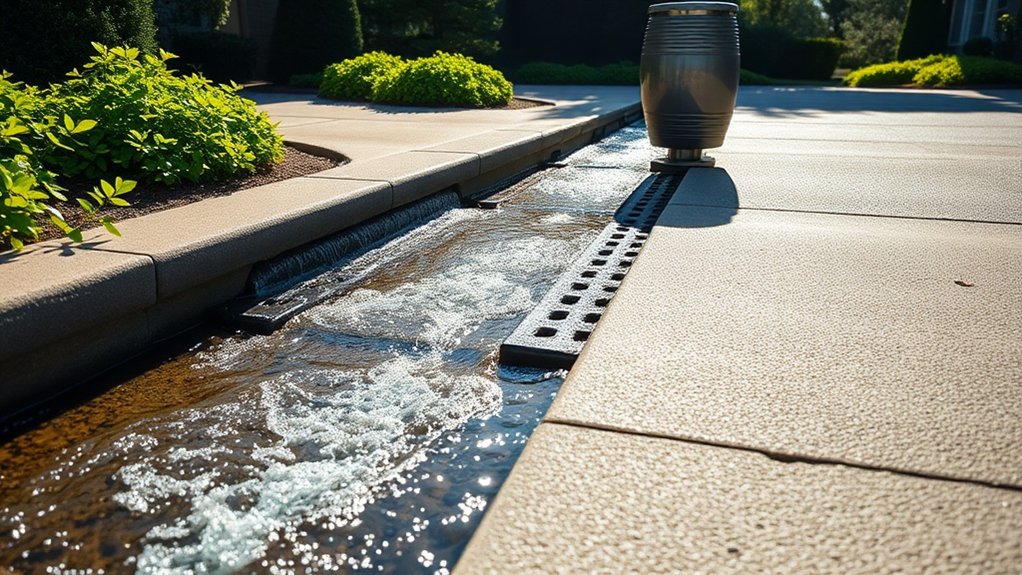
When considering drainage solutions for your driveway, it’s essential to be aware of the associated costs.
Here are some budget-friendly options for drainage installation:
- Gutter extensions: £80–£240 for a straightforward fix.
- Channel drains: £24–£80 per linear metre, depending on the materials used.
- French drains: Range from £8–£80 per linear metre, influenced by depth and location.
- Basic buried downspout systems: Starting at £400, these are some of the more economical choices.
Assessing Landscape and Soil for Drainage Needs
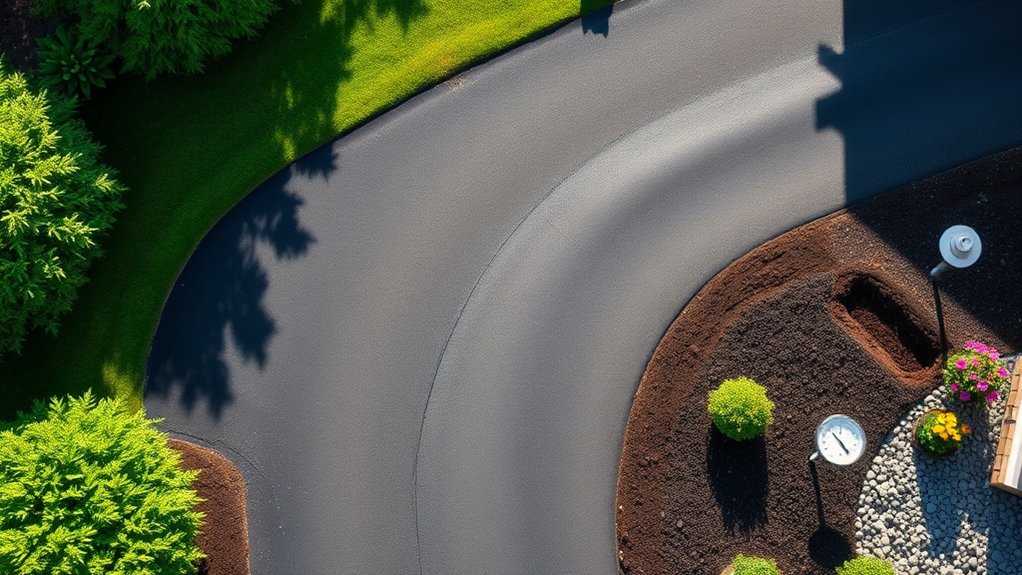
To ensure proper drainage for your driveway, assess the landscape and soil conditions around your property.
Start by examining the topography: identify high and low spots, pooling areas, and existing drainage routes. Test the soil type; clay soils absorb water slowly, while sandy soils drain quickly. Conduct a percolation test to measure how fast water drains.
Observe current drainage patterns and note how water flows during rainfall. Your driveway should have a slope of 1% to 2% to avoid pooling.
Look for signs of poor drainage, such as standing water or erosion, which indicate potential problems. Address these issues promptly to protect your driveway from water damage.
Sustainable Practices for Driveway Drainage
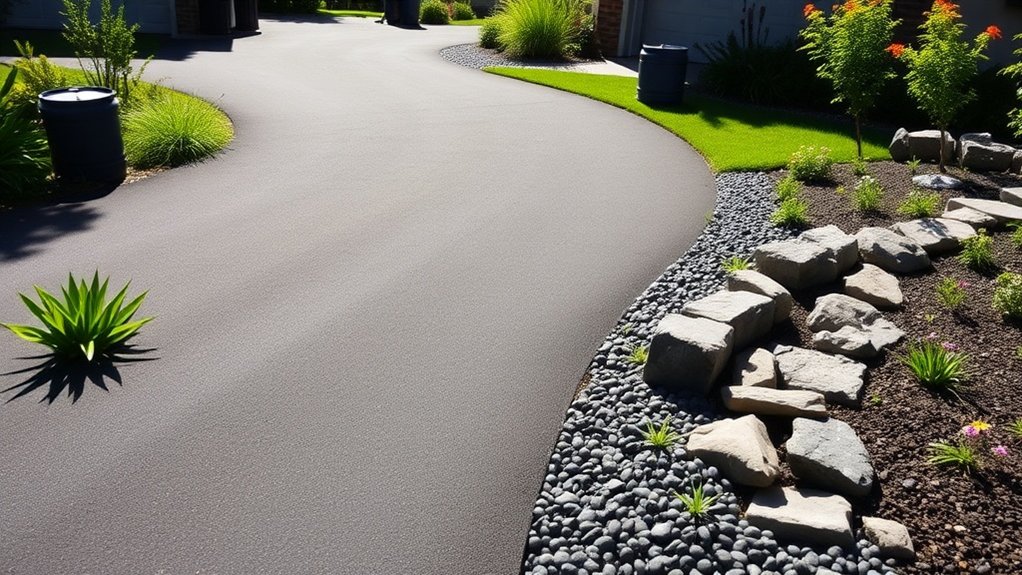
Once you’ve assessed your landscape and soil for effective drainage, it’s time to explore sustainable practices that improve driveway drainage while being kind to the environment.
Here are some eco-friendly options:
- Permeable Pavers: Consider permeable surfaces such as TRUEGRID or Grasspave2, which allow rainwater to soak through, reducing surface runoff.
- Gravel Systems: Use Gravelpave2 for excellent drainage and stability; it’s both practical and sustainable.
- Recycled Materials: Choose composite pavers made from recycled plastics to minimise your environmental impact.
- Maintenance: Regularly sweep high-traffic areas and install geotextile layers to prevent weeds, ensuring your system remains effective.
Frequently Asked Questions
How Often Should I Inspect My Driveway for Water Damage?
You should check your driveway for water damage at least twice a year. Look for signs of water pooling and carry out regular maintenance to catch issues early, helping to avoid expensive repairs later on.
Can Plants Help With Driveway Drainage Issues?
Yes, drainage plants can significantly improve issues with driveway drainage. Adding them to your landscape design can help absorb excess water, stabilise the soil, and reduce runoff. This not only enhances the functionality of your driveway but also improves its appearance. For example, plants like willow or certain grasses can thrive in wet conditions, making them ideal for these areas.
What Are Signs of Poor Drainage on a Driveway?
Signs of poor drainage on a driveway include water pooling, persistent puddles, and mould growth. Cracks and erosion are indicators of more serious issues, while musty smells and unhealthy plants nearby suggest prolonged moisture exposure that could compromise your driveway’s structure.
How Do I Choose the Right Driveway Material for My Climate?
When selecting the right driveway material, take your local climate into account. In colder regions, asphalt is a good choice as it can handle frost and snow, while in milder areas, concrete often proves more durable. Ensure that the material you choose can cope with temperature changes and will last over time. For example, if you live in a place with heavy rainfall, consider permeable paving to prevent flooding.
Are There DIY Solutions for Driveway Water Management?
Consider your driveway as a sponge. To manage water effectively, you can install French drains, create gravel beds, use permeable paving, or plant rain gardens. Each of these DIY solutions helps channel water away, keeping your driveway safe and dry.
Conclusion
To prevent water damage to your driveway, effective drainage solutions are crucial. It’s surprising to note that almost a quarter of all home insurance claims are due to water damage. Ensuring proper grading, installing trench drains, and considering gravel options can significantly lower your risk. Regular inspections and maintenance are vital too. By investing time and resources now, you can avoid costly repairs later, keeping your driveway in good condition for years to come.
Maximize the durability of your tarmac driveway by understanding the ideal weather conditions for installation—discover the secrets to perfect timing Read more
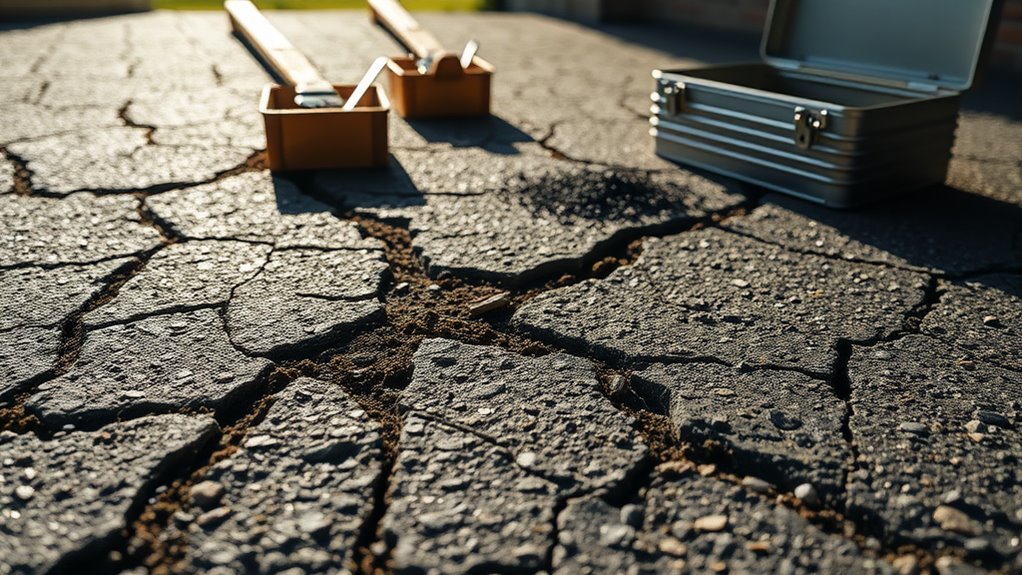
Discover the common causes of tarmac driveway cracks and learn effective repair methods to protect your investment—your driveway deserves the Read more
Before you paint your tarmac driveway, discover essential tips and techniques that can transform its appearance and durability—don't miss out Read more